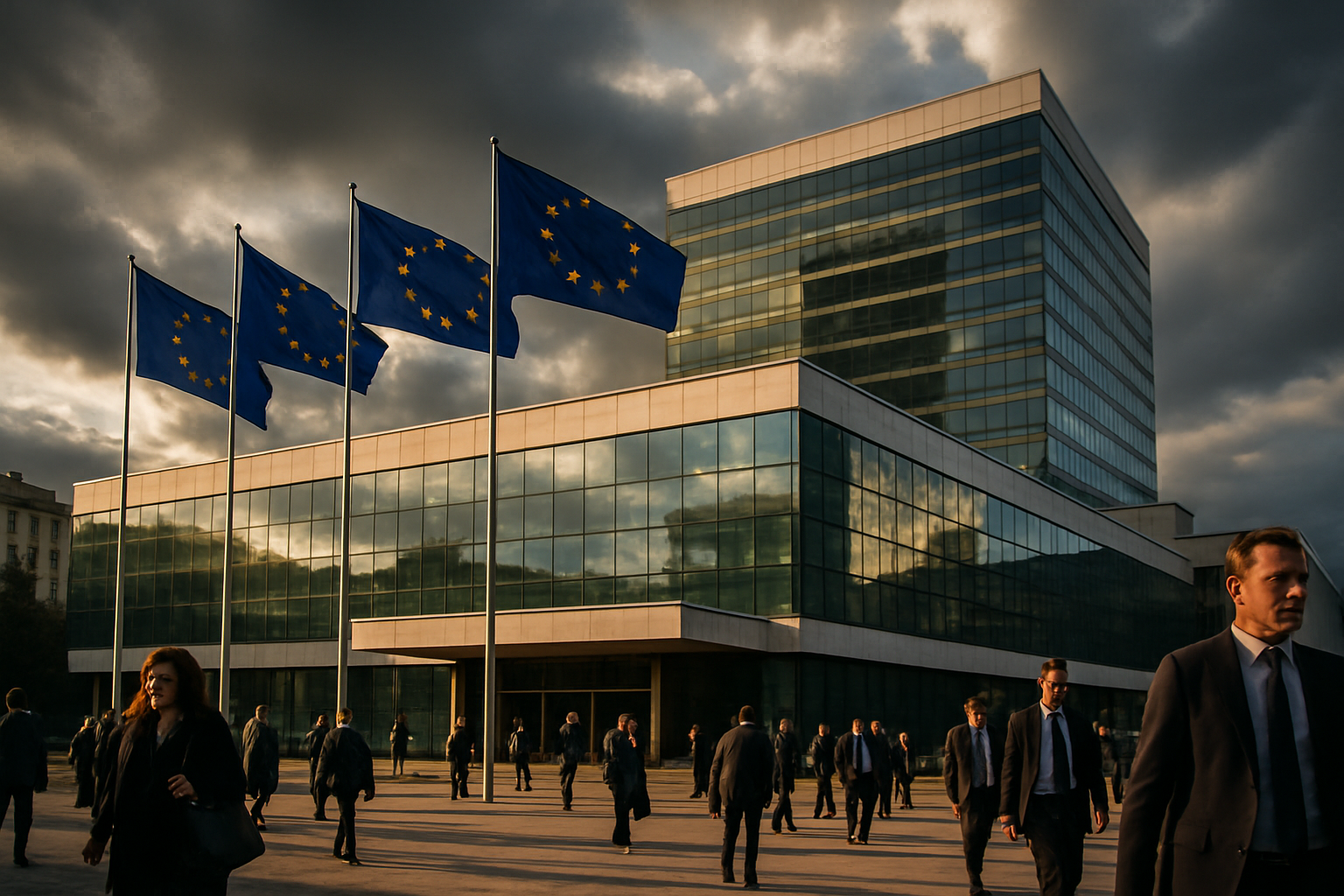
The Western Balkans region faces a pivotal political transition period as High Representative Christian Schmidt prepares to depart Bosnia and Herzegovina following the next general elections, while Kosovo undergoes a significant presidential transition that underscores the region's ongoing institutional development challenges.
Multiple sources confirm that Christian Schmidt, the international community's chief representative in Bosnia and Herzegovina, will step down after the completion of upcoming general elections, marking the potential end of an era in international oversight that has defined the country's post-war governance structure since the 1995 Dayton Agreement.
Bosnia Herzegovina's International Oversight Evolution
Schmidt's anticipated departure represents a significant shift in Bosnia Herzegovina's relationship with the international community. The Office of the High Representative (OHR) has served as the ultimate authority in implementing the civilian aspects of the Dayton Peace Agreement for over three decades, wielding extraordinary powers to remove officials and impose legislation when local authorities fail to act.
The timing of Schmidt's departure, contingent on upcoming general elections, suggests a carefully planned transition that aims to leave behind functioning democratic institutions capable of self-governance. This development comes as the country continues to navigate complex ethnic divisions and institutional challenges that have persistently hindered effective governance and European integration efforts.
Historical context reveals the critical role of international oversight in maintaining stability and preventing institutional breakdown during Bosnia's post-conflict transition. Schmidt's tenure has coincided with various political crises, including recent government collapses at both federal and entity levels, demonstrating the ongoing need for institutional support mechanisms.
Kosovo Presidential Transition Signals Democratic Maturity
Simultaneously, Kosovo is experiencing its own institutional transition as President Vjosa Osmani prepares to transfer presidential duties to Assembly President Albulena Haxhiu in a planned constitutional procedure. This transition reflects the democratic institutions' functionality even during periods of political uncertainty.
The presidential handover occurs against the backdrop of Kosovo's complex political landscape, where Prime Minister Albin Kurti's Vetëvendosje (Self-Determination) Movement has maintained governmental control despite various domestic and international pressures. Kosovo's democratic resilience has been tested repeatedly, particularly regarding the ongoing war crimes trials at The Hague involving former Kosovo Liberation Army leaders.
Recent memory from our coverage reveals that Kosovo successfully formed its third government under Kurti's leadership in February 2026, demonstrating institutional stability despite year-long political deadlocks. The current presidential transition continues this pattern of constitutional governance operating within established democratic frameworks.
Sports Unity Amid Political Division
Adding a different dimension to regional dynamics, sports continue to serve as both a unifying force and reflection of broader social tensions. The upcoming 158th eternal Sarajevo derby between local football rivals exemplifies how traditional cultural events persist despite political uncertainties, providing community cohesion during transitional periods.
The match between the "Blue" and "Bordeaux" teams represents more than athletic competition—it embodies Sarajevo's resilience and cultural continuity that has survived war, political upheaval, and ongoing institutional challenges. Such events demonstrate how civil society maintains vitality independent of political developments.
Tragic Reminder of Infrastructure Challenges
The region's governance challenges extend beyond high-level political transitions to fundamental issues of public safety and infrastructure. The tragic death of priest Nenad Mitrić and his wife in Derventa, which prompted municipal authorities to declare a day of mourning, serves as a stark reminder of the human costs when institutional capacity fails to meet citizen needs.
This incident reflects broader patterns documented throughout 2026, where aging infrastructure and insufficient investment in public safety have repeatedly endangered civilian populations. The Sarajevo tram accident in February, which killed student Erdoan Morankić and critically injured Ella Jovanović, sparked massive protests that ultimately led to government resignations and calls for systematic reform.
Regional Implications for European Integration
The concurrent political transitions across Bosnia Herzegovina and Kosovo occur within the broader context of European Union enlargement policy toward the Western Balkans. Schmidt's departure could signal international confidence in Bosnia Herzegovina's institutional development, potentially accelerating EU integration processes that have been stalled by governance concerns.
However, the transitions also highlight persistent challenges that complicate European integration. Ethnic divisions in Bosnia Herzegovina remain pronounced, while Kosovo's relationship with Serbia continues to impede regional cooperation essential for EU membership. The success of these political transitions will significantly influence the region's European trajectory.
EU officials have consistently emphasized that Western Balkans integration depends on democratic governance, rule of law, and regional cooperation—precisely the areas being tested during current political transitions. The international community's reduced footprint in Bosnia Herzegovina will provide a crucial test of whether domestic institutions can maintain stability and progress toward European standards.
Looking Forward: Challenges and Opportunities
As the Balkans navigate these simultaneous political transitions, several key factors will determine success. First, the capacity of domestic institutions to maintain stability without extensive international oversight will be critically tested. Second, political leaders must demonstrate commitment to democratic norms and inclusive governance that addresses all ethnic communities' concerns.
Third, civil society's role in holding governments accountable—demonstrated powerfully in recent protest movements—will be essential for ensuring that political transitions translate into improved governance and citizen welfare. Finally, sustained international engagement, even with reduced direct oversight, remains crucial for supporting democratic consolidation and European integration.
The current political transitions represent both opportunity and risk for the Western Balkans. Success could accelerate European integration and demonstrate the region's democratic maturity. Failure could reignite ethnic tensions and undermine decades of peace-building efforts, potentially destabilizing a strategically important region at a critical juncture in European history.