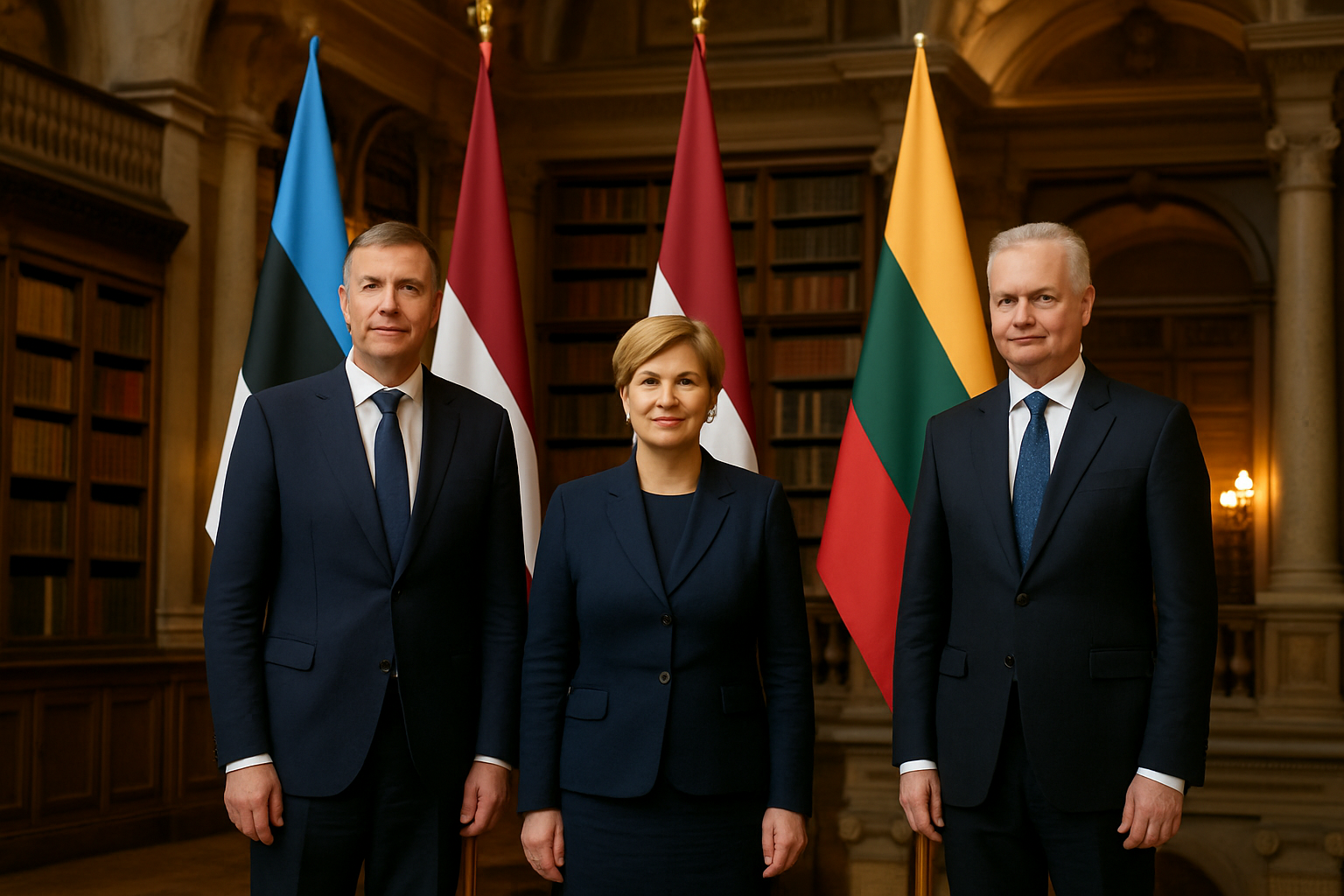
The Baltic states are deepening their strategic partnerships through groundbreaking cultural cooperation initiatives and enhanced security frameworks, with national libraries taking an unprecedented role in addressing geopolitical challenges while preserving regional heritage.
In a historic development for regional cooperation, Baltic national libraries have agreed to strengthen their strategic partnership specifically to address contemporary geopolitical challenges and protect cultural heritage. This innovative approach demonstrates how cultural institutions are increasingly recognized as essential infrastructure for democratic resilience and international cooperation.
Library Cooperation as Strategic Infrastructure
The partnership represents a fundamental shift in how cultural institutions view their role in national security and regional stability. Baltic libraries are implementing advanced digital preservation techniques, coordinated collection development, and shared security protocols to protect against information warfare and cultural heritage threats.
This initiative builds on the documented "February 2026 Cultural Renaissance" that has seen unprecedented international coordination in cultural preservation activities. The Baltic approach demonstrates technology enhancing rather than replacing authentic cultural expression, with international cooperation respecting local authenticity while fostering global understanding.
"Libraries serve as guardians of democratic values and cultural identity. In an era of information warfare, cultural institutions become frontlines of democratic defense."
— Baltic Cultural Cooperation Initiative Statement
Regional Security Cooperation Frameworks
Beyond cultural initiatives, the Baltic states are expanding their defense cooperation through multiple frameworks. According to intelligence assessments documented in recent analyses, the region faces evolving security challenges that require coordinated responses combining traditional defense mechanisms with innovative approaches to hybrid warfare.
The cooperation includes enhanced intelligence sharing, satellite surveillance, and maritime patrols established through NATO Arctic Sentry mission - the alliance's most comprehensive Arctic security response since the Cold War. This represents a template for European territorial defense coordination, demonstrating how geographic boundaries no longer contain regional conflicts.
Recent developments show Finland doubling Norway troop presence from 1,000 to 2,000 over three years, while Estonia contributes operational planning for enhanced regional security frameworks. These initiatives represent the most concrete expression of European strategic autonomy in decades.
Addressing Contemporary Challenges
The Baltic region's approach to cooperation addresses multiple contemporary challenges simultaneously. Recent intelligence assessments warn of potential Russian military intentions in the Baltic Sea, with Lithuania predicting Moscow could be ready for "limited military conflict" within 3-5 years if Ukraine ceasefire is achieved.
This timeline, based on force reconstitution requirements and tactical development for Baltic-specific terrain and NATO defenses, has accelerated cooperation initiatives. The region observes Russia developing new frameworks specifically focused on the Baltic Sea, including increased submarine incursions, GPS jamming, and underwater cable sabotage.
Swedish Armed Forces confirmed Russian drone reconnaissance operations targeting NATO assets, demonstrating escalating intelligence activities in the region. These developments have prompted unprecedented cooperation in both cultural preservation and security frameworks.
Innovation in Cultural Diplomacy
The Baltic states' approach represents a sophisticated evolution in cultural diplomacy. Estonia's continued international cooperation, including Ukraine collaboration despite regional tensions, demonstrates how cultural partnerships can transcend political boundaries while maintaining strategic objectives.
Estonia's digital leadership, built on e-governance pioneering and comprehensive digital identity systems, provides a foundation for innovative cooperation models. The country demonstrates how smaller nations can leverage specific expertise for influential global technology governance roles, particularly in cybersecurity and digital preservation.

Economic and Strategic Benefits
The comprehensive approach to Baltic cooperation generates substantial economic benefits. Cultural initiatives create lasting infrastructure through enhanced international reputation, educational partnerships, and creative industry employment. Countries investing in authentic programming see returns through enhanced recognition, diplomatic relationships, and attractive destination positioning.
Defense cooperation includes advanced radar systems, maritime surveillance technologies, and coordinated training programs. These initiatives create high-tech employment opportunities while enhancing regional security capabilities.
The partnership also addresses energy security concerns, with Estonia maintaining European renewable leadership (88% renewable electricity) and continental Europe's largest battery storage capacity. This energy independence contributes to overall regional resilience against geopolitical pressures.
International Recognition and Support
The Baltic approach has garnered significant international support and recognition. Recent NATO initiatives specifically acknowledge the region's innovative cooperation models, with the UK doubling its Norway troop presence and enhanced intelligence sharing protocols established throughout the region.
The success of Baltic cooperation extends beyond security matters. Estonia's Latitude59 tech competition facilitated €675,000 in investments to regional companies, including Estonian MarkeDroid (green energy), Latvia's Adventum Tech (construction), and Lithuanian Luna Robotics (defense tech). This demonstrates how comprehensive cooperation creates synergies across multiple sectors.
Technological Integration and Innovation
The Baltic states are pioneering sophisticated technology-tradition integration approaches. Estonia hosted the Tallinn Cyber Diplomacy Winter School, bringing together experts from 33 countries to address cyber incident response through diplomatic tools and AI impact on security.
These initiatives address global cyber incidents that surged 20.6% in Q4 2025, with criminals using AI-enhanced methods and exploiting jurisdictional limitations. Estonia's digital leadership provides frameworks for other nations to adapt, demonstrating how comprehensive security approaches must integrate traditional and technological capabilities.
Future Implications and Templates
The Baltic cooperation model provides templates for other regions facing similar challenges. The synthesis of cultural preservation, security cooperation, technological innovation, and economic development creates a comprehensive approach to 21st-century regional governance.
Success factors include sustained political commitment beyond electoral cycles, comprehensive stakeholder engagement, technology enhancement rather than replacement of traditional practices, and authentic international collaboration that respects local identity while fostering global understanding.
"The Baltic model demonstrates how cultural cooperation and security frameworks can be mutually reinforcing. Libraries and defense systems serve the same ultimate purpose: protecting democratic values and cultural identity."
— Regional Security Analysis
Challenges and Adaptations
The initiative faces several implementation challenges, including funding sustainability for developing comprehensive programs, technical capacity building across multiple sectors, and adaptive management responding to rapidly changing circumstances.
Climate change creates additional pressures, as January 2026 marked the hottest month on record - the 18th consecutive month exceeding 1.5°C above pre-industrial levels. Environmental challenges intersect with security concerns, requiring comprehensive approaches that address multiple vulnerabilities simultaneously.
Looking Forward
The Baltic states' comprehensive cooperation initiative represents a watershed moment in regional governance. By combining cultural preservation, security cooperation, technological innovation, and economic development into coherent frameworks, the region demonstrates how smaller nations can achieve disproportionate international influence through strategic cooperation.
The approach establishes precedents for 21st-century cultural stewardship and security cooperation that balance innovation with tradition, local authenticity with international cooperation, and economic viability with cultural and security integrity.
As other regions face similar challenges combining cultural preservation with security concerns, the Baltic model provides practical templates adaptable to diverse contexts. The success demonstrates that effective governance in the modern era requires sophisticated coordination across traditional sector boundaries, with cultural institutions playing increasingly important roles in democratic resilience and international cooperation.