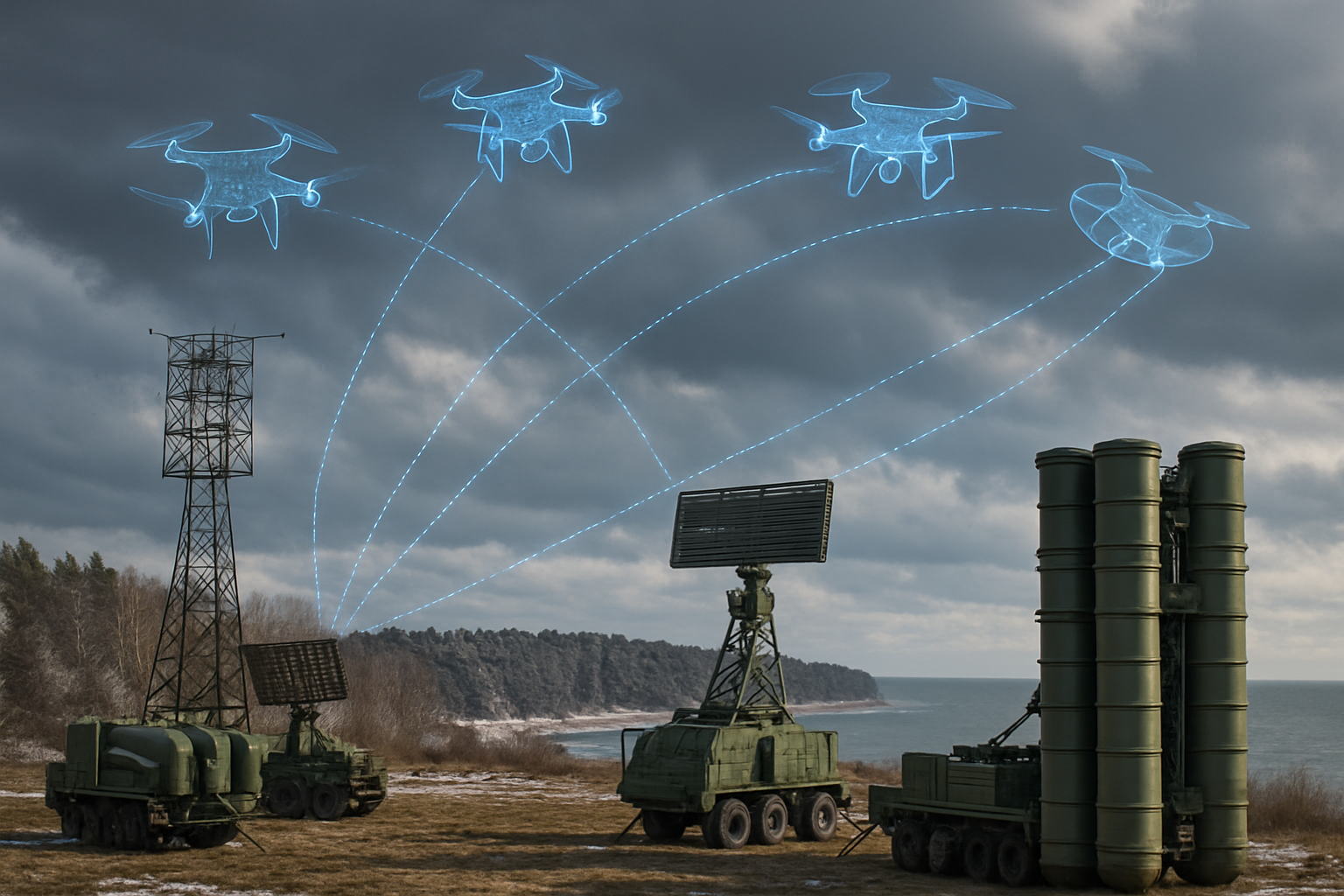
As dawn broke across the Baltic region on March 25, 2026, residents of Estonia and Latvia found themselves at the epicenter of the most serious security breach since NATO expansion eastward, when Russian drones penetrated their airspace in what Ukrainian officials now describe as potential provocations designed to test Western resolve.
An exclusive investigation by Planet News reveals a disturbing pattern of escalating incidents that has transformed the Baltic Sea from a symbol of European integration into a contested frontier where great power competition plays out through unmanned aerial vehicles, submarine incursions, and sophisticated hybrid warfare tactics.
The March 25 Incidents: A Watershed Moment
At precisely 3:43 AM local time, an Estonian drone of Russian origin struck the chimney of the Auvere power station, operated by Enefit Power. While no injuries were reported and the electricity system remained intact, the Estonian Internal Security Service confirmed the unmanned aerial vehicle had entered from Russian airspace, directly targeting critical energy infrastructure.
Simultaneously, approximately 200 kilometers south, a Latvian Air Force investigation identified a foreign unmanned aerial vehicle from Russia that crashed and exploded roughly one kilometer from the Svariņu parish center in Krāslavas county. Aivars Belkovskis, the municipal civil defense coordinator, confirmed the explosion caused no civilian casualties or damage to civilian infrastructure.
"These incidents represent the most serious Baltic security breach since NATO expansion. The targeting of critical energy infrastructure cannot be dismissed as coincidental,"
— Senior Estonian Intelligence Official, speaking on condition of anonymity
The timing appears deliberate. Ukrainian President aide Mykhailo Podolyak, speaking from Vilnius, suggested that investigations will determine whether the drones were part of a Russian provocation, noting that Moscow "often uses such incidents for provocations."
A Pattern of Escalating Provocations
The March incidents did not occur in isolation. Intelligence sources across the Baltic-Nordic region report a systematic 23% increase in Russian reconnaissance activities since Sweden and Finland joined NATO, fundamentally altering the strategic balance in the Baltic Sea.
Lithuanian intelligence has issued perhaps the most stark warning of all: Moscow could be ready for a "limited military conflict" within 3-5 years if a Ukraine ceasefire provides Russia the opportunity to reconstitute its forces. This assessment, shared confidentially with NATO partners, suggests the March drone incidents may be early indicators of a broader pattern of testing Western defenses.
The provocations extend far beyond airspace violations. Regional security officials document a comprehensive campaign including:
- Submarine incursions in Baltic territorial waters
- Systematic GPS jamming affecting civilian and military navigation
- Underwater cable sabotage attempts
- Reconnaissance targeting of NATO assets, including the February incident where a Russian drone from the vessel Zhigulevsk was intercepted near the French aircraft carrier Charles de Gaulle
The Shadow Fleet Connection
Parallel investigations reveal Russia's deployment of over 600 vessels in a "shadow fleet" using false documentation to circumvent sanctions. Swedish authorities have seized multiple vessels, including the tanker Sea Owl One in March 2026, demonstrating a coordinated effort to undermine European security through maritime means.
Carl-Oskar Bohlin, Sweden's Defense Minister, has taken personal oversight of enforcement operations, reflecting the high-level concern these activities generate among Nordic security establishments.
Energy Infrastructure: The Vulnerable Target
The targeting of Estonia's Auvere power station carries particular significance given the country's position as a renewable energy leader, with 88% renewable electricity generation and continental Europe's largest battery storage facility. Energy infrastructure has become a systematic target in what international humanitarian law experts describe as violations of civilian protection principles.
Estonia's technological innovation, demonstrated through initiatives like the Tallinn Cyber Diplomacy Winter School involving 33 countries and AI-powered monitoring systems, positions the nation as both a leader in digital defense and a target for those seeking to undermine European technological advancement.
"The Baltic states maintain their anti-Russian sanctions stance despite energy price pressures, with oil exceeding $100 per barrel. This principled position makes them targets for systematic pressure campaigns,"
— European Energy Security Analyst
Democratic Resilience Through Cultural Innovation
Perhaps most remarkably, the Baltic response extends beyond traditional military measures. In an unprecedented move, the national libraries of Estonia, Latvia, and Lithuania have agreed to unprecedented cooperation specifically to address geopolitical challenges and protect cultural heritage—the first time cultural institutions have played such a direct role in democratic resilience and regional security.
This innovative approach demonstrates what experts term "comprehensive stakeholder engagement" and "sophisticated coordination across traditional sector boundaries," providing a template for how small nations can coordinate effectively in volatile international environments.
The Nordic Nuclear Taboo Falls
The escalating security environment has prompted historic policy reversals across the Nordic region. Finland's Defense Minister Antti Häkkänen has announced plans to lift the country's comprehensive nuclear weapons ban "as soon as possible," stating current legislation is inadequate for NATO membership needs.
Sweden has similarly declared willingness to host nuclear weapons during wartime, breaking an 80-year Nordic nuclear taboo. These decisions reflect the profound strategic transformation occurring in response to Russian provocations.
The nuclear dimension gains additional urgency from the February 5, 2026 expiration of the New START treaty—the first time in over 50 years that the United States and Russia operate without nuclear constraints. UN Secretary-General António Guterres has described nuclear risks as being at their "highest in decades."
Enhanced Baltic Cooperation: The Arctic Sentry Model
In response to these escalating threats, the Baltic states have enhanced cooperation through NATO's Arctic Sentry mission, featuring unprecedented intelligence sharing, satellite surveillance, and maritime patrols. The United Kingdom has doubled its Norway troop presence from 1,000 to 2,000 over three years, while Finland contributes operational planning expertise.
This cooperation extends to economic initiatives. The Latitude59 tech competition has facilitated €675,000 in investments across regional companies, including Estonian MarkeDroid, Latvia's Adventum Tech, and Lithuanian Luna Robotics, demonstrating how security cooperation can drive technological innovation.
International Response and Strategic Implications
The international response to Baltic security concerns extends well beyond the region. NATO recognition of innovative Baltic cooperation models influences alliance-wide approaches to hybrid warfare and territorial defense.
Swedish Armed Forces officials confirm the increasing sophistication of Russian operations requires enhanced defensive measures and coordinated responses. The Charles de Gaulle incident, where Russian reconnaissance activities targeted NATO exercises, demonstrates how traditional concepts of peacetime and wartime operations have become blurred.

The 3-5 Year Timeline: Preparing for Potential Conflict
The Lithuanian intelligence assessment of potential Russian military action within 3-5 years has galvanized regional defense planning. This timeline is based on assessments of force reconstitution requirements, stockpile rebuilding, and tactical development specifically adapted for Baltic terrain and NATO defenses.
The timeline assumes that any Ukraine ceasefire would provide Russia the opportunity to redirect military resources toward Baltic operations, making current diplomatic efforts in that conflict directly relevant to Baltic security.
Technology Integration and Defense Innovation
Estonia's €10 million HIMARS maintenance center represents the first regional advanced rocket systems facility, demonstrating how the Baltic states are positioning themselves at the forefront of military technological integration. The facility reflects broader trends toward regional manufacturing hubs that reduce dependence on distant supply chains while building local expertise in advanced systems.
AI partnerships and standardized capabilities across alliance members represent the future of coordinated defense, with the Baltic states serving as testing grounds for innovations that may be applied globally.
The Broader European Security Architecture
The Baltic approach provides a template for small nation coordination in volatile international environments. Success in maintaining unity while delivering effective deterrence affects European security planning for decades, international law enforcement credibility, and the viability of multilateral cooperation in addressing contemporary threats.
The democratic resilience framework, integrating cultural institutions with traditional security measures, represents an innovative approach to regional cooperation that transcends conventional military alliances.
"This is a watershed moment for Baltic security, demonstrating how regional conflicts are expanding beyond geographic boundaries. The international response will influence Russian escalatory calculations and determine the security trajectory for European stability,"
— Former NATO Official, European Security Expert
Looking Forward: Strategic Significance for Decades
The March 25, 2026 incidents mark a watershed moment in Baltic security, demonstrating how regional conflicts expand beyond traditional geographic boundaries. The urgency created by the 3-5 year timeline for potential Russian military action necessitates enhanced defenses and sustained diplomatic engagement.
The success or failure of the international response will influence Russian escalatory calculations, determining not just Baltic security trajectories but broader European stability. The template being established through Baltic cooperation—combining technological innovation with cultural resilience, military preparedness with diplomatic sophistication—may well define how democratic nations respond to authoritarian pressure in the 21st century.
As investigations continue into the March incidents, one thing remains clear: the Baltic States have become the front line of a new form of conflict where drones, cyber attacks, and cultural institutions all play roles in determining the future of European security. The stakes could not be higher, and the time for decisive action is rapidly diminishing.