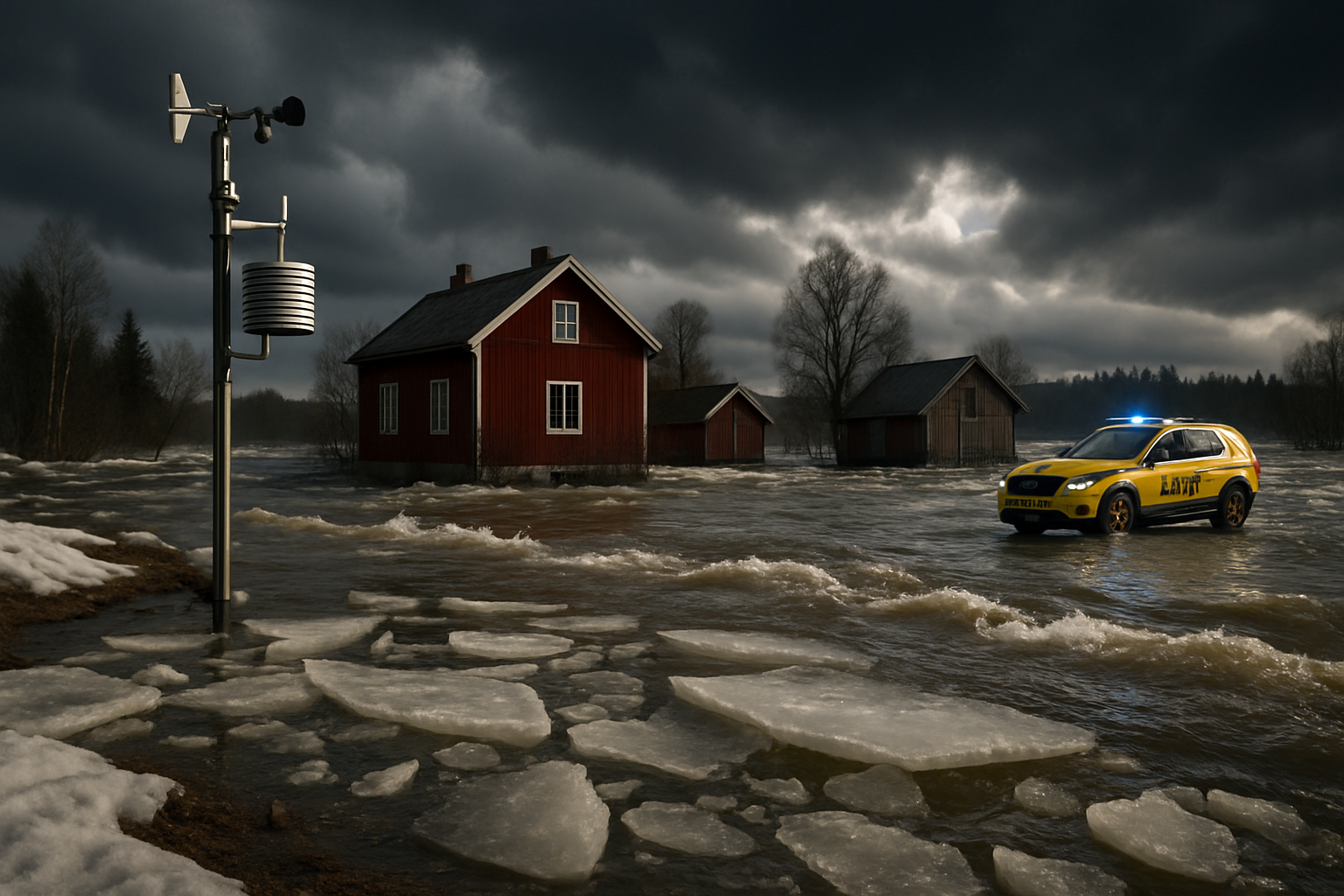
The Baltic region is experiencing a dramatic climate crisis as Finland braces for the earliest spring floods in recorded history while Latvia shatters temperature records, marking another milestone in the planet's 20th consecutive month of temperatures exceeding the critical 1.5°C threshold above pre-industrial levels.
Finnish meteorologists warn that ice breakup in northern rivers could begin this weekend, triggering spring flooding at an unprecedented time of year. The Finnish Meteorological Institute reports that while flood peaks are expected to remain below average levels, the timing represents a fundamental disruption of traditional seasonal patterns that have guided regional planning for centuries.
Simultaneously, Latvia is experiencing extraordinary temperature swings that exemplify the climate volatility paradox affecting the Nordic region. After enduring some of the harshest winter conditions in decades, including record snowfall and dangerous blizzards, the country is now witnessing rapid warming that threatens to destabilize established weather patterns.
Temperature Records Fall Across the Baltics
According to the Latvian Environment, Geology and Meteorology Centre (LVĢMC), the country has broken maximum air temperature records for seven consecutive days, with Friday, March 13th marking another historic milestone. These unprecedented temperature swings follow weeks of severe winter conditions that brought the strongest blizzards of the season and snow accumulations reaching 62 centimeters in some cities.
The dramatic shift from extreme cold to record-breaking warmth within weeks demonstrates the increasing unpredictability of Baltic weather systems. Dr. Elena Vasquez, a climate scientist at the European Centre for Medium-Range Weather Forecasts, explains that such rapid temperature fluctuations are becoming increasingly common as global warming disrupts traditional atmospheric circulation patterns.
"We're witnessing the collapse of predictable seasonal transitions that have characterized the Baltic region for millennia. These aren't just weather anomalies—they're symptoms of a fundamentally altered climate system."
— Dr. Elena Vasquez, European Centre for Medium-Range Weather Forecasts
Finland's Historic Flooding Concerns
Finnish authorities are closely monitoring river systems across the northern provinces as unprecedented early ice breakup threatens to trigger spring flooding weeks ahead of schedule. The Finnish Environment Institute reports that the combination of rapid snow melt and early thaw conditions could overwhelm traditional flood management systems designed for predictable seasonal patterns.
Emergency services have been placed on high alert as communities prepare for potential evacuations. The early onset of spring flooding conditions represents a significant departure from historical norms, challenging infrastructure systems built to handle predictable seasonal water management cycles.
Local authorities in the affected regions are coordinating with national emergency management agencies to ensure adequate preparation for flood scenarios that fall outside traditional planning parameters. The unprecedented timing has forced officials to adapt response protocols developed for later spring conditions.
Regional Infrastructure Under Pressure
The Baltic region's infrastructure is facing unprecedented stress as traditional seasonal assumptions prove unreliable. Transportation networks designed for predictable winter-to-spring transitions are struggling to adapt to rapidly changing conditions that demand both winter and spring preparedness simultaneously.
Energy systems are experiencing particular strain as heating demands remain high during the day while unusual warming trends create complex operational challenges. Estonia's power grid, which recently set consumption records during the coldest winter in 25 years, must now adapt to volatile temperature swings that stress both generation and distribution systems.
Water management infrastructure across the region faces its most significant test as rapid snow melt combines with unpredictable precipitation patterns. Traditional flood defenses are being activated weeks earlier than planned, raising concerns about their effectiveness throughout what could be an extended flooding season.
Global Climate Context
The Baltic crisis unfolds against the backdrop of unprecedented global warming, with January 2026 marking the 20th consecutive month that global temperatures have exceeded the critical 1.5°C threshold above pre-industrial levels. This represents the longest sustained warming streak in recorded human history, fundamentally altering atmospheric circulation patterns worldwide.
The World Meteorological Organization has indicated a 50-60% probability of El Niño development during July-September 2026, potentially driving global temperatures to unprecedented levels during an already exceptional warming period. Human-induced climate change is now fundamentally overriding natural cooling mechanisms, including La Niña effects that historically moderated global temperatures.
Climate scientists emphasize that current conditions provide a preview of routine 2030s circumstances without immediate and comprehensive climate adaptation investment. The "climate volatility paradox" enables simultaneous global heat records and devastating regional extremes through disrupted polar vortex patterns and altered Atlantic circulation systems.
Economic and Social Impact
The unprecedented weather patterns are creating cascading economic effects across multiple sectors. Agricultural planning, which has relied on predictable seasonal transitions for generations, faces fundamental uncertainty as farmers struggle to adapt planting and harvesting schedules to increasingly erratic weather patterns.
Tourism industries dependent on predictable winter sports seasons and spring activities are experiencing significant disruption. Winter recreation facilities face extended closures due to unsafe conditions, while spring tourism infrastructure must prepare for conditions arriving weeks earlier than traditional marketing and operational schedules anticipate.
Mental health services across the Baltic region report increased demand for support related to climate anxiety and weather-related trauma. Communities are struggling to adapt to conditions that challenge generational knowledge about living with Nordic climate patterns.
Emergency Response and Adaptation
Baltic governments are implementing enhanced emergency coordination protocols as traditional mutual aid mechanisms designed for sequential regional disasters prove inadequate for simultaneous extreme weather affecting multiple countries. The European Union's Civil Protection Mechanism has been repeatedly activated throughout 2026 to coordinate response efforts across member states.
Finland is investing in advanced flood monitoring systems capable of responding to unpredictable seasonal timing, while Latvia is upgrading meteorological infrastructure to better track rapid temperature fluctuations. Estonia is developing hybrid emergency protocols that can address both winter and spring hazards simultaneously.
Regional cooperation frameworks are evolving to address the new reality of permanent climate volatility rather than treating extreme weather as exceptional events. Cross-border coordination for emergency services, infrastructure management, and resource sharing is being fundamentally restructured to handle concurrent rather than sequential disasters.
International Implications
The Baltic region's crisis represents a microcosm of global climate adaptation challenges that will intensify throughout the decade. The convergence of extreme weather, infrastructure vulnerabilities, and emergency response limitations underscores the urgent need for coordinated international action on climate adaptation.
Traditional emergency frameworks assume stable regions can assist others during disasters, but simultaneous global weather events challenge this assumption. The Baltic experience provides crucial lessons for other regions facing similar transitions from historical climate patterns to permanent volatility conditions.
Environmental challenges transcend national boundaries as atmospheric systems and ocean currents transport climate effects globally regardless of political borders. Success in managing these challenges requires unprecedented international cooperation, enhanced coordination across multiple sectors and scales, and financial commitments that recognize environmental protection as essential infrastructure for human prosperity and planetary sustainability.
Looking Forward
March 2026 represents a watershed moment for global climate preparedness, as the choice between reactive crisis management and transformative infrastructure adaptation becomes increasingly critical. Current conditions may establish a "new normal" of extreme weather frequency that will permanently challenge traditional emergency response frameworks.
The Baltic region's experience demonstrates both the vulnerability of existing systems and the potential for adaptive innovation. The combination of advanced technology with traditional local knowledge offers templates for broader adaptation strategies, but success depends on rapid scaling and sustained political commitment to environmental protection as essential infrastructure.
The window for effective climate action continues to narrow as ecological systems approach critical thresholds that could trigger irreversible changes affecting global food security, climate stability, and human settlements. The tools and knowledge exist for comprehensive protection, but implementation requires unprecedented speed and coordination through sustained international cooperation.
As additional weather systems develop across the Atlantic and Pacific regions, authorities maintain high alert levels globally. The current crisis may persist for weeks, establishing patterns that define climate resilience strategies for generations. The choices made in the coming months could prove decisive for global climate adaptation efforts during this critical decade for climate action.