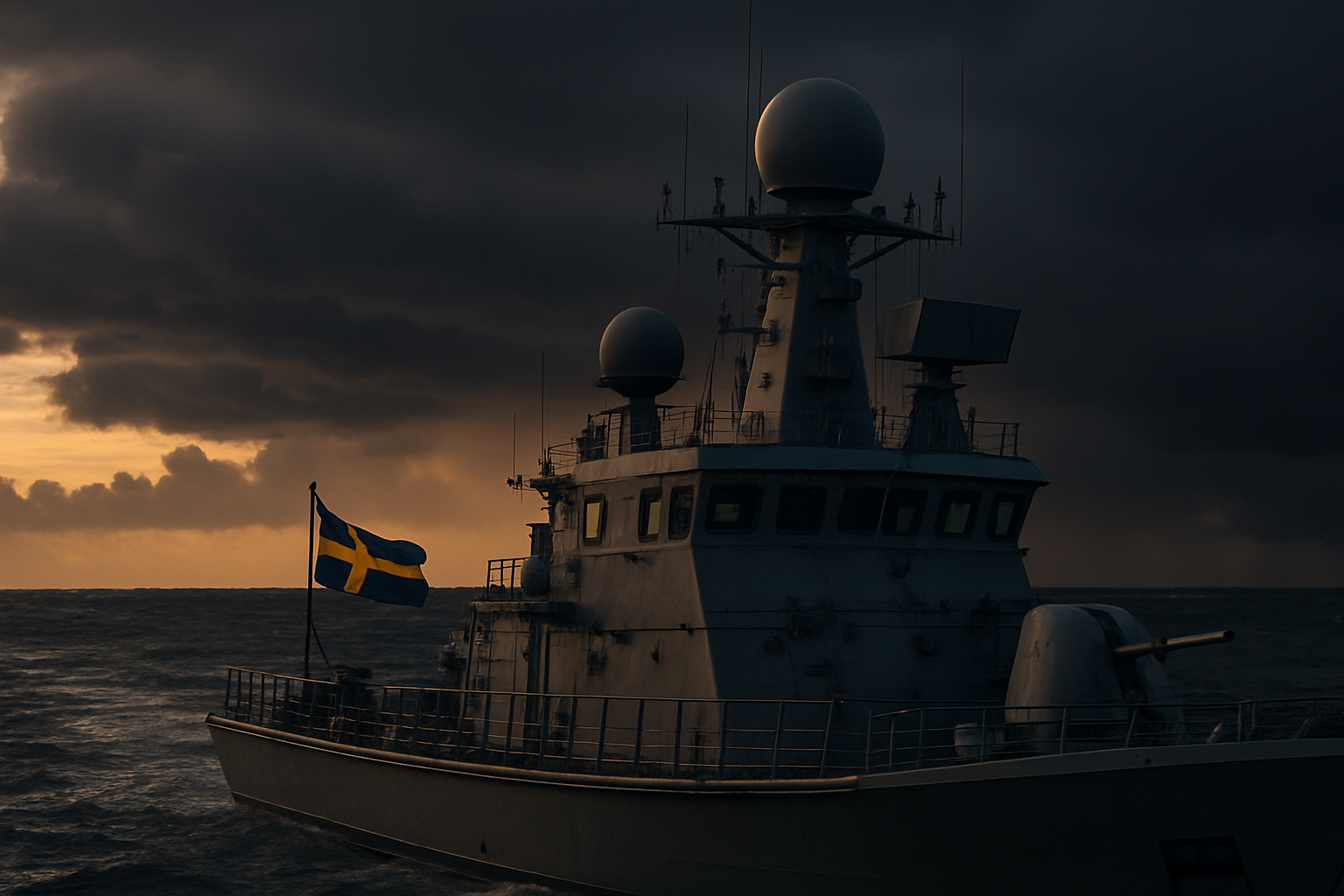
Baltic States are intensifying security measures through enhanced drone capabilities and coordinated maritime enforcement as Sweden moves to prosecute a Russian ship captain for false flag operations, reflecting deepening regional tensions in one of Europe's most strategically sensitive waterways.
The Latvian Parliament's Defense, Interior, and Corruption Prevention Commission will convene Tuesday, March 17, to deliberate on expanding the nation's drone capacity development, according to parliamentary schedules released Sunday. The timing of these discussions coincides with Sweden's arrest of a Russian ship captain suspected of operating under false documentation in Baltic Sea waters, underscoring the complex security challenges facing the region.
Swedish Maritime Enforcement Action
Swedish courts have ordered the detention of a Russian ship captain whose vessel allegedly sailed under false flag documentation while transiting Baltic Sea routes. The arrest, announced Sunday by N1 Info RS, represents part of Sweden's broader crackdown on what maritime security experts describe as "shadow fleet" operations designed to circumvent international sanctions.
The incident builds on Sweden's recent seizure of the Russian cargo vessel Caffa in early March, which was operating under false Guinea flag documentation with a predominantly Russian crew en route to St. Petersburg. That operation, personally overseen by Defense Minister Carl-Oskar Bohlin during a helicopter-assisted intervention off the Trelleborg coast, marked one of the most significant enforcement actions against sanctions-evading vessels in European waters.
"This type of action is not surprising given the established pattern of Russian provocations in the Baltic Sea region."
— Defense Chief Ewa Skoog Haslum, Swedish Armed Forces
Regional Security Architecture Evolution
The coordinated response across Baltic States reflects a sophisticated understanding of shared vulnerabilities and collective defense requirements. Estonia, Latvia, and Lithuania have established unprecedented cooperation frameworks spanning intelligence sharing, satellite surveillance, and maritime patrols through NATO's Arctic Sentry mission.
Latvia's parliamentary focus on drone capacity development represents a strategic pivot toward autonomous surveillance capabilities essential for monitoring the region's extensive maritime boundaries. The initiative follows Lithuania's intelligence warnings that Russia could be ready for "limited military conflict" within 3-5 years if a Ukraine ceasefire is achieved, creating potential for expanded Russian operations in the Baltic theater.
Historical Context of Baltic Security Concerns
Recent incidents underscore the Baltic Sea's emergence as a critical theater in NATO-Russia confrontation. Nordic security officials report a dramatic 23% increase in Russian reconnaissance activities since Sweden and Finland's NATO membership fundamentally altered the strategic balance in the region.
The February incident involving a Russian drone intercepted near the French aircraft carrier Charles de Gaulle in the Øresund Strait exemplifies the sophisticated hybrid warfare tactics being employed. The drone, launched from the Russian reconnaissance vessel Zhigulevsk, violated Swedish airspace sovereignty while gathering intelligence on NATO exercises.
Technological Integration and Maritime Security
Advanced surveillance capabilities, including satellite tracking and AI-powered monitoring systems, enable more effective detection of suspicious maritime activities. However, coordination across different jurisdictions remains challenging, requiring sustained diplomatic cooperation and standardized response protocols.
Estonia's technological leadership provides a template for regional adaptation. The nation's achievements in digital governance, cyber security education, and renewable energy infrastructure (88% renewable electricity generation) demonstrate how small nations can leverage technological advantages for enhanced security benefits.

Shadow Fleet Operations and Economic Warfare
Intelligence assessments reveal Russia operates a sophisticated network of over 600 vessels worldwide using false documentation and concealed ownership to circumvent international sanctions. The EU's 20th sanctions package, which added 43 vessels to enforcement blacklists and implemented comprehensive maritime services bans, represents the most extensive effort to counter these operations.
The economic implications extend beyond immediate sanctions enforcement. These vessels frequently carry stolen Ukrainian grain and operate without proper registration documents, contributing to broader patterns of economic warfare that affect global agricultural markets and energy supplies.
International Coordination Framework
Sweden's enforcement actions benefit from G7, Nordic, and Baltic coordination that establishes enforcement templates for complex international operations. Belgium's recent North Sea seizure of a Russian shadow fleet vessel demonstrates the effectiveness of coordinated European responses to sanctions violations.
The challenge lies in maintaining consistent enforcement across different legal jurisdictions while preserving the flexibility needed for rapid response to evolving threats. Template-setting operations like Sweden's Caffa seizure provide precedents for future coordination among allied nations.
Nuclear and Energy Security Dimensions
The regional security concerns occur against the backdrop of the most severe nuclear governance crisis in decades. The expiration of the New START Treaty in February 2026 marked the first time in over 50 years without US-Russia nuclear constraints, creating verification voids and arms control uncertainty that affect regional security planning.
Simultaneously, the ongoing global energy crisis, triggered by Iran's closure of the Strait of Hormuz affecting 40% of global oil transit, has elevated the strategic importance of Baltic energy security. Estonia's renewable energy leadership and regional cooperation initiatives become even more critical as Europe seeks to diversify energy sources and reduce dependence on volatile geopolitical regions.
Democratic Resilience and Cultural Cooperation
An innovative aspect of Baltic cooperation involves cultural institutions playing unprecedented roles in democratic resilience. The agreement between Baltic national libraries to strengthen cooperation specifically addresses geopolitical challenges and cultural heritage protection, representing the first time such institutions have been formally integrated into regional security frameworks.
This approach reflects sophisticated understanding that contemporary security challenges require coordination across traditional sector boundaries, leveraging cultural diplomacy and educational partnerships alongside military and intelligence cooperation.
Strategic Implications and Future Challenges
The Baltic States' enhanced security posture represents both response to immediate threats and preparation for longer-term strategic competition. Lithuania's intelligence assessment regarding Russia's potential readiness for "limited military conflict" within 3-5 years provides a crucial timeline for regional preparations.
Success in countering sophisticated sanctions violations and hybrid warfare tactics depends on sustained commitment to technological advancement, international coordination, and innovative approaches that integrate traditional security measures with modern challenges like cyber threats, economic warfare, and disinformation campaigns.
"The Baltic region demonstrates that small nation coordination can be highly effective in volatile global environments when based on genuine shared interests and sophisticated technological integration."
— Regional Security Analyst
Broader European Security Context
The developments in the Baltic States occur within the broader context of European strategic autonomy discussions and fundamental questions about post-Cold War security architecture. Finland's recent consideration of lifting its comprehensive nuclear weapons ban and Sweden's willingness to host nuclear weapons during wartime represent historic shifts in Nordic security policy.
These changes reflect the reality that regional conflicts no longer remain geographically contained, requiring new alliance coordination approaches and enhanced capacity for independent action when faced with threats to territorial integrity and democratic institutions.
Looking Forward: Template-Setting Regional Cooperation
The Baltic States' approach to contemporary security challenges provides a potential template for small nation cooperation in an increasingly volatile international environment. The combination of technological enhancement, authentic international collaboration, comprehensive stakeholder engagement, and sustained political commitment beyond electoral cycles offers lessons for similar regions facing comparable challenges.
As Sweden proceeds with prosecution of the Russian ship captain and Latvia advances its drone capacity development, these actions contribute to a broader pattern of coordinated deterrence that balances immediate security needs with longer-term strategic planning. The effectiveness of this approach will influence European security planning for decades, affecting how democratic nations respond to hybrid warfare, economic coercion, and territorial threats in the 21st century.
The stakes extend beyond regional boundaries, as success or failure in maintaining Baltic security affects broader questions of international law enforcement, alliance credibility, and the viability of multilateral cooperation in addressing complex contemporary threats. The region's response to current challenges will establish precedents for how democratic nations can effectively coordinate defense of shared values while maintaining the flexibility needed to address rapidly evolving security environments.