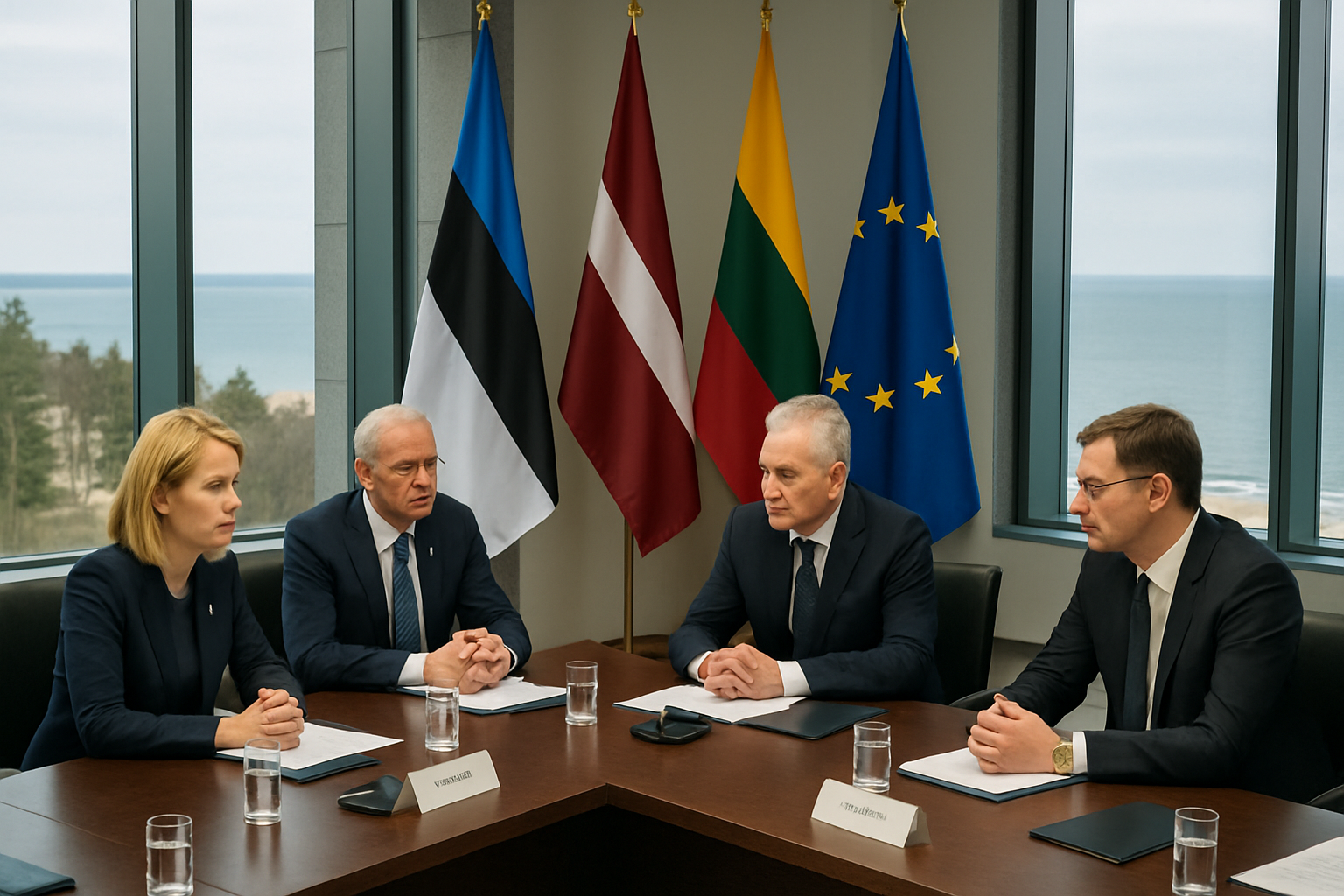
Estonia, Latvia, and Lithuania are strengthening regional security cooperation through unprecedented partnerships while actively pursuing increased European Union funding for eastern border security measures, according to high-level discussions held at the "Strengthening Resilience of the EU Eastern Border" conference in Vilnius.
The three Baltic nations, alongside Poland, are coordinating efforts to secure enhanced EU financial support for border infrastructure and security initiatives as regional tensions continue to escalate. This collaborative approach represents a significant evolution in Baltic security strategy, moving beyond individual national responses toward comprehensive regional defense frameworks.
Regional Security Imperatives
The intensified cooperation comes amid mounting security challenges across the Baltic region. Recent intelligence assessments indicate a 23% increase in Russian reconnaissance activities since Sweden and Finland joined NATO, creating new operational pressures for the Baltic states positioned along the alliance's eastern frontier.
Lithuanian intelligence sources have warned that Russia could be prepared for "limited military conflict" within 3-5 years if current regional tensions persist. This assessment has added urgency to Baltic cooperation initiatives, with all three nations recognizing that coordinated responses provide stronger deterrent effects than isolated national measures.
"We must work together to ensure our eastern border remains secure and resilient against all threats"
— Conference participant, Vilnius discussions
The security cooperation extends beyond traditional military coordination to encompass comprehensive regional resilience strategies. Baltic national libraries have agreed to strengthen cooperation specifically to address geopolitical challenges and protect cultural heritage – representing an unprecedented role for cultural institutions in democratic resilience frameworks.
Enhanced Intelligence and Operational Coordination
The Baltic states have significantly expanded intelligence sharing capabilities through the NATO Arctic Sentry mission, which facilitates enhanced satellite surveillance and maritime patrol coordination. This framework enables real-time information sharing about regional threats and coordinated response planning.
Estonia has emerged as a regional hub for advanced defense capabilities, establishing a €10 million HIMARS maintenance center in partnership with Lockheed Martin – the first such regional facility for advanced rocket systems in the Baltic region. This development represents a shift toward European strategic autonomy in defense manufacturing and maintenance capabilities.
The cooperation framework also leverages Estonia's technological leadership, including its position as Europe's renewable energy leader with 88% renewable electricity generation and continental Europe's largest battery storage capacity serving 90,000 households. Estonia's digital governance expertise, demonstrated through initiatives like the Tallinn Cyber Diplomacy Winter School serving 33 countries, provides technological foundations for enhanced regional security coordination.
EU Funding Strategy and Border Infrastructure
The unified Baltic approach to EU funding represents a strategic recognition that regional security challenges require coordinated European responses. The three nations are developing comprehensive proposals that emphasize shared border security benefits extending beyond their individual territories to encompass broader European security interests.
This funding strategy builds on successful precedents of Baltic cooperation in European integration projects. The Rail Baltica initiative, despite facing cost efficiency variations between countries, demonstrates the potential for sustained multi-national coordination on major infrastructure projects connecting the Baltic region to broader European networks.
Latvia's parliamentary discussions on drone capacity development, scheduled for comprehensive review, exemplify the type of coordinated capability building that EU funding could support across all three Baltic nations. Such synchronized development ensures interoperability and maximizes defensive effectiveness through shared technological standards.
International Support and NATO Integration
The Baltic security cooperation has received significant international recognition and support. The UK has doubled its Norway troop presence from 1,000 to 2,000 personnel over three years, while Sweden is deploying Gripen jets for Greenland exercises and Finland is contributing operational planning expertise to Arctic security initiatives.
This international engagement validates the Baltic approach to regional cooperation as a model for small nation coordination in volatile security environments. The success of these initiatives could influence European security architecture for decades, affecting international law enforcement credibility and multilateral cooperation viability.

Nuclear Policy Transformation
The regional security environment has prompted unprecedented nuclear policy discussions across the Nordic-Baltic region. Finland is lifting its comprehensive nuclear weapons ban "as soon as possible," with defense officials stating current legislation is inadequate for NATO membership requirements. Sweden has indicated willingness to host nuclear weapons during wartime, breaking an 80-year Nordic nuclear taboo.
These developments occur within the context of the New START treaty expiration in February 2026, creating the first period in over 50 years without US-Russia nuclear constraints. This nuclear governance crisis adds urgency to regional security frameworks and validates the Baltic emphasis on enhanced cooperation mechanisms.
Economic and Technology Integration
The security cooperation extends into economic and technological domains, creating comprehensive regional integration that strengthens overall resilience. The Latitude59 technology competition facilitated €675,000 in investments across regional companies, including Estonian MarkeDroid, Latvia's Adventum Tech, and Lithuanian Luna Robotics.
This economic dimension provides sustainable foundations for security cooperation beyond crisis-driven coordination. The integration of defense technology development with civilian innovation creates synergies that enhance both economic competitiveness and security capabilities.
Cultural and Democratic Resilience
Perhaps most innovatively, the Baltic cooperation framework integrates cultural institutions into security strategies. The unprecedented cooperation agreement between Baltic national libraries to address geopolitical challenges represents the first time cultural institutions have played explicit democratic resilience roles in regional security frameworks.
This comprehensive approach recognizes that effective security cooperation requires social and cultural foundations beyond military and technological capabilities. By involving cultural institutions, the Baltic states are creating deeper societal engagement with security challenges and building more resilient democratic frameworks.
Future Implications and Global Significance
The Baltic security cooperation model provides templates for other regions facing similar security challenges. The success of comprehensive coordination – spanning military, technological, economic, and cultural domains – demonstrates that small nations can achieve significant security outcomes through strategic cooperation.
The emphasis on EU integration while maintaining strong NATO commitments offers a framework for European strategic autonomy that strengthens rather than competes with transatlantic relationships. This balance could influence broader European security policy development as the continent adapts to evolving geopolitical challenges.
"Closer cooperation among the Baltic States is the key to strengthening the region's security"
— Ugis Rotbergs, New Unity MP and co-chairman
The timing of these initiatives, amid broader European discussions about enhanced cooperation mechanisms and strategic autonomy, positions the Baltic states as pioneers in 21st-century security cooperation. Their success could establish precedents for democratic coordination on substantial defense investments while maintaining unity and effectiveness.
As regional security challenges continue to evolve, the Baltic approach demonstrates that sustained political commitment, technological innovation, and authentic international collaboration can create robust frameworks for addressing complex security environments. The integration of traditional security measures with cultural resilience and economic cooperation provides a comprehensive model that could influence European security architecture for decades to come.