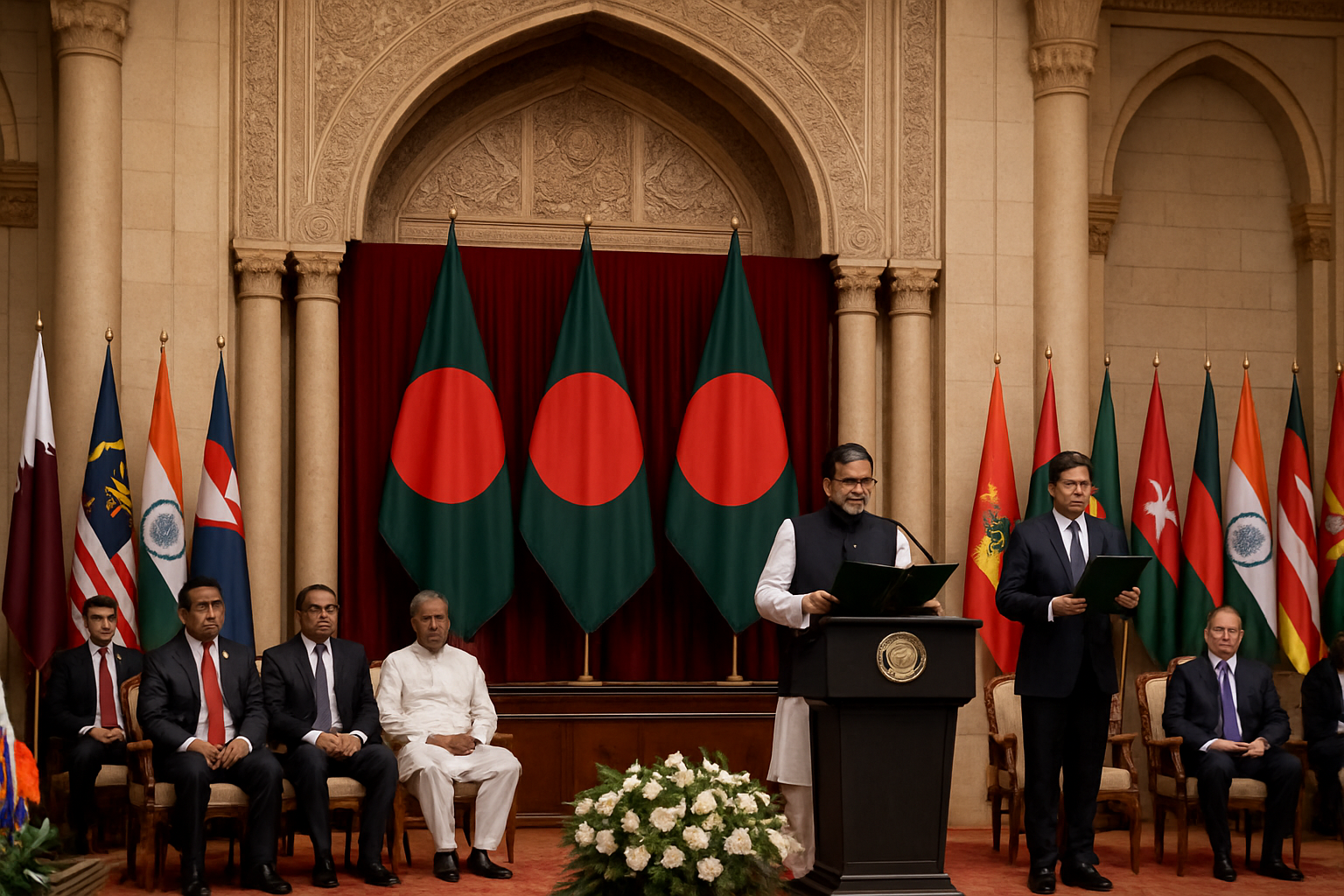
Bangladesh's interim government has extended formal invitations to heads of government from 13 countries to attend the swearing-in ceremony of the new BNP government, scheduled for Tuesday, February 17, marking a historic moment in the nation's democratic transition.
The Bangladesh Nationalist Party (BNP), under the leadership of Chairman Tarique Rahman, is set to form the new government following its decisive landslide victory in the February 12 parliamentary elections. The invitations, extended by Chief Adviser Professor Muhammad Yunus of the interim government, represent an unprecedented diplomatic initiative to showcase Bangladesh's democratic transformation on the international stage.
International Diplomatic Outreach
According to multiple sources within the interim government's Chief Adviser's office, the Ministry of Law, and BNP leadership, the invitations have been extended to heads of government from 13 countries, including major regional powers China, India, and Pakistan. The decision was made in consultation with the policy-making leadership of the BNP, which achieved a commanding two-thirds majority in the 13th National Parliament election.
The diplomatic sources indicate that the comprehensive list of invited nations reflects Bangladesh's commitment to maintaining balanced international relations while demonstrating the legitimacy of its democratic transition. The ceremony is scheduled for 7:00 PM at Bangabhaban Darbar Hall, where President Mohammed Shahabuddin will administer the oath to the new cabinet.
Modi's Scheduling Conflict
However, a significant diplomatic challenge has emerged regarding Indian Prime Minister Narendra Modi's attendance. According to reports from the Hindustan Times, Modi is unlikely to attend the BNP government's swearing-in ceremony due to a pre-existing commitment with French President Emmanuel Macron, who is scheduled to visit India on February 17.
The scheduling conflict presents a diplomatic dilemma, as Modi will be engaged in bilateral talks with Macron in Mumbai on the same day as the Bangladesh ceremony. Following their meeting, Macron will participate in the AI Impact conference in New Delhi and remain in India until February 19. Indian diplomatic sources suggest that a high-ranking official may represent India at the ceremony instead of the Prime Minister.
Despite this scheduling challenge, the BNP has expressed gratitude for Modi's congratulatory message following their electoral victory and looks forward to constructive engagement with India under the new government.
Historical Context of the Transition
The invitation to international leaders comes as Bangladesh completes one of the most remarkable democratic transitions in recent South Asian history. The BNP's electoral victory represents the culmination of a democratic transformation that began with the August 2024 student-led uprising, which ended Sheikh Hasina's 15-year authoritarian rule.
Tarique Rahman, the 60-year-old son of former Prime Minister Khaleda Zia, returned from a 17-year exile in London in December 2025 to lead the BNP's campaign. His party's victory, securing 212 of 299 parliamentary seats, represents a decisive mandate from the "uprising generation" – the 55 million voters aged 18-37 who comprised 44% of the electorate.
"Today we are being released. There is much to discuss regarding the present and future of Bangladesh. Always with the truth at the forefront."
— Tarique Rahman, addressing the nation following BNP's victory
The election, monitored by 394 international observers from 27 countries in the largest observation mission in Bangladesh's recent history, was conducted peacefully across 42,651 polling centers. The historic overseas voting system enabled 883,000 postal ballots, including 444,436 from expatriate Bangladeshis, marking the first time the diaspora could participate directly in the democratic process.
International Recognition and Legitimacy
The international community has responded positively to Bangladesh's democratic transition. Malaysia's Prime Minister Anwar Ibrahim praised it as a "triumph of democracy," while US officials have expressed readiness to work with the new government. The interim government under Professor Yunus achieved a significant diplomatic breakthrough with the United States, securing a trade agreement that reduced tariffs to 19% and eliminated tariffs on textiles and apparel using US materials.
The BNP's victory has also drawn attention from regional powers. While India monitors the situation with some concern due to historical tensions with the BNP, China views the developments in the context of its Belt and Road Initiative investments in Bangladesh. Pakistan has expressed hopes for enhanced cooperation under the new government.
Challenges Ahead for the New Government
As Rahman prepares to assume the role of Prime Minister, his government faces significant challenges. During his victory speech, Rahman acknowledged inheriting a "fragile economy, ineffective constitutional institutions, and weak law and order" from what he characterized as the previous "fascist regime."
The new government will need to address several critical issues:
- Implementation of the July Charter, which institutionalizes the principles of the 2024 uprising
- Managing transitional justice processes related to the mass killings during the uprising
- Rebuilding the economy while maintaining the diplomatic gains achieved under the interim government
- Strengthening democratic institutions and ensuring sustainable governance
The BNP has indicated that its cabinet will be efficiently sized, focusing on effectiveness rather than political accommodation. This approach reflects the party's mandate to implement substantial reforms with its two-thirds majority, which enables constitutional amendments if necessary.
Regional and Global Implications
Bangladesh's democratic transformation extends far beyond its borders, serving as a potential template for peaceful political change through youth-led movements institutionalized via electoral processes. The success of the transition influences regional stability patterns and could encourage similar democratic movements across South Asia.
The invitation to 13 countries for the swearing-in ceremony demonstrates Bangladesh's commitment to multilateral engagement and its desire to position itself as a responsible regional power. This diplomatic initiative comes at a crucial time when South Asian cooperation faces various challenges, and Bangladesh's democratic consolidation could provide positive momentum for regional integration efforts.
The world's eighth-largest population completing such a democratic transition has global significance, particularly as other nations grapple with democratic challenges. The peaceful transfer of power from a student-led uprising to institutional democracy through electoral means provides hope for democratic resilience worldwide.
Looking Forward
As preparations continue for the February 17 ceremony, the international community will be watching closely to see how many of the invited leaders attend and what this reveals about Bangladesh's evolving diplomatic relationships. The presence or absence of key regional leaders could signal the direction of Bangladesh's foreign policy under BNP leadership.
For Rahman and his party, the swearing-in ceremony represents not just the culmination of their electoral victory, but the beginning of their responsibility to deliver on the promises made to the Bangladeshi people. The presence of international dignitaries will underscore the global significance of Bangladesh's democratic renewal and the expectations for successful governance.
The ceremony will mark the completion of what many observers consider the most significant democratic transformation in Bangladesh since its independence, achieved through peaceful means and with broad international legitimacy. As the nation prepares for this historic moment, the world watches to see how this template for democratic transition might influence broader patterns of political change in the 21st century.