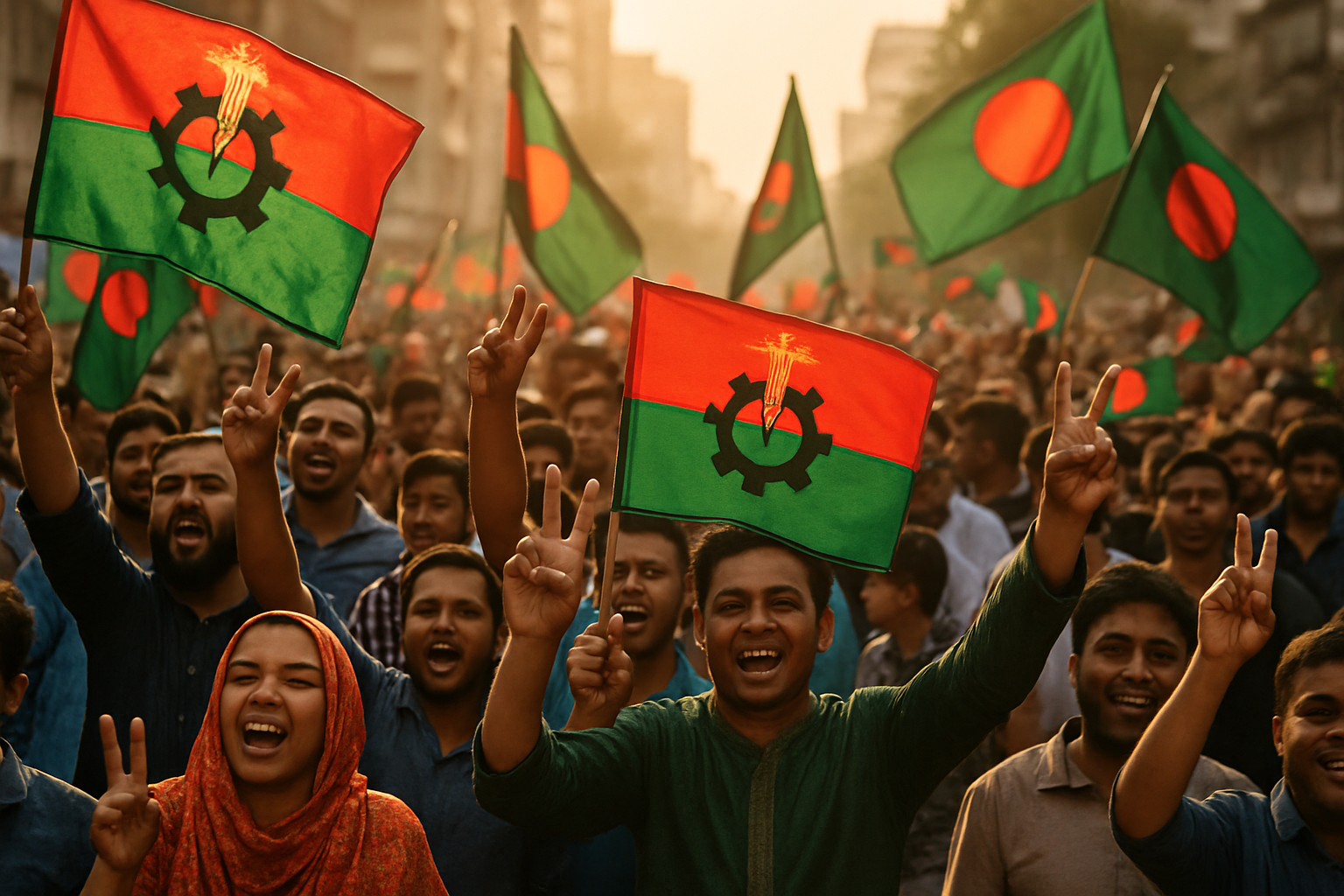
Bangladesh Nationalist Party (BNP) achieved a decisive landslide victory in the country's historic February 13, 2026 parliamentary elections, securing 212 of 299 seats and establishing a commanding two-thirds majority that ends Sheikh Hasina's 15-year authoritarian rule and completes one of the most remarkable democratic transformations in recent South Asian history.
The victory positions BNP Acting Chairman Tarique Rahman, who returned from 17 years of London exile just two months ago, as Bangladesh's next Prime Minister in what international observers are calling the world's first election following a successful Generation Z uprising. The results mark a stunning political comeback and the completion of a democratic transition that began with student-led protests in August 2024.
Electoral Mandate and Key Victories
BNP's triumph was comprehensive across all regions, with party Secretary General Mirza Fakhrul Islam Alamgir winning a landslide victory in Thakurgaon-3 constituency with 236,308 votes—more than doubling his nearest rival. Rahman himself was declared elected from both Bogra-6 and Dhaka-17 constituencies, demonstrating the party's broad appeal.
The scale of BNP's success was evident in regional sweeps, including all six seats in Barisal division. Dr. Reza Kibria secured Habiganj-1 with 111,073 votes, doubling his nearest competitor, while BNP-backed candidates achieved significant victories across the country.
"This victory belongs to Bangladesh, belongs to democracy. Now it is time to build the nation. Everyone must work unitedly and play a responsible role to achieve this. National unity is our strength, while division is our weakness."
— Tarique Rahman, BNP Acting Chairman
Opposition Results and Political Realignment
The election results revealed a fundamental realignment of Bangladesh's political landscape. The Jamaat-e-Islami coalition secured approximately 77 seats, representing their strongest showing since 1971 independence. The student-led National Citizen Party, which emerged directly from the 2024 uprising, won symbolic victories including Nahid Islam's triumph in Dhaka-11 with 93,872 votes.
The Awami League's complete absence from the political process—banned following their violent suppression of the August 2024 student uprising—marked the end of traditional two-party dominance and created space for this new political configuration.
International Recognition and Oversight
The election received unprecedented international validation through the largest monitoring mission in Bangladesh's recent history. A total of 394 international observers from 27 countries, including over 200 from the European Union, provided crucial democratic legitimacy to the process.
International recognition came swiftly, with Malaysian Prime Minister Anwar Ibrahim praising the "triumph of democracy," while US Secretary Marco Rubio congratulated Rahman and expressed readiness for enhanced cooperation. The election also featured historic overseas voting, with 883,000 postal ballots including 444,436 expatriate votes processed through the ICPV system.
Youth Demographics and Generational Change
A critical factor in BNP's victory was the decisive role of Bangladesh's youth demographic. An estimated 55 million voters aged 18-37—representing 44% of the electorate—participated as the "uprising generation" that drove democratic renewal. This cohort demanded accountability, transparency, and effective governance over traditional party loyalty.
The peaceful conduct of elections across 42,651 polling centers, despite the deployment of 900,000 security personnel in the largest peacetime operation in Bangladesh's history, demonstrated the maturity of democratic institutions and the commitment of citizens to peaceful political change.
Challenges and Opportunities Ahead
The new BNP government faces several immediate challenges, including implementing the July Charter that institutionalizes the principles of the 2024 uprising, addressing transitional justice questions regarding mass killing trials, and managing complex regional relationships.
The interim government under Nobel laureate Muhammad Yunus achieved significant diplomatic breakthroughs during the transition, including a major US trade agreement reducing tariffs to 19% with zero rates for textiles using US materials. Sustaining these gains while addressing domestic development needs will be crucial for the new administration.
Regional and International Implications
Bangladesh's democratic transformation carries significant implications beyond its borders. As the world's eighth-largest country by population, its successful transition from authoritarian rule through youth-led movements to institutional democracy provides a template for peaceful political change through mass mobilization.
The election's success influences regional cooperation patterns, with neighboring countries monitoring Bangladesh's approach to democratic governance, economic development, and international relationships. Success in democratic consolidation could establish Bangladesh as a regional model for South Asian democratic renewal.
Historical Significance
The 2026 election represents the most significant democratic transformation since Bangladesh's independence. The peaceful transfer of power from a student-led uprising to elected government through constitutional means demonstrates the resilience of democratic institutions even under severe authoritarian pressure.
The two-thirds constitutional mandate provides BNP with unprecedented legislative authority to implement major reforms while maintaining democratic accountability. This achievement, combined with extensive international oversight and validation, establishes important precedents for democratic consolidation in the post-uprising era.
"We celebrated the victory peacefully and instructed party and alliance activists not to hold any victory processions to avoid any kind of disorder. Gratitude for the victory was expressed through prayers and supplications."
— Tarique Rahman, addressing post-election responsibilities
As Bangladesh prepares for this historic transition of power, the international community watches closely to see how the new government will balance domestic expectations with regional responsibilities, democratic governance with development needs, and national sovereignty with international cooperation. The success of this democratic experiment could influence similar movements across South Asia and beyond, making Bangladesh's political transformation a closely watched model for peaceful democratic change in the 21st century.