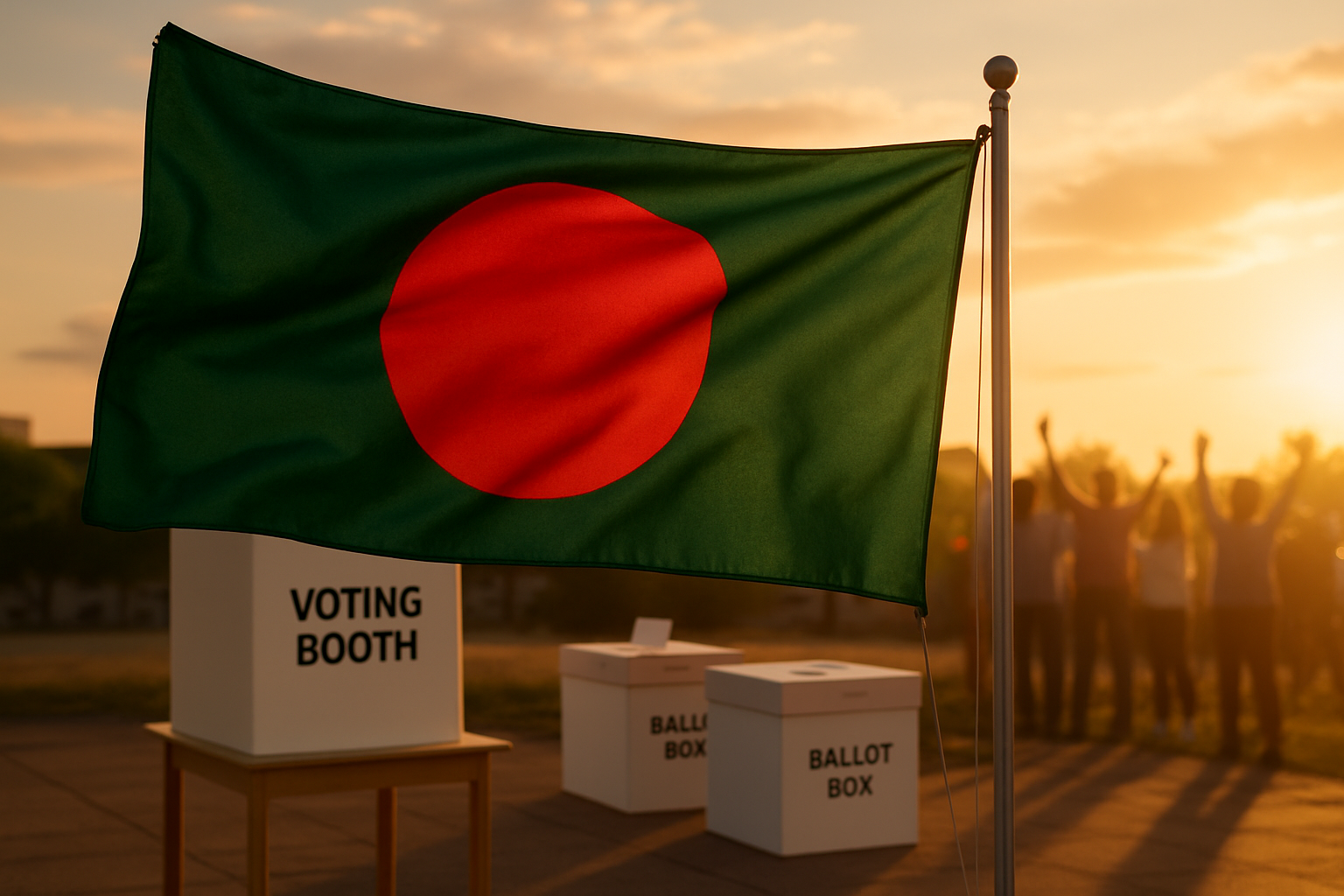
The Bangladesh Nationalist Party (BNP) has achieved a decisive electoral victory, securing approximately 212 of 299 parliamentary seats in the February 13, 2026 elections, marking the party's return to power after two decades and completing Bangladesh's remarkable democratic transformation following the August 2024 student uprising.
Tarique Rahman, who returned from a 17-year London exile in December 2025, is now positioned to become the next Prime Minister after his party's commanding two-thirds majority victory. The election represents the first truly free and fair democratic contest in Bangladesh since 2008, ending Sheikh Hasina's 15-year authoritarian rule.
Electoral Breakthrough Details
BNP Secretary General Mirza Fakhrul Islam Alamgir delivered a stunning performance in Thakurgaon-3, winning with 236,308 votes—more than doubling his nearest rival. Rahman himself was elected from both Bogra-6 and Dhaka-17 constituencies, demonstrating the party's broad national appeal.
The party swept all six seats in the Barisal division and secured victories across multiple regions, with Dr. Reza Kibria winning Habiganj-1 with 111,073 votes, effectively doubling his nearest competitor's total.
"This victory represents the triumph of democratic values over authoritarianism. The people of Bangladesh have spoken clearly for change, accountability, and a new direction for our nation."
— BNP Spokesperson Mahdi Amin
Opposition Results and Political Realignment
The Jamaat-e-Islami coalition secured approximately 77 seats, representing their strongest showing since 1971 independence. This marks a significant shift in Bangladesh's political landscape, with the traditional two-party system giving way to a more complex multi-party arrangement.
The student-led National Citizen Party, which emerged directly from the 2024 uprising, won symbolic victories including Nahid Islam's triumph in Dhaka-11, representing the successful institutionalization of youth political movements into formal electoral processes.
Notably absent from the political contest was the Awami League, which was banned from participation following the violent suppression of the August 2024 student protests that ultimately led to Sheikh Hasina's downfall.
Unprecedented International Oversight
The election was conducted under the largest international monitoring mission in Bangladesh's recent history, with 394 observers from 27 countries providing crucial democratic legitimacy. The European Union deployed over 200 observers, while Japan sent an Election Observer Mission led by Watanabe Masato.
For the first time in the country's history, overseas voting was implemented through the ICPV system, enabling 883,000 postal ballots including 444,436 expatriate votes. This breakthrough was particularly significant for the British Bangladeshi community and established Bangladesh as a regional leader in diaspora political participation.
Youth Demographics Decisive Factor
Perhaps most significantly, the election was driven by Bangladesh's "uprising generation"—55 million voters aged 18-37 representing 44% of the electorate. These young voters, who led the democratic transformation, demanded accountability, transparency, and effective governance over traditional party loyalty.
The peaceful conduct of the election across 42,651 polling centers, despite a massive security deployment of 900,000 personnel, demonstrated the maturity of Bangladesh's democratic institutions and the public's commitment to peaceful political change.
International Recognition and Diplomatic Implications
International leaders quickly congratulated the BNP's victory. Malaysian Prime Minister Anwar Ibrahim praised it as a "triumph of democracy," while Pakistani Prime Minister Shehbaz Sharif expressed hopes for continued cooperation.
The interim government under Nobel laureate Muhammad Yunus had achieved significant diplomatic breakthroughs, including a major US trade agreement providing a 19% tariff rate and zero tariffs for textiles and apparel using US materials. These achievements signal potential strategic realignments in the Indo-Pacific region.
US Secretary Marco Rubio congratulated Rahman and the BNP, expressing readiness to work with the new government, while the extensive international observation mission provides crucial legitimacy for the democratic transition.
Historical Context and Significance
This election marks the completion of what many observers consider the world's first successful transition from a Gen Z-led uprising to institutional democracy through peaceful electoral processes. The August 2024 student movement successfully ended Sheikh Hasina's increasingly authoritarian rule and established the framework for democratic renewal.
The 48% voter turnout across the election represented strong civic participation and demonstrated renewed faith in democratic institutions after years of authoritarian governance. The fact that the election proceeded without major violence—a stark contrast to previous contested elections—highlights the fundamental shift in Bangladesh's political culture.
Challenges Ahead for New Government
The incoming BNP government faces significant challenges, including implementing the July Charter that institutionalizes the principles of the 2024 uprising, addressing transitional justice questions regarding mass killing trials, and managing complex regional relationships.
Bangladesh's relationship with India, historically tense during BNP rule, will require careful management, as will the country's engagement with China's Belt and Road Initiative and potential deeper cooperation with the United States following recent trade breakthroughs.
Domestically, the new government must address economic development needs while maintaining the democratic momentum that brought it to power and ensuring that public expectations for accountability and transparency are met.
Global Template for Democratic Renewal
Bangladesh's successful transition provides a template for peaceful political transformation through mass mobilization and institutional democratic processes. The success of youth-led movements in achieving sustainable political change through electoral democracy offers hope for similar movements worldwide.
As the world's eighth-largest nation by population, Bangladesh's democratic consolidation has significant implications for regional stability and South Asian cooperation patterns. The peaceful transfer of power vindicates non-violent resistance and demonstrates the effectiveness of institutional democratic processes even amid significant political pressures.
The election's success in the face of extreme weather, technological challenges, and complex international dynamics provides a model for democratic resilience under multiple simultaneous pressures—a template increasingly relevant as democracies worldwide face similar multi-dimensional challenges.