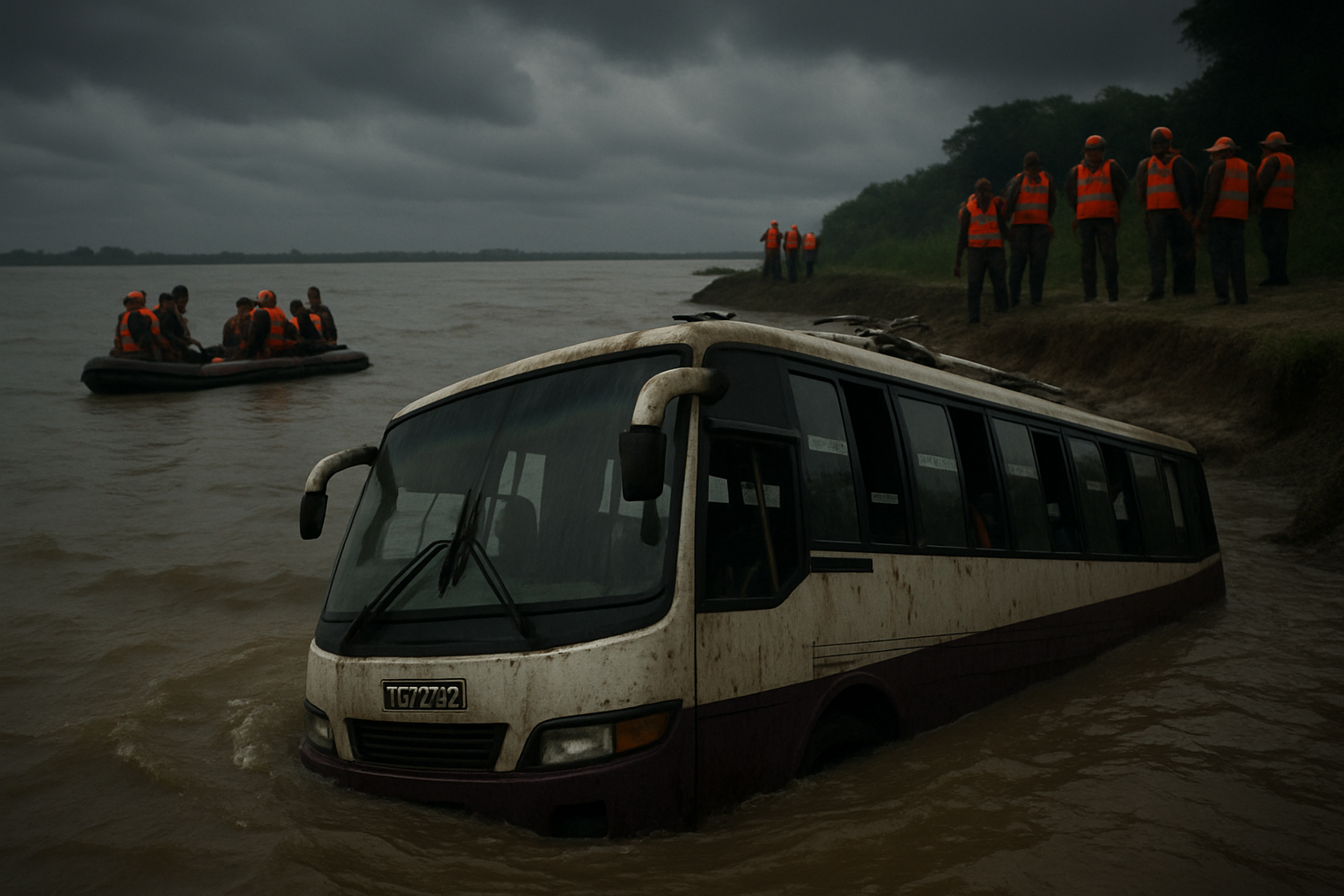
At least 24 people were killed and several others injured when a passenger bus carrying approximately 40 passengers plunged into the Padma River while attempting to board a ferry in southwestern Bangladesh on Wednesday, marking another tragic chapter in the country's ongoing transportation safety crisis.
The devastating accident occurred near the Daulatdia ferry terminal in Rajbari district, approximately 100 kilometers from the capital Dhaka. The bus, operated by Souhardo Paribahan, lost control as it approached the ferry crossing, sending the vehicle careening into the murky waters of one of Bangladesh's major rivers.
Rescue Operations and Casualty Details
Emergency responders launched immediate rescue operations, recovering 22 bodies from inside the submerged bus, according to Talha Bin Qasim, a local rescue official. The victims included five children, eleven women, and six men, painting a grim picture of the human cost of this transportation disaster.
The rescue operation faced significant challenges due to the river's depth and strong currents at the ferry crossing point. Emergency teams worked through the night using specialized equipment to extract victims and search for any survivors who may have been thrown from the vehicle during the crash.
"The bus was completely submerged when we arrived," said a rescue coordinator who declined to be named. "Our divers had to work in difficult conditions to recover the bodies and search for survivors."
Investigation Underway
Authorities have launched a comprehensive investigation into the cause of the accident. Preliminary reports suggest the bus may have experienced mechanical failure or driver error while navigating the approach to the ferry terminal, a notoriously dangerous section of road that has witnessed multiple accidents over the years.
The Daulatdia ferry crossing serves as a critical transportation link connecting the southwestern regions of Bangladesh with the capital and other major cities. The terminal area is known for heavy traffic congestion and challenging road conditions, particularly during the busy passenger and goods transportation periods.
"This tragic incident once again highlights the urgent need for improved road safety measures and better infrastructure at our ferry terminals."
— Local Transport Authority Official
Bangladesh's Transportation Safety Record
This latest tragedy occurs against the backdrop of Bangladesh's persistent road safety challenges. The country has one of the highest road accident fatality rates in South Asia, with thousands of deaths recorded annually due to various factors including poor road conditions, inadequate vehicle maintenance, driver fatigue, and insufficient safety regulations.
Ferry terminals and river crossings represent particularly hazardous points in Bangladesh's transportation network. The combination of heavy vehicle traffic, narrow approach roads, and the urgency to catch ferry departures creates dangerous conditions that have resulted in numerous accidents over the years.
According to transportation safety experts, Bangladesh's rapid urbanization and economic growth have led to increased vehicle traffic without corresponding improvements in infrastructure and safety measures. The country's road network struggles to accommodate the growing number of buses, trucks, and private vehicles that traverse its highways daily.
Broader Context of Regional Transportation Challenges
The Padma River bus crash reflects broader transportation safety challenges affecting South Asia and developing nations worldwide. Recent months have witnessed multiple serious accidents across the region, from bus crashes in mountainous terrain to ferry accidents on major rivers.
International transportation safety experts point to several common factors contributing to these tragic incidents: aging vehicle fleets, inadequate driver training and certification, poor road maintenance, insufficient emergency response capabilities, and weak enforcement of safety regulations.
The economic impact of such accidents extends far beyond the immediate human tragedy. Families lose breadwinners, communities are devastated, and the transportation sector faces increased scrutiny and potential regulatory changes that can affect operations and costs.
Calls for Safety Improvements
Transportation advocates and safety experts are renewing calls for comprehensive reforms to Bangladesh's road and ferry transportation systems. Recommended improvements include enhanced vehicle inspection programs, mandatory driver training and certification, improved road infrastructure at ferry terminals, and stronger emergency response capabilities.
The government faces pressure to implement stricter safety standards and invest in transportation infrastructure improvements. However, such changes require significant financial resources and political will, challenging priorities in a developing economy with numerous competing demands on public funds.
International development organizations have offered technical assistance and funding for transportation safety improvements, but implementing comprehensive reforms requires sustained effort and coordination among multiple government agencies and private sector operators.
Community Impact and Response
The local community near Daulatdia has been profoundly affected by this tragedy. Many of the victims were regular commuters who used this route for work, family visits, or business activities. The ferry terminal serves as a vital link for thousands of people who depend on reliable and safe transportation for their livelihoods.
Community leaders are calling for immediate safety improvements at the terminal, including better road markings, warning signs, and traffic management during busy ferry loading periods. Local authorities have promised to review safety procedures and work with ferry operators to implement enhanced safety measures.
Religious and community organizations have mobilized to provide support for victims' families and assist with funeral arrangements. The tragedy has united the community in grief while also strengthening resolve to prevent similar incidents in the future.
Looking Forward: Prevention and Reform
As Bangladesh continues its investigation into this tragic accident, the focus must turn to preventing similar disasters. Transportation experts emphasize that effective safety improvements require a multi-faceted approach combining infrastructure investment, regulatory reform, enforcement enhancement, and public education.
The Padma River bus crash serves as a stark reminder that transportation safety cannot be taken for granted. Every bus journey, every ferry crossing, and every mile of highway represents both an opportunity to connect people and communities and a potential risk that must be carefully managed through proper safety measures.
The memory of the 24 people who lost their lives in this tragic accident must serve as motivation for comprehensive transportation safety reforms. Their deaths will only have meaning if they lead to changes that prevent future tragedies and protect the lives of countless other travelers who depend on Bangladesh's transportation network for their daily needs.
As rescue operations conclude and the investigation continues, the nation mourns the loss of life while confronting the urgent need for systematic improvements to ensure that such preventable tragedies become increasingly rare in Bangladesh's transportation system.