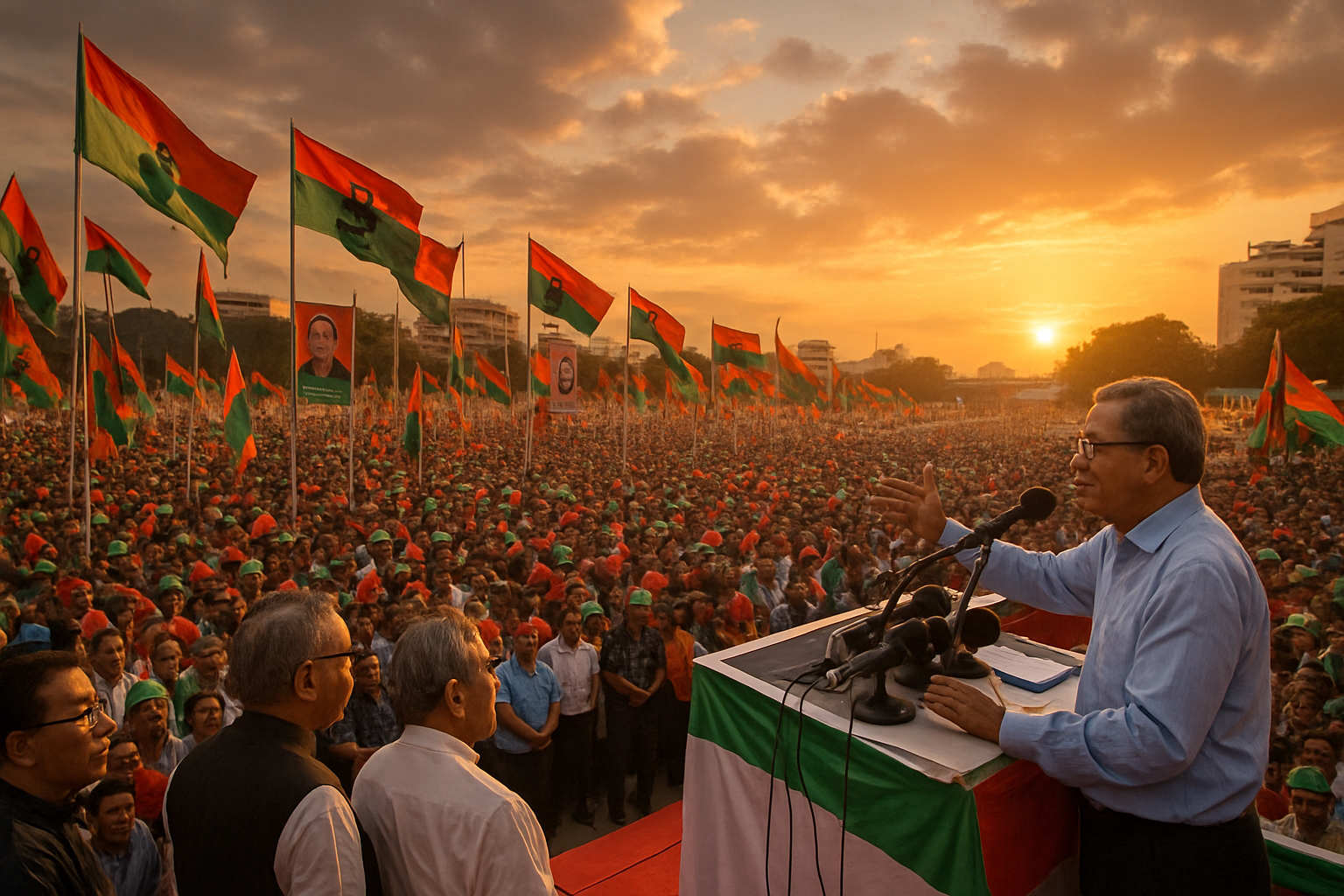
Political parties across Bangladesh are intensifying their final campaign push as the nation prepares for parliamentary elections on February 12, 2026, marking what many observers describe as a crucial test of the country's democratic restoration efforts following years of political upheaval.
With just days remaining before voters head to the polls, the campaign has reached fever pitch as parties make their final appeals for support in what is being characterized as one of the most significant elections in Bangladesh's recent history. The stakes are particularly high as the nation seeks to consolidate democratic governance while addressing pressing economic and social challenges.
BNP Chairman Launches Historic Campaign Rally
Bangladesh Nationalist Party (BNP) Chairman Tarique Rahman electrified thousands of supporters during a massive rally in Thakurgaon, marking his first public appearance in the region since 2003. The gathering, which drew crowds from across the district, highlighted both the party's organizational strength and the intense popular interest surrounding these elections.
Rahman positioned the February 12 vote as "extremely important for national reconstruction," promising comprehensive reforms that would benefit all segments of society. His address focused heavily on economic development initiatives, including ambitious plans for airport infrastructure development and the implementation of a Family Cards system to support household economics.
"The BNP seeks to rebuild the country with the support, love and strength of the people. This election represents our opportunity to create a Bangladesh that works for everyone."
— Tarique Rahman, BNP Chairman
The Thakurgaon rally demonstrated what observers described as "communal harmony and election fervor," with participants representing diverse backgrounds united in their calls for democratic renewal. Rahman's appearance marked a significant moment in the campaign, as his physical presence energized party workers and supporters who have been working to mobilize voters across rural constituencies.
Competitive Electoral Landscape Emerges
The electoral contest has intensified across multiple constituencies, with parties competing vigorously for parliamentary seats. In Rajshahi-6, a particularly closely watched race has emerged where the BNP seeks to reclaim territory while Jamaat-e-Islami aims to capture new ground, highlighting the significant shifts taking place in local political dynamics.
The competition reflects broader patterns of political realignment occurring throughout Bangladesh, with traditional party strongholds being challenged and new alliances forming in response to changing voter preferences. This has created an atmosphere of genuine electoral uncertainty that has energized both campaigning efforts and public interest.
Multiple political parties and alliances are competing for control of the National Parliament, creating what analysts describe as the most competitive electoral environment Bangladesh has experienced in recent years. The campaign has featured intensive rallies, digital engagement initiatives, and sophisticated social media political communication strategies.
Historic Overseas Voting Initiative
One of the most significant developments in this election cycle has been the implementation of Bangladesh's first-ever overseas voting system. Over 400,000 expatriate postal ballots have arrived in the country under the new Integrated Citizen Participation and Voting (ICPV) system, representing a historic expansion of democratic participation.
This initiative has been particularly exciting for the British Bangladeshi community, which represents one of the largest diaspora populations. However, the implementation has not been without challenges, with some expatriates reporting difficulties with registration processes and concerns about ballot accessibility in certain regions.
The success of overseas voting could establish Bangladesh as a regional leader in diaspora political participation, potentially influencing neighboring countries to adopt similar systems. The initiative represents a significant technological and logistical achievement for the Election Commission, which has had to coordinate ballot distribution and collection across multiple continents.
International Oversight and Support
The elections are receiving unprecedented international attention, with Japan deploying a comprehensive Election Observer Mission led by Watanabe Masato, a former ambassador with extensive diplomatic experience. The mission, running from February 6-14, includes officials from Japan's Ministry of Foreign Affairs and Embassy personnel, providing crucial international oversight.
This international engagement supports the fair implementation of electoral processes and demonstrates the global community's investment in Bangladesh's democratic success. The presence of international observers adds credibility to the electoral process and provides an additional layer of accountability for election administration.
The Election Commission has implemented comprehensive security protocols, enhanced voter education programs, and technological improvements for ballot counting to ensure the integrity of the electoral process. These measures reflect lessons learned from previous electoral experiences and demonstrate the commission's commitment to conducting free and fair elections.
Political Tensions and Accountability Demands
The campaign has not been without controversy, with political tensions surfacing over various issues including governance accountability and policy directions. Youth and Family Affairs Adviser Asif Mahmud has raised concerns about potential obstacles to implementing key reforms, including trials related to past mass killings and the July Charter initiatives.
These tensions reflect deeper debates about Bangladesh's political future and the balance between continuity and change. Voters are demanding increased accountability, transparency, and effective governance from their political leaders, creating pressure on all parties to articulate clear policy platforms and demonstrate their capacity for responsible leadership.
The electoral campaign has featured debates over economic development strategies, approaches to youth and women's empowerment, and the role of international cooperation in Bangladesh's development trajectory. These discussions have elevated the quality of political discourse and provided voters with substantive policy choices.
Logistical Challenges and Preparations
The massive scale of electoral preparations has created some logistical challenges, particularly regarding vehicle requisitioning for election operations. The Election Commission has issued directives ensuring that vehicle requisitioning is conducted strictly in accordance with established regulations, following concerns raised by vehicle owners about the broad scope of government requisition powers.
Despite these challenges, preparations appear to be proceeding smoothly, with election officials expressing confidence in their ability to conduct the vote successfully. The commission has coordinated with security forces, civil administration, and international partners to ensure comprehensive election coverage across the country's diverse geographic and demographic landscape.
Stakes for Democratic Consolidation
Chief Adviser Professor Muhammad Yunus has emphasized the critical nature of the coming week, describing it as "very crucial" for Bangladesh's democratic future. His comments reflect the broader recognition that these elections represent more than a routine transfer of power – they constitute a fundamental test of Bangladesh's capacity for democratic consolidation.
"The main challenge is to make the voting 'perfect' and the next week is very crucial for our democratic journey."
— Professor Muhammad Yunus, Chief Adviser
The elections occur amid heightened political expectations, with citizens demanding accountability, transparency, and effective governance from their elected representatives. Success in conducting free, fair, and credible elections could strengthen Bangladesh's position as a stable democracy in South Asia and enhance its international standing.
The results will have significant implications for Bangladesh's foreign policy orientation, economic development strategies, and regional relationships within South Asia. International observers are monitoring the electoral process as an indicator of democratic governance capacity and its potential influence on broader regional cooperation initiatives.
Campaign Dynamics and Voter Engagement
The final phase of campaigning has been characterized by intensive political rallies, community meetings, and grassroots mobilization efforts. Political parties have invested heavily in digital engagement and social media communication to reach younger voters, while maintaining traditional campaign methods to connect with rural and older constituencies.
Voter education initiatives have been expanded to ensure citizens understand the electoral process, including the new overseas voting system and technological improvements in ballot counting. These efforts reflect the Election Commission's commitment to maximizing legitimate voter participation while maintaining electoral integrity.
The campaign has demonstrated the vibrancy of Bangladesh's civil society, with numerous organizations working to promote voter awareness, electoral transparency, and peaceful political competition. This civic engagement represents a positive development for democratic consolidation and suggests strong public investment in the electoral process.
Looking Ahead to Election Day
As Bangladesh approaches February 12, 2026, the convergence of domestic political mobilization, international oversight, and technological innovation in electoral administration creates the conditions for what could be a landmark moment in the nation's democratic development.
The success of these elections will be measured not only by their technical execution but also by their capacity to produce legitimate governance that addresses citizen needs while maintaining democratic institutions and international cooperation. The results will influence Bangladesh's trajectory for years to come and could provide a model for other nations seeking to strengthen their democratic systems.
The intensive campaigning, unprecedented overseas voting, and substantial international engagement all point to February 12, 2026, as a date that may be remembered as a turning point in Bangladesh's democratic journey, representing either successful consolidation of democratic gains or a critical test that shapes the country's political future for the next generation.