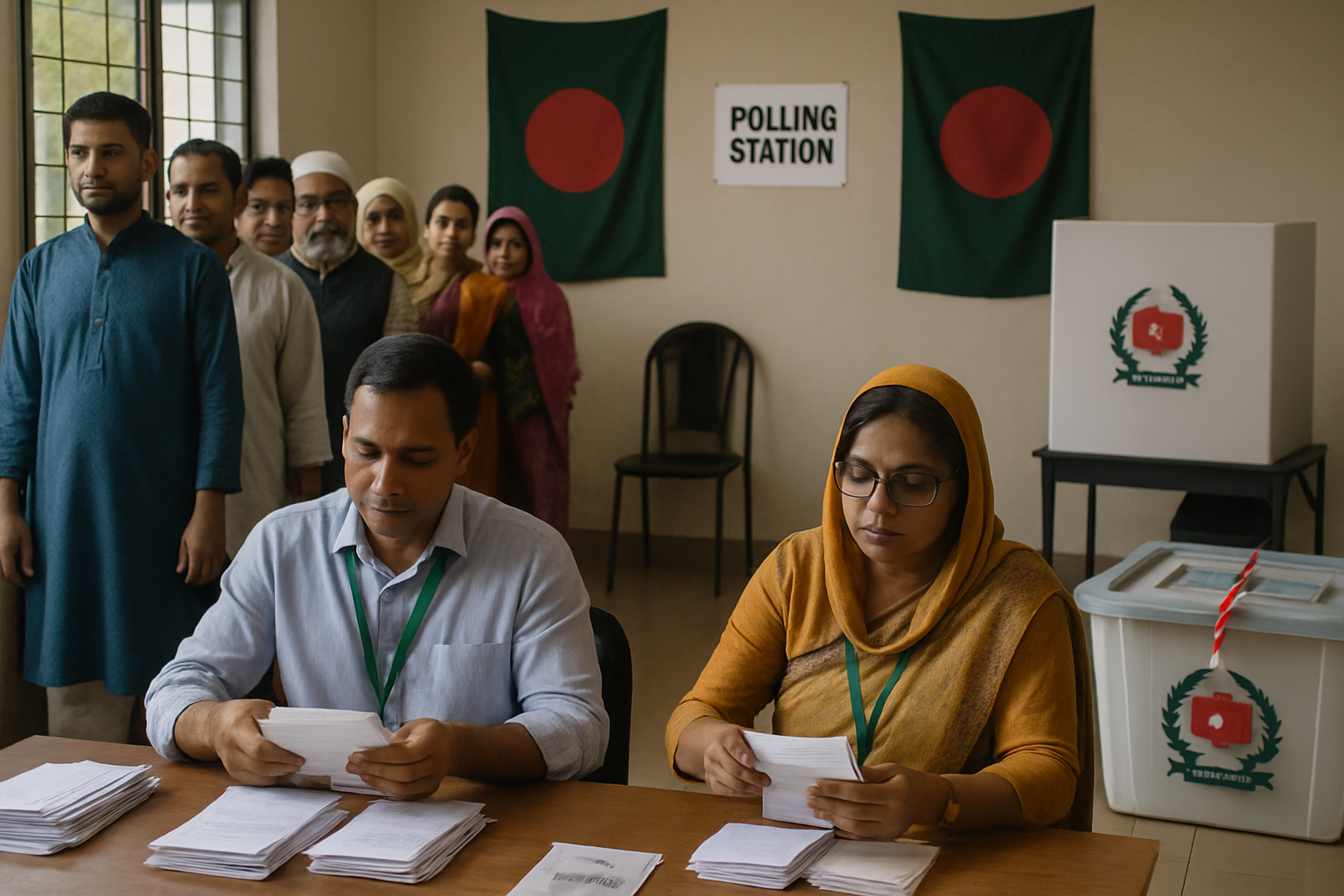
Bangladesh stands at a critical juncture as the nation prepares for its February 12, 2026 parliamentary elections, with the arrival of over 400,000 expatriate postal ballots marking an unprecedented expansion of democratic participation for the Bangladeshi diaspora worldwide.
The 13th national parliamentary election represents more than a routine democratic exercise—it has emerged as a pivotal moment for national reconstruction and democratic renewal, according to key political leaders and international observers. The Election Commission has already begun distributing postal ballots to voters residing both inside and outside the country under the International Citizens Postal Voting (ICPV) system, representing a historic first for Bangladesh's electoral process.
BNP's National Reconstruction Vision
Bangladesh Nationalist Party (BNP) Chairman Tareque Rahman has positioned this election as "extremely important for national reconstruction," delivering this message during a major rally in Thakurgaon on Saturday morning. Speaking to thousands of supporters at the Government High School ground, Rahman outlined an ambitious development agenda that includes constructing an airport in Thakurgaon if his party wins and forms the government.
"For over a decade, the people of the country have been unable to exercise their voting rights. On February 12, people will cast their votes. This election is not just for electing public representatives, but also extremely important for the reconstruction of the country."
— Tareque Rahman, BNP Chairman
Rahman's appearance in Thakurgaon marked his first visit to the region since 2003, drawing massive crowds and demonstrating what observers described as remarkable "communal harmony and election fervor." The rally showcased the intense political energy surrounding the upcoming election, with supporters welcoming the BNP leader in unprecedented numbers.
Revolutionary Overseas Voting Initiative
The arrival of over 400,000 expatriate postal ballots represents a groundbreaking expansion of Bangladesh's democratic process. This initiative enables millions of Bangladeshi citizens living abroad to participate directly in their homeland's political future, marking the first time in the nation's history that overseas voters can cast ballots in a general election.
The International Citizens Postal Voting system has been implemented alongside domestic postal voting arrangements, creating what election officials describe as the most inclusive electoral process in Bangladesh's democratic history. The Election Commission has coordinated with diplomatic missions worldwide to ensure ballot distribution and collection mechanisms function effectively across multiple time zones and jurisdictions.
This expansion of voting rights has particular significance for the British Bangladeshi community and diaspora populations across the Middle East, North America, and Europe, who have long advocated for meaningful political participation in their country of origin.
International Oversight and Legitimacy
The February 12 elections have attracted significant international attention, with Japan deploying an Election Observer Mission led by Watanabe Masato, a former ambassador, from Monday through February 14. The mission consists of Ministry of Foreign Affairs and Embassy officials, providing crucial international oversight to support fair election implementation.
International observers view the successful implementation of overseas voting as a potential model for other South Asian nations, with the initiative representing a major step forward in democratic participation and inclusion. The presence of international monitors underscores the global significance of Bangladesh's electoral process and its implications for regional democratic development.
Political Stakes and National Transformation
Rahman's campaign messaging has emphasized the transformative potential of the February 12 election, arguing that the vote represents an opportunity to address what he describes as systematic deprivation of both political and economic rights. The BNP chairman specifically criticized previous ruling parties for failing to make women and youth economically self-reliant, positioning his party's platform as a comprehensive approach to national development.
The BNP's campaign promises include the introduction of "Family Cards" and agricultural support systems designed to strengthen rural economies and social safety nets. These proposals reflect broader concerns about economic inequality and social justice that have become central themes in the 2026 electoral discourse.
Competing Political Visions
Al Jazeera's analysis of the key players and parties reveals a complex political landscape where multiple parties and individuals could significantly shape the election outcome. The competition extends beyond traditional party lines, with various political alliances and coalitions positioning themselves as alternatives to the status quo.
The election occurs against a backdrop of heightened political expectations, with voters expressing strong demands for accountability, transparency, and effective governance. Public opinion polling suggests that economic management, infrastructure development, and social welfare policies have emerged as decisive issues influencing voter preferences across demographic groups.
Electoral Infrastructure and Security
The Election Commission has implemented comprehensive security protocols and voter education programs to ensure the integrity of the electoral process. Technological improvements have been introduced to enhance ballot counting efficiency and reduce the potential for disputes or irregularities.
The logistics of managing both domestic and international postal voting systems simultaneously has required unprecedented coordination between electoral authorities, diplomatic missions, and international postal services. Election officials report that the complexity of the operation has been successfully managed through extensive planning and stakeholder cooperation.
Democratic Consolidation and Regional Implications
The success of Bangladesh's February 12 elections could establish the country as a leader in diaspora political participation, potentially influencing neighboring countries to adopt similar overseas voting mechanisms. The election represents a critical test of Bangladesh's democratic institutions and their capacity to manage complex electoral processes while maintaining public confidence.
The international observer presence and global media attention reflect broader regional concerns about democratic consolidation in South Asia. Success in implementing free, fair, and inclusive elections could strengthen Bangladesh's position in regional diplomatic relationships and international cooperation frameworks.
Campaign Dynamics and Public Engagement
The final days of campaigning have been marked by intensive political rallies and public events across the country. The enthusiasm demonstrated at Rahman's Thakurgaon rally reflects broader patterns of high public engagement with the electoral process, suggesting strong voter turnout expectations for February 12.
Political parties have utilized both traditional campaign methods and digital platforms to reach voters, with social media playing an increasingly important role in political communication. The integration of overseas voters through digital engagement strategies has created new dimensions in campaign organization and voter outreach.
Looking Ahead: February 12 and Beyond
As Bangladesh approaches February 12, the convergence of domestic political competition and international oversight creates a unique moment in the nation's democratic evolution. The successful implementation of overseas voting, combined with robust international monitoring, positions this election as potentially transformative for Bangladesh's democratic trajectory.
The results will have significant implications for Bangladesh's foreign policy orientation, economic development strategies, and regional relationships in South Asia. International observers are particularly focused on the electoral administration's capacity to manage complex logistics while maintaining democratic principles and voter access.
The February 12, 2026 elections represent more than a routine transfer of power—they embody Bangladesh's aspirations for democratic renewal, inclusive governance, and national reconstruction. The success of this electoral process could provide a template for democratic innovation that extends far beyond Bangladesh's borders, influencing democratic development across South Asia and beyond.