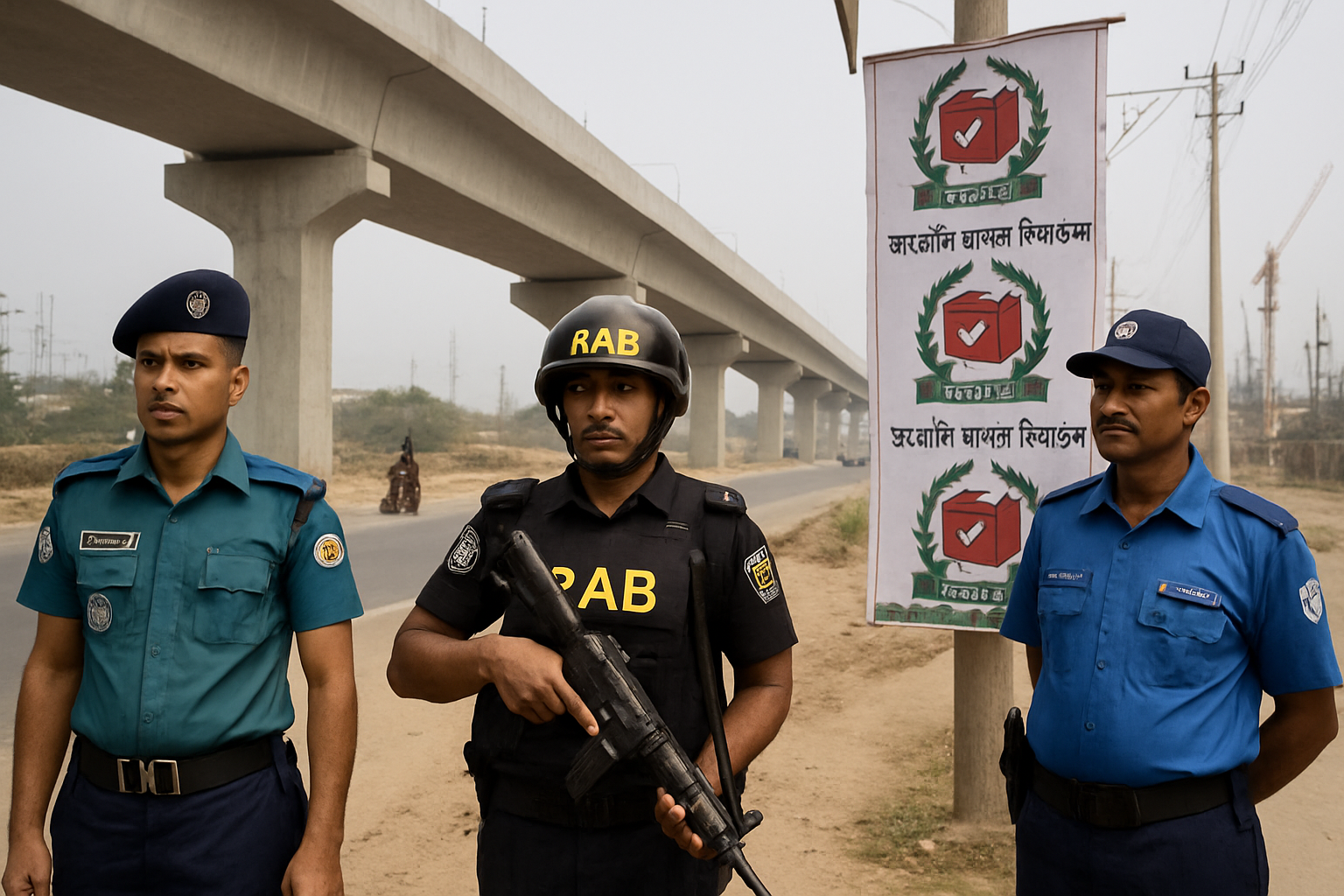
Bangladesh has initiated the deployment of approximately 900,000 security personnel from various law enforcement agencies to ensure the peaceful conduct of the 13th national parliamentary election scheduled for February 12, 2026, while simultaneously grappling with significant delays in critical infrastructure projects including the Hili land port highway upgrade.
The Ministry of Home Affairs announced that members of the Police, Border Guard Bangladesh (BGB), Ansar and Village Defence Party (VDP), Coast Guard, and armed forces will work under the "In Aid to Civil Power" framework to assist civilian administration during the election period. The deployment represents one of the largest peacetime security operations in Bangladesh's history.
Comprehensive Security Framework for Democratic Process
According to the official circular, 1,051 executive magistrates have already commenced their duties ahead of the election. Additionally, 157,000 police personnel are scheduled for deployment on February 11, the day before voting begins. Ansar forces began their field-level deployment on February 8, as part of the systematic security rollout.
The unprecedented scale of the security operation reflects the government's commitment to conducting "free, fair, impartial, and peaceful" elections amid a politically charged environment. Among the 900,000 deployed personnel, approximately 550,000 members represent the core security contingent responsible for maintaining order across the country's diverse geographical and political landscape.
This election marks a historic milestone with the introduction of overseas voting for the first time, allowing over 400,000 expatriate Bangladeshis to participate through the International Commonwealth Parliamentary Vote (ICPV) system. The initiative has generated particular excitement among the British Bangladeshi community, though some have reported registration challenges that election authorities are working to address.
Infrastructure Delays Expose Development Challenges
While the nation prepares for democratic participation, significant infrastructure projects continue to face substantial delays and cost overruns. The Hili land port highway upgrade, originally scheduled for completion by December 2024, has been granted a no-cost extension until December 2025, with project costs jumping to Tk588 crore (approximately $49.8 million).
The highway project, crucial for facilitating trade between Bangladesh and India through the Hili land port, represents broader challenges facing the country's infrastructure development initiatives. The delays highlight ongoing issues with project management, resource allocation, and coordination between various government agencies responsible for major development projects.
International Oversight and Regional Implications
Japan has deployed an Election Observer Mission led by Watanabe Masato, former ambassador, consisting of Ministry of Foreign Affairs and Embassy officials who will monitor the democratic process from February 6-14. This international oversight provides crucial external validation for the electoral process and supports fair election implementation.
The success of Bangladesh's first overseas voting initiative could establish the country as a regional leader in diaspora political participation, potentially influencing neighboring South Asian countries to adopt similar measures. The Election Commission has implemented comprehensive security protocols, voter education programs, and technological improvements for ballot counting to ensure the integrity of this historic democratic exercise.
Economic and Regional Context
The election occurs against a backdrop of economic challenges and infrastructure development needs that have become central campaign issues. Multiple political parties and alliances are competing for control of the National Parliament, with voters expressing demands for accountability, transparency, and effective governance.
BNP Chairman Tareque Rahman made his first visit to Thakurgaon since 2003, declaring the election "extremely important for national reconstruction" and promising airport development and economic reforms including Family Cards. His rally drew thousands, demonstrating what observers described as "communal harmony and election fervor."
"This election is extremely important for national reconstruction. We promise comprehensive development that addresses both immediate needs and long-term infrastructure challenges."
— Tareque Rahman, BNP Chairman
Strategic Significance for South Asian Democracy
The February 12 elections carry implications far beyond Bangladesh's borders. Success in conducting free and fair elections with historic overseas participation could enhance Bangladesh's standing as a stable democracy in South Asia. The results will impact foreign policy orientation, economic development strategies, and regional relationships within the broader South Asian cooperation framework.
However, infrastructure challenges like the Hili highway delays underscore the need for improved project management and resource allocation. The highway project's importance extends beyond domestic connectivity, serving as a crucial trade corridor that impacts regional economic integration efforts.
Democratic Consolidation Amid Development Challenges
The simultaneous occurrence of democratic exercises and infrastructure setbacks reflects Bangladesh's broader developmental paradox. While the country demonstrates capacity for organizing complex democratic processes involving nearly a million security personnel and international oversight, it continues to struggle with timely completion of essential infrastructure projects.
Chief Adviser Professor Muhammad Yunus described the coming week as "very crucial," emphasizing that the main challenge lies in achieving "perfect" voting execution. This sentiment reflects the high stakes involved in consolidating democratic institutions while addressing persistent development challenges.
Looking Forward: Implications for Governance and Development
The outcome of the February 12 elections will determine Bangladesh's political trajectory for years to come. Voters are demanding not only democratic legitimacy but also effective governance that can address infrastructure delays, economic challenges, and development needs.
The success of overseas voting could establish new precedents for diaspora participation in South Asian democracies, while the resolution of infrastructure delays will test the next government's capacity for effective project management and economic development.
As Bangladesh navigates this critical juncture, the intersection of democratic consolidation and infrastructure development will likely define the country's progress toward its development goals and regional aspirations in the years ahead.