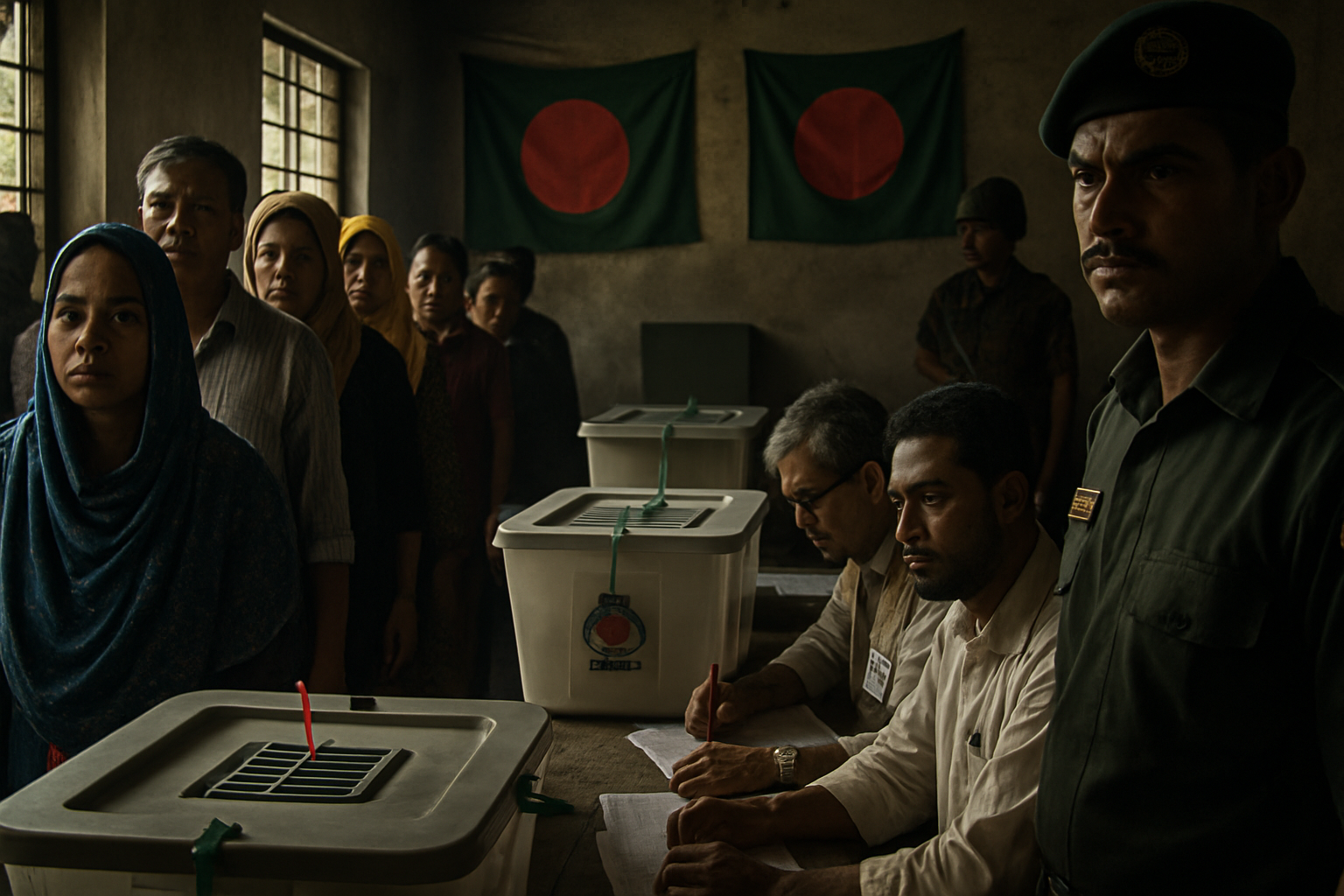
Bangladesh is grappling with escalating security concerns as the nation prepares for its historic February 12 parliamentary elections, with authorities identifying two-thirds of polling centers in Rajshahi as high-risk and reports of crude bomb explosions and political violations emerging across the country.
The mounting tensions underscore the challenges facing Bangladesh's first democratic election since the student-led uprising ended Sheikh Hasina's 15-year rule in August 2024, with the Awami League now banned from participation in what observers are calling a pivotal moment for the nation's democratic future.
Security Incidents Rock Pre-Election Period
In a troubling escalation of pre-election violence, crude bomb explosions occurred at three polling centers in Gopalganj on Tuesday evening, causing panic among local residents though no injuries were reported. Police have launched investigations into the incidents and strengthened security in the affected areas as concerns mount about election safety.
The security situation in Rajshahi has become particularly concerning, with authorities identifying two-thirds of polling centers as risky. According to police officials, each high-risk polling station will be staffed with four armed police personnel, two armed Ansar members, and ten police and female Ansar members equipped with batons to ensure voter safety and electoral integrity.
Adding to the security concerns, a Jamaat-e-Islami worker, Habibur Rahman, was arrested in Sutrapur carrying 6,000 taka in cash, allegedly for distribution to voters. The money was confiscated in favor of the state, and Rahman was sentenced to two days in jail, highlighting authorities' efforts to combat vote-buying ahead of the crucial polls.
Political Tensions Intensify
The political landscape has grown increasingly tense as major parties position themselves for the historic election. The Bangladesh Nationalist Party (BNP) has issued stern warnings about any attempts to disrupt the electoral process, with party leader Nazrul Islam Khan urging the Election Commission to take strict action amid reports of code violations and unrest across the country.
"Any attempt to thwart elections will face mass resistance,"
— Nazrul Islam Khan, BNP Leader
The BNP's warning comes as the party, led by Tarique Rahman, positions itself as a frontrunner in the upcoming election. In a significant political development, Rahman visited ailing party leader Rizvi at Square Hospital, where Rizvi has been admitted due to breathing-related health issues, demonstrating the party's unity during this critical period.
Government Transition Preparations
Meanwhile, the interim government under Chief Adviser Professor Muhammad Yunus continues to prepare for a smooth transition of power. Current advisers have been instructed to continue their duties until a new cabinet is formed after the polls, with key meetings and file signings paused as some refrain from exercising executive powers during this transitional period. Advisers are scheduled to report on February 15 as the new government takes shape.
Historic Context and International Significance
These elections represent a watershed moment for Bangladesh, marking the first time since independence in 1971 that Islamist forces appear poised for their strongest electoral showing. With the long-dominant Awami League barred from participating following the International Crimes Tribunal's conviction of former Prime Minister Sheikh Hasina in November for obstructing justice and ordering killings during the July 2024 uprising, the political landscape has been fundamentally transformed.
An Islamist alliance, strengthened by the student-led National Citizen Party (NCP), has emerged as a powerful contender, reshaping expectations about the Muslim-majority nation's political future. This dramatic shift follows the student-led uprising that ended Hasina's iron-fisted rule, with senior Awami League leaders now facing trial over the deaths of hundreds during the unrest.
Sheikh Hasina, currently in exile in neighboring India, was convicted by Bangladesh's International Crimes Tribunal of serious charges including obstructing justice, ordering killings, and failing to prevent punitive violence during the protests that ultimately led to her downfall.
Security Deployment and Electoral Preparations
The scale of security preparations reflects the gravity of the situation, with authorities deploying unprecedented resources to ensure peaceful elections. The comprehensive security apparatus includes not only police and Ansar forces but also coordination with other law enforcement agencies to maintain order during the voting process.
Election officials are working around the clock to address logistical challenges while ensuring that democratic processes can proceed despite the security concerns. The identification of high-risk polling centers allows for targeted security deployment, though it also highlights the extent of potential threats to the electoral process.
International Oversight and Democratic Stakes
International observers are closely monitoring the situation, recognizing that these elections will serve as a crucial test of Bangladesh's democratic resilience following the transformative events of 2024. The outcome will significantly impact the nation's political trajectory, regional relationships, and its role in South Asian cooperation.
The success of these elections could establish Bangladesh as a model for democratic transition in the region, while failure might undermine institutional credibility and complicate the country's path toward stable governance. The international community's attention reflects the broader implications of Bangladesh's democratic experiment for regional stability and democratic governance patterns across South Asia.
As February 12 approaches, the convergence of security challenges, political tensions, and historical significance makes these elections among the most consequential in Bangladesh's history. The nation stands at a crossroads, with the outcome determining not just the next government, but the future trajectory of its democratic institutions and political culture.