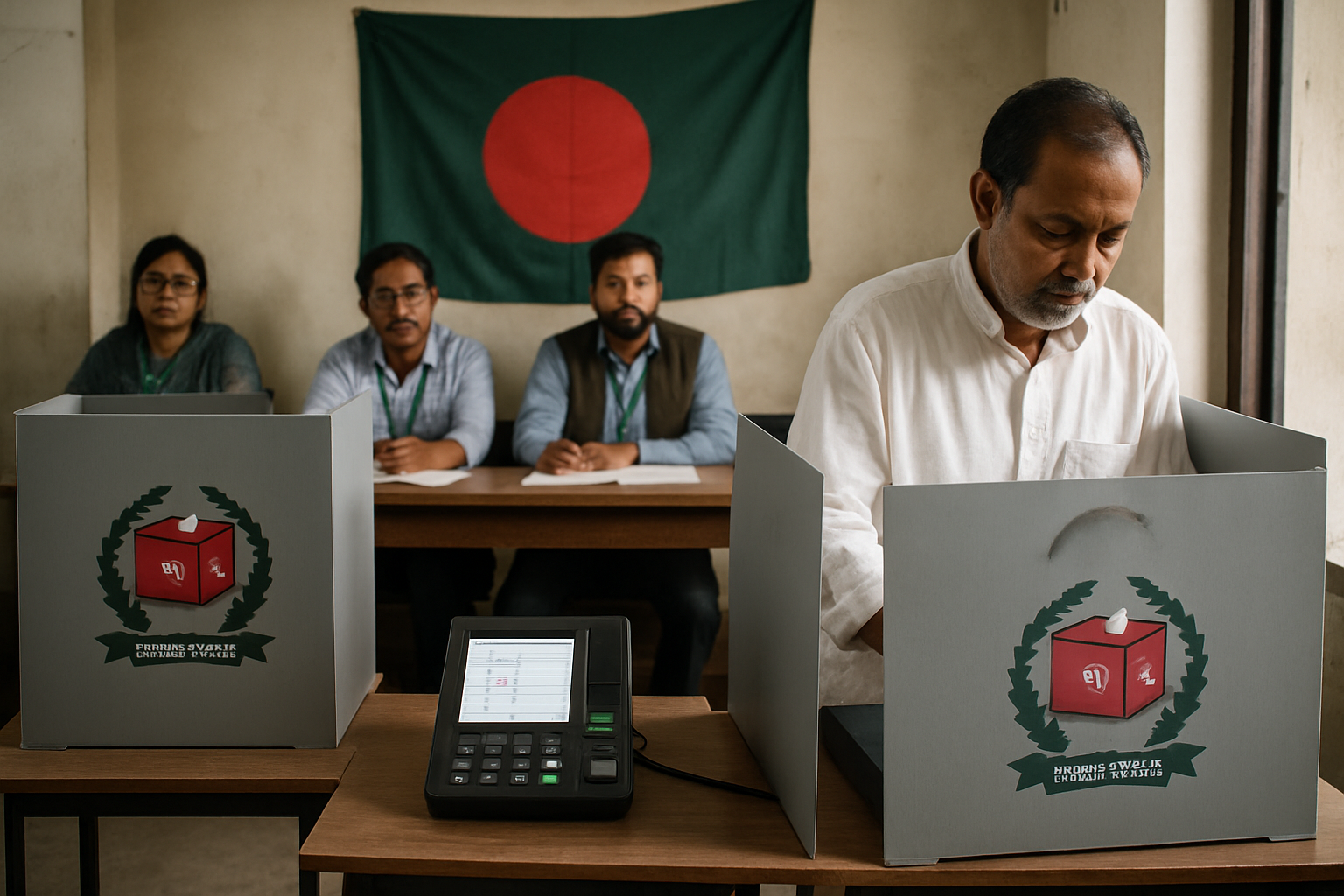
Bangladesh stands at a historic crossroads as it prepares for the 13th National Parliament Election on February 12, 2026, marking the first democratic vote since the mass uprising that ended Sheikh Hasina's 15-year rule in August 2024.
Massive Security Deployment Addresses Tensions
Police Inspector General Baharul Alam announced an unprecedented three-tier security system for the elections, with 187,603 police personnel deployed nationwide. The comprehensive security framework encompasses polling centers, mobile teams, and striking forces, supported by army, navy, and Ansar units.
Authorities have identified 8,770 vulnerable centers across the country, with 24,000 polling stations designated for special surveillance through CCTV cameras and body cameras. "If any violence occurs at a center, voting at that center will be stopped immediately," Alam stated during a press conference at Police Headquarters.
The Election Commission has implemented strict protocols, including specific restrictions on mobile phone use at polling stations. Only five categories of personnel—presiding officers, chief police officers, two Ansar members using the 'Election Protection 2026' app, and specific law enforcement officials—are authorized to carry mobile devices while on duty.
Political Landscape Transformed
The election represents a fundamental shift in Bangladesh's political dynamics. The Awami League, which ruled for 15 years under Sheikh Hasina, has been banned from participating, raising questions about the legitimacy of the democratic process while creating opportunities for new political formations.
According to international media analysis, the election is being watched as a critical test of Bangladesh's democratic institutions following what has been described as a "Gen Z-led uprising" that dramatically altered the country's political trajectory. The interim government, led by Chief Adviser Professor Muhammad Yunus, has positioned this election as crucial for the nation's democratic renewal.
"Fair polls will create opportunity for state reforms. There is no scope for 'election engineering' this time."
— BNP Leader, warning against electoral manipulation
International Oversight and Trade Developments
The election is being conducted under significant international scrutiny, with multiple observer missions deployed to ensure transparency. Japan has sent an Election Observer Mission, while European Union representatives are among the 200 international observers monitoring the democratic process.
Concurrent with the electoral preparations, Bangladesh has secured a significant trade agreement with the United States. The deal provides for a reduced tariff rate of 19% for most exports to the US, representing a 1% improvement from previous rates. Notably, textile and apparel goods produced using US cotton will receive zero tariffs, potentially transforming Bangladesh's crucial garment industry.
Chief Adviser Muhammad Yunus announced the trade breakthrough, stating that Washington has committed to establishing mechanisms for certain textile exports using US-produced materials to receive preferential treatment in American markets. This development comes as Bangladesh seeks to diversify its economic partnerships during its democratic transition.
Election Administration and Process
The Election Commission has taken extraordinary measures to ensure the integrity of the voting process. A comprehensive directive signed by Senior Assistant Secretary Md. Shahidul Islam outlines strict protocols for election day operations, including limitations on technology use and enhanced supervision mechanisms.
Chief Adviser Yunus is scheduled to address the nation at 7 PM on election day, with his speech focusing on both the parliamentary elections and the simultaneous July Charter referendum scheduled for the same date. This dual democratic exercise represents Bangladesh's attempt to chart a new constitutional and political course following the dramatic events of 2024.
Regional and International Implications
The election results will significantly impact Bangladesh's position in South Asian geopolitics and its relationships with major powers including China, India, and the United States. The outcome will influence the country's foreign policy orientation, particularly regarding regional cooperation initiatives and economic partnerships.
International observers are monitoring whether Bangladesh can establish itself as a model for democratic transition in the region. Success could influence neighboring countries' approaches to democratic governance and regional cooperation frameworks.
The election occurs within the broader context of changing US-Bangladesh relations, evidenced by the new trade agreement and increased diplomatic engagement. This represents a potential shift from previous alignments and could reshape Bangladesh's role in Indo-Pacific strategic considerations.
Challenges and Opportunities
Despite the comprehensive security preparations, significant challenges remain. The exclusion of the Awami League, while reflecting the political realities following the 2024 uprising, creates questions about inclusive democracy and national reconciliation. The interim government must balance accountability for past governance with the need for broader political participation.
Economic pressures, including the need to address development challenges while managing the transition, add complexity to the electoral environment. The new trade agreement with the United States provides some economic optimism, but sustainable development will require continued international engagement and domestic stability.
The election's conduct will serve as a crucial test of Bangladesh's democratic institutions and their ability to manage political transition while maintaining stability and legitimacy. International partners are closely monitoring whether the democratic process can address citizen demands for accountability, transparency, and effective governance.
Historical Significance
February 12, 2026, represents more than a routine electoral exercise—it marks a potential turning point in Bangladesh's democratic development. The election follows an unprecedented popular uprising that demonstrated the power of mass mobilization in effecting political change, establishing new expectations for democratic accountability.
The combination of massive security deployment, international oversight, and significant economic agreements reflects both the opportunities and uncertainties facing Bangladesh as it seeks to consolidate democratic gains while addressing practical governance challenges.
Success in conducting free, fair, and peaceful elections could establish Bangladesh as a regional leader in democratic governance and post-conflict transition. The results will determine not only the country's immediate political trajectory but also its long-term position as a stable democracy in an increasingly complex regional environment.