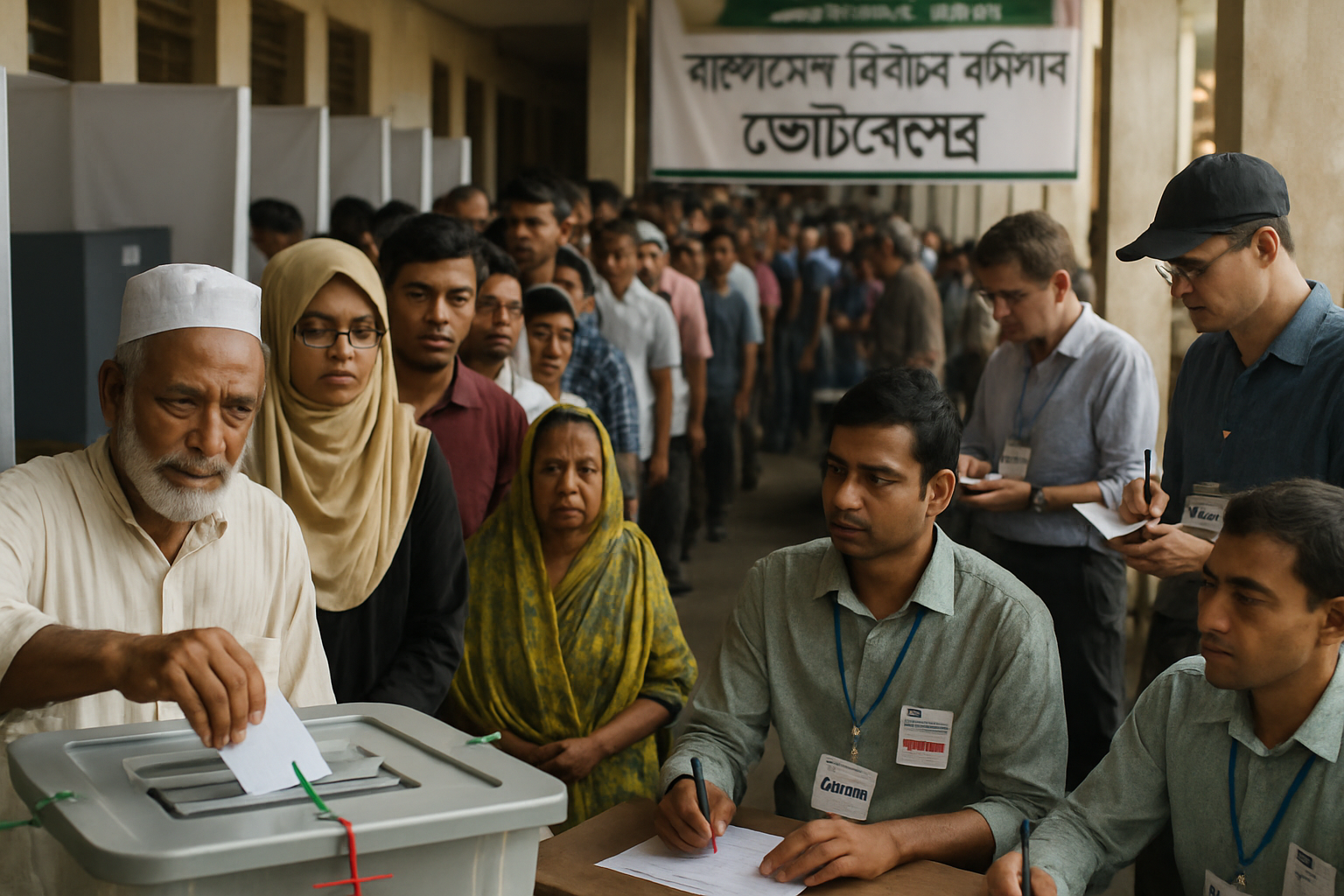
Bangladesh is conducting its first parliamentary election since the student-led uprising that toppled Sheikh Hasina's government, marking a pivotal moment in the nation's democratic transition as 883,000 postal ballots from expatriates and election officials have reached returning officers ahead of voting on February 12, 2026.
Chief Election Commissioner AMM Nasir Uddin reaffirmed the commission's "unwavering commitment to delivering a peaceful, credible and participatory election" as the country prepares for what analysts describe as its most significant democratic test in over a decade. The election represents the culmination of the mass student-led movement that successfully ended Hasina's increasingly autocratic rule.
Unprecedented International Oversight
A total of 394 international observers and 197 foreign journalists are monitoring the election process, more than double the number from the controversial January 7, 2024 general election. This massive international presence underscores the global significance of Bangladesh's democratic transition following the historic student uprising.
Among the observer missions is Japan's Election Observer Mission, led by former ambassador Watanabe Masato, consisting of Ministry of Foreign Affairs and Embassy officials providing crucial international legitimacy to the electoral process. The European Union has deployed over 200 observers from 27 member states plus Canada, Norway, and Switzerland in the largest international election observation mission in Bangladesh's recent history.
Historic Overseas Voting Initiative
For the first time in Bangladesh's electoral history, expatriate citizens have been able to participate through postal voting. Of the 766,862 ballots dispatched to overseas voters, 481,185 have been cast and returned, with 444,436 successfully reaching returning officers. This groundbreaking initiative has been particularly significant for the British Bangladeshi community, though some have reported registration challenges.
Within Bangladesh, 760,898 ballots were distributed to various locations, with 438,951 cast ballots reaching returning officers. The Election Commission announced that returning officers will complete the count of postal ballots by 4:30 PM on February 12.
Political Landscape Transformed
The election features a dramatically altered political landscape following the banning of Sheikh Hasina's Awami League after the August 2024 uprising. The Bangladesh Nationalist Party (BNP), led by Tarique Rahman, is widely seen as the frontrunner, while their main rival Jamaat-e-Islami, led by Shafiqur Rahman, has formed an alliance with the student-led National Citizen Party.
"The young leader of the protest-born National Citizen Party has teamed up with Jamaat-e-Islami to contest elections."
— Al Jazeera Analysis
The campaign's final day featured tens of thousands at rival rallies across Dhaka, with parties invoking the legacy of the 2024 uprising that ended Hasina's rule. This represents a fundamental test of democratic consolidation following the unprecedented popular mobilization that transformed Bangladesh's political landscape.
Youth-Driven Democratic Movement
More than 55 million voters – approximately 44 percent of the electorate – are aged between 18 and 37, underscoring the growing political weight of young people who were instrumental in the uprising against Hasina's government. The demographic shift highlights how the Gen Z-led movement has fundamentally altered Bangladesh's political dynamics.
The student-led National Citizen Party, born from the protest movement, represents this generational change in Bangladeshi politics. Led by prominent uprising figure Nahid Islam, the party has formed what many describe as an "uneasy alliance" with the historically Islamist Jamaat-e-Islami, creating one of the most intriguing political partnerships in the election.
Comprehensive Security Arrangements
The government has declared a four-day holiday beginning February 11, with all government, semi-government, autonomous and private offices along with educational institutions remaining closed on February 11 and 12 to ensure smooth electoral operations.
Security forces have deployed unprecedented personnel numbers across the country, with comprehensive arrangements including multiple tiers of protection at polling stations. The Election Commission has identified vulnerable centers requiring special attention, with enhanced CCTV monitoring and body camera surveillance at strategic locations.
International Stakes and Regional Implications
Chief Adviser Professor Muhammad Yunus, who has led the interim government since Hasina's ouster, described the election week as "very crucial" with the main challenge being "perfect voting execution." The international community is closely watching as Bangladesh's success could establish it as a regional democratic model following its unprecedented popular uprising.
The election occurs against the backdrop of significant diplomatic developments, including a breakthrough US-Bangladesh trade agreement that provides a 19% tariff rate and zero tariffs for textiles using US materials, signaling shifted international relations during the democratic transition.
Challenges and Expectations
Despite the optimism surrounding the democratic transition, challenges remain. The Election Commission has faced concerns about vehicle requisitioning for electoral duties, and some overseas voters have reported difficulties with the new postal ballot system. Additionally, there have been isolated incidents including four polling centers being set on fire in Netrakona, highlighting ongoing security challenges.
Youth Adviser Asif Mahmud has raised concerns about potential obstacles to mass killing trials and implementation of the July Charter under a future BNP government, reflecting ongoing tensions around transitional justice and democratic accountability.
Historical Significance
The February 12 election represents far more than a routine power transfer. It marks the first democratic contest since the student-led uprising that ended Sheikh Hasina's 15-year rule and banned the Awami League from participation. The outcome will determine Bangladesh's foreign policy orientation, economic development trajectory, and role in regional South Asian cooperation.
Success in conducting free and fair elections could position Bangladesh as a model for democratic renewal in the region, while failure might impact the credibility of institutions built during the transition period. The massive international observation presence and unprecedented overseas voting participation demonstrate the global significance of this democratic moment.
As Bangladesh prepares for this historic vote, the eyes of the international community remain focused on whether the country can successfully consolidate its hard-won democracy after one of the most remarkable popular uprisings in recent history. The February 12 election will not only determine the next government but also test the resilience of democratic institutions forged in the crucible of student-led resistance.