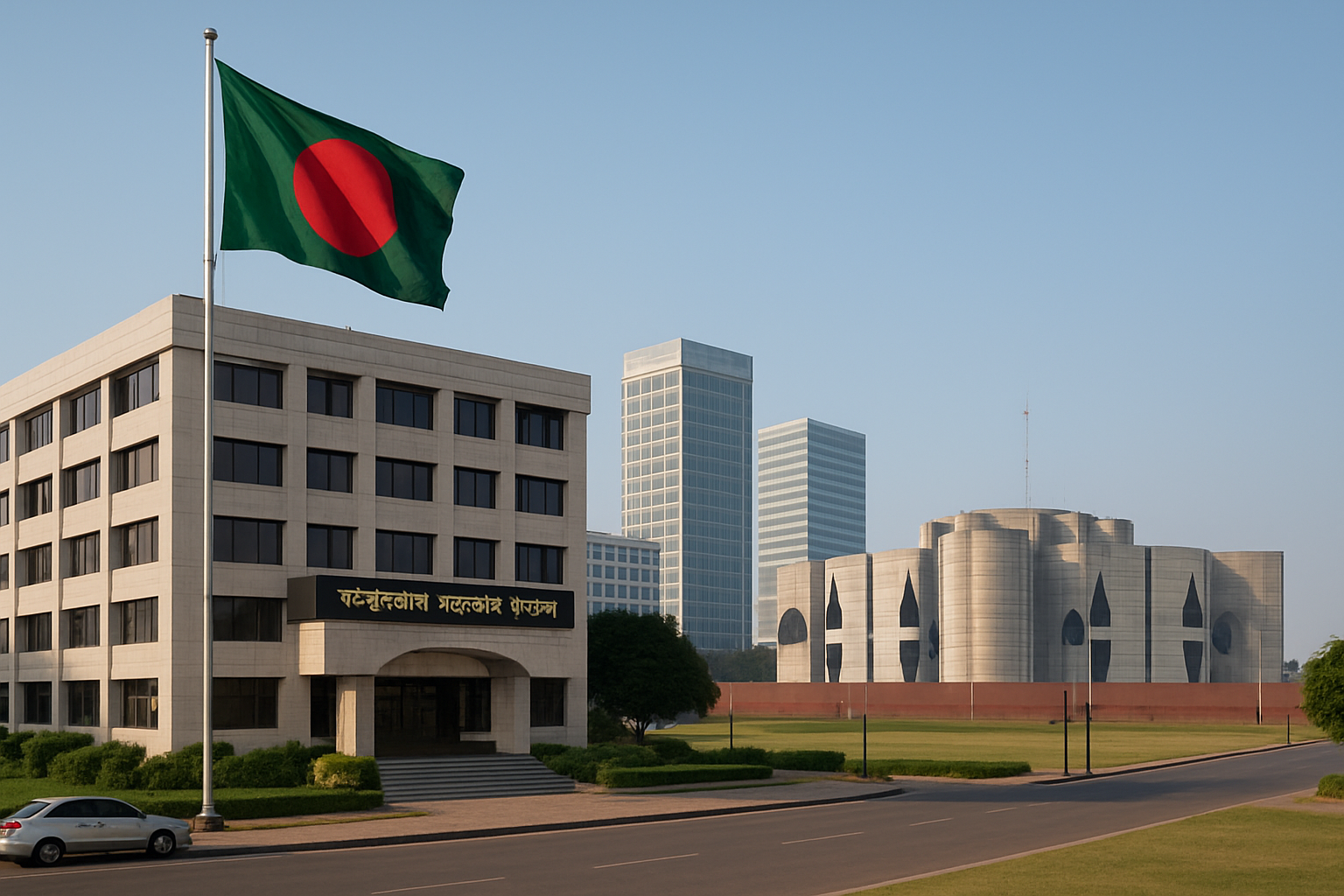
Bangladesh's interim government under Chief Adviser Professor Muhammad Yunus continues implementing wide-ranging democratic reforms and institutional investigations as the nation prepares for its historic February 12 parliamentary elections, marking a critical transition period following the July 2025 uprising.
The government has intensified efforts across multiple fronts, from combating skills certification fraud to establishing comprehensive pay review mechanisms, while simultaneously pursuing international cooperation on human rights investigations that underscore the administration's commitment to accountability and transparency.
Action Against Certificate Forgery and Skills Development
During the second meeting of the National Skill Development Authority (NSDA) governing body on February 8, Chief Adviser Yunus issued urgent directives to eliminate skill development training and certificate forgery, emphasizing the critical importance of maintaining Bangladesh's labor force reputation in the global market.
"If Bangladeshi workers lose trust abroad due to fake certificates, all initiatives for skill development will be futile. International employers should be able to trust our certification system completely."
— Professor Muhammad Yunus, Chief Adviser
The directive reflects growing international concerns about certificate fraud affecting Bangladesh's competitive position in global labor markets. Yunus emphasized that despite high demand for Bangladeshi workers internationally, the country's reputation faces damage from fraudulent practices, making immediate corrective action essential for future economic opportunities.
Institutional Reforms and Pay Commission Review
The interim government has established a high-level committee to examine salary recommendations from three major commissions: the National Pay Commission 2025, Bangladesh Judicial Service Pay Commission 2025, and Armed Forces Pay Committee 2025. The Cabinet Secretary leads this committee, which includes senior secretaries from key ministries and the Comptroller General of Accounts.
This comprehensive review demonstrates the government's systematic approach to institutional reform, addressing long-standing grievances about public sector compensation while ensuring fiscal sustainability. The committee structure reflects cross-governmental coordination, bringing together expertise from public administration, defense, education, health, and judicial sectors.
Civil Service Excellence
In parallel developments, the Bangladesh Public Service Commission (BPSC) announced results for the 46th Bangladesh Civil Service (BCS) examination, recommending 1,457 candidates for various government positions. This represents continued functioning of critical administrative recruitment processes during the transitional period.
International Human Rights Cooperation
Bangladesh has formally requested United Nations assistance in investigating the killing of Shahid Sharif Osman Hadi, spokesperson for Inquilab Mancha and a key organizer of the July uprising that led to the current political transition. The request, sent through a Note Verbale from Bangladesh's Permanent Mission in Geneva to the Office of the United Nations High Commissioner for Human Rights (OHCHR), seeks technical and institutional assistance for the investigation.
This unprecedented move signals the interim government's commitment to international accountability standards and transparency in addressing violence against pro-democracy activists. The case has become symbolic of the broader effort to investigate human rights violations from the previous administration.
Political Landscape and Electoral Preparations
As Bangladesh approaches its February 12 parliamentary elections, political parties are intensifying their campaigns while addressing contemporary social issues. Women's rights organizations have protested against derogatory remarks made by Jamaat-e-Islami leadership, demanding government action against misogynistic political discourse.
The Bangladesh Nationalist Party (BNP) has announced plans to establish a Women Support Cell if elected, with Dr. Zubaida Rahman stating that a BNP victory would "pave the way for a women-friendly government." This commitment reflects growing attention to gender issues in Bangladesh's political discourse.
Minority Rights and Electoral Security
Citizens for Human Rights has called for enhanced protection of minority voting rights and post-election security, urging political parties to play active roles in ensuring safe polling environments. The organization's demands highlight ongoing concerns about electoral inclusivity and democratic participation across Bangladesh's diverse communities.
Academic voices have also joined the political discourse, with Dhaka University's White Panel urging voters to support experienced leadership. Professor Dr. Md Abdus Salam emphasized that Bangladesh stands at a "critical juncture" where selecting appropriate leadership will determine the country's political and economic future.
Justice System Reforms
The interim government has withdrawn 23,865 politically motivated cases filed during previous administrations, according to ministry sources. This massive legal review process aims to address systematic abuse of the justice system for political persecution, representing one of the most significant judicial reform initiatives in Bangladesh's recent history.
The case withdrawal process continues as part of broader efforts to restore public confidence in legal institutions and ensure that the justice system serves all citizens impartially rather than being used as a tool for political control.
International Context and Regional Implications
Bangladesh's democratic transition is being closely monitored internationally, particularly given the successful implementation of overseas voting for the first time in the country's history. Over 400,000 expatriate Bangladeshis have participated in the electoral process through postal ballots, marking a significant expansion of democratic participation.
The transition has drawn attention from regional powers, with neighboring countries observing Bangladesh's approach to democratic renewal following popular uprising. The interim government's emphasis on institutional reform and international cooperation provides a potential model for democratic transition in South Asia.
Challenges Ahead
Despite significant progress in reform initiatives, Bangladesh faces ongoing challenges in maintaining stability while implementing comprehensive changes. The government must balance immediate needs for institutional accountability with longer-term requirements for economic development and social cohesion.
The success of current reforms will likely influence Bangladesh's trajectory well beyond the immediate transition period, affecting the country's democratic institutions, international relationships, and economic development prospects for years to come.
As Bangladesh prepares for its crucial parliamentary elections, the interim government's comprehensive reform agenda demonstrates a commitment to addressing systemic issues while building foundations for sustained democratic governance. The combination of institutional reforms, international cooperation, and electoral preparations represents an ambitious effort to transform Bangladesh's political landscape through peaceful, democratic means.