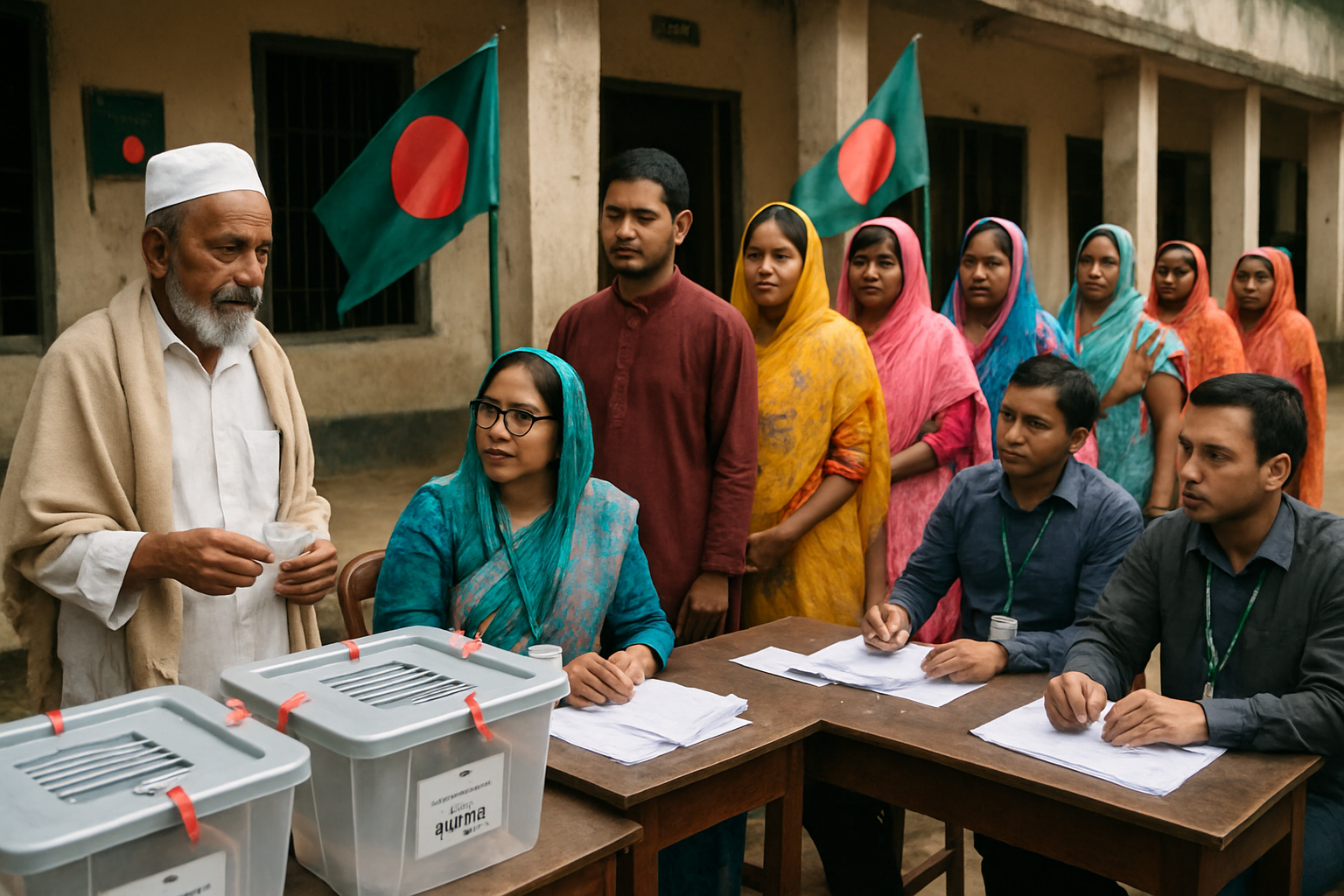
Bangladesh prepares for its parliamentary elections scheduled for February 12, 2026, marking a critical juncture in the country's democratic journey as international observer missions deploy across the nation to ensure transparent and fair electoral processes.
Japan has emerged as a key international partner in supporting Bangladesh's electoral integrity, announcing the deployment of an Election Observer Mission from Monday through February 14. The mission, headed by Watanabe Masato, former Japanese ambassador to Bangladesh, will consist of officials from Japan's Ministry of Foreign Affairs and the Embassy of Japan, demonstrating unprecedented international commitment to Bangladesh's democratic process.
International Observer Framework
The Japanese observer mission represents part of a broader international effort to support the fair implementation of Bangladesh's general election. According to official announcements from the Dhaka Tribune, the mission will monitor electoral procedures, assess the conduct of voting, and provide independent evaluation of the electoral process's transparency and fairness.
This international oversight comes at a crucial time as Bangladesh continues to strengthen its democratic institutions. The presence of foreign observer missions reflects the global community's recognition of Bangladesh's strategic importance and commitment to supporting democratic governance in South Asia.
Historic Overseas Voting Initiative
For the first time in Bangladesh's electoral history, citizens living abroad will have the opportunity to participate in the parliamentary elections. This groundbreaking development has generated significant excitement among the Bangladeshi diaspora, particularly in Britain, where thousands of eligible voters are preparing to cast their ballots.
According to Al Jazeera reporting, this expansion of voting rights represents a major step forward in ensuring comprehensive democratic participation. However, the implementation has not been without challenges, as some eligible voters have reported difficulties with registration processes or feel excluded from the overseas voting mechanism.
The overseas voting initiative particularly impacts Bangladeshi communities in Britain, where established immigrant populations have maintained strong connections to their homeland's political developments. The ability to influence their country's electoral outcomes from abroad represents a significant expansion of democratic participation that could serve as a model for other South Asian nations.
Electoral Landscape and Party Dynamics
The 2026 parliamentary elections feature a complex array of political parties and alliances competing for control of Bangladesh's National Parliament. According to The Indian Express, multiple parties have formed strategic alliances while independent candidates also seek representation in the legislative body.
The electoral competition reflects Bangladesh's evolving political landscape, where traditional party loyalties intersect with contemporary concerns about economic development, governance transparency, and international relations. The outcome of these elections will significantly influence Bangladesh's domestic policies and its positioning within regional geopolitical dynamics.
Democratic Institutions Under Scrutiny
The February 12 elections occur within a broader context of democratic consolidation efforts across South Asia. International observers will pay particular attention to electoral administration, voter access, campaign conduct, and post-election processes. The presence of multiple international observer missions underscores global interest in Bangladesh's democratic trajectory.
Bangladesh's Election Commission has implemented various measures to ensure electoral integrity, including enhanced security protocols, voter education campaigns, and technological improvements to voting processes. These efforts aim to address previous concerns about electoral transparency while accommodating the expanded voter base that includes overseas participants.
Regional and Global Implications
The electoral outcome will have significant implications for Bangladesh's foreign policy orientation and regional relationships. As a strategically located nation in South Asia, Bangladesh's political direction influences regional stability, economic cooperation, and security arrangements.
The international community's investment in observing these elections reflects Bangladesh's growing importance in global affairs. The country's democratic development serves as a crucial example for democratic consolidation in post-colonial South Asian societies facing contemporary governance challenges.
Challenges and Opportunities
Despite the positive developments in international oversight and overseas voting, the elections face several challenges. These include ensuring equitable access to voting for all eligible citizens, managing potential security concerns, and addressing technical difficulties in implementing new voting procedures for overseas participants.
The success of the overseas voting initiative could establish Bangladesh as a leader in diaspora political participation, potentially influencing electoral reforms in neighboring countries with significant overseas populations. However, the complexity of managing simultaneous domestic and international voting processes requires careful coordination and substantial institutional capacity.
As Bangladesh approaches this crucial electoral moment, the combination of international oversight, expanded voting rights, and competitive political dynamics creates conditions for a potentially transformative democratic exercise. The February 12 elections will test not only the country's electoral institutions but also its commitment to inclusive democratic governance in an increasingly interconnected world.
The presence of international observers, led by Japan's comprehensive mission, provides an additional layer of accountability that could enhance public confidence in the electoral process. With overseas voting enabling unprecedented diaspora participation, these elections may mark a new chapter in Bangladesh's democratic evolution, setting precedents for future electoral innovations and international cooperation in South Asian democracy.