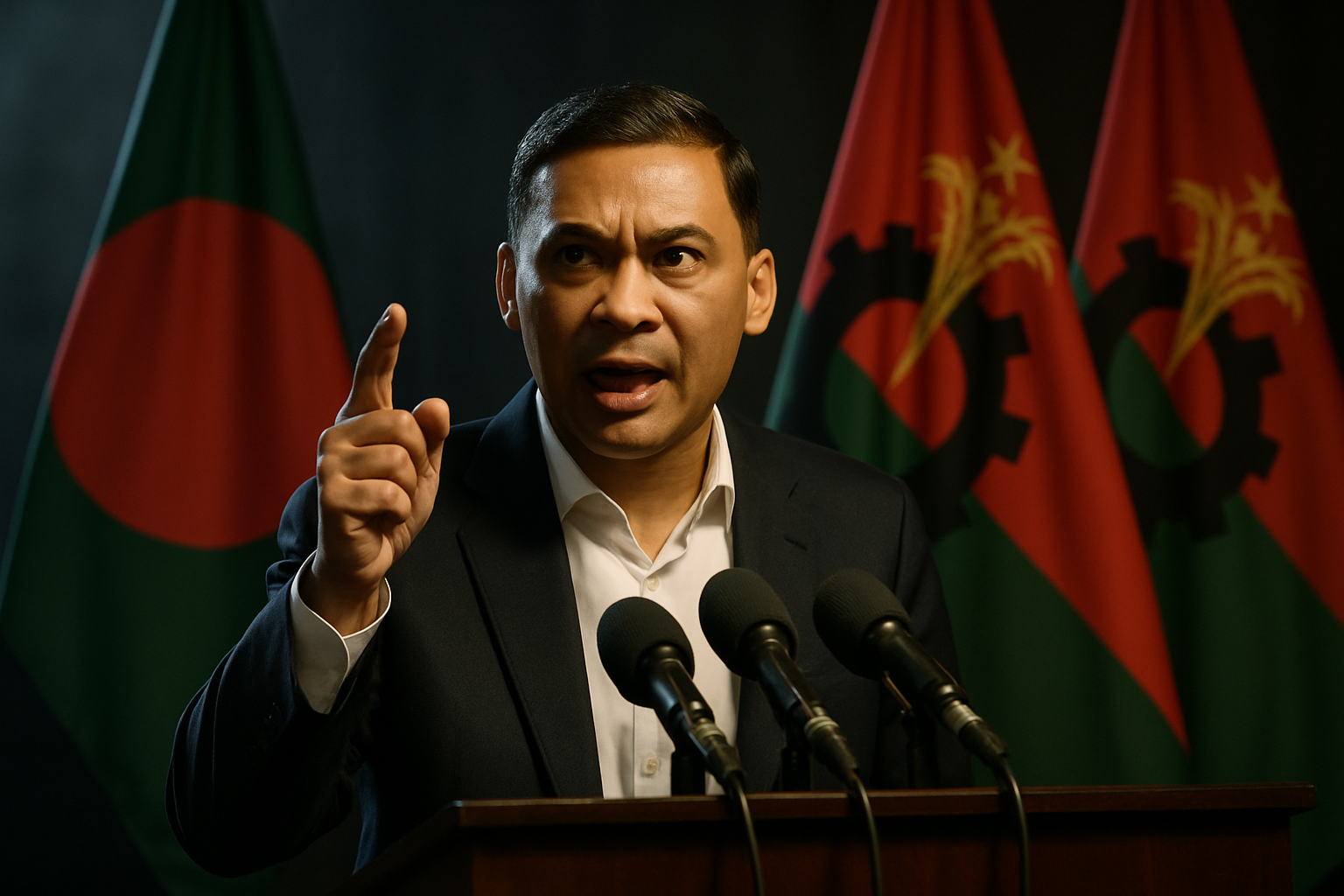
Bangladesh's political landscape undergoes a dramatic transformation as Tarique Rahman, the newly victorious Bangladesh Nationalist Party (BNP) chairman, prepares to assume leadership while initiating unprecedented diplomatic overtures to reshape the nation's relationship with neighboring India.
Following the BNP's decisive landslide victory securing 212 of 299 parliamentary seats in February's historic elections, Rahman has embarked on a series of remarkable political reconciliation visits that signal a new era of "positive politics" in Bangladesh. The moves come as the party seeks what sources describe as a "total reset" in ties with India, marking a potential end to decades of strained relations.
A Historic Victory Transforms Bangladesh
The BNP's overwhelming electoral triumph represents the most significant democratic transformation in Bangladesh since independence. The party's two-thirds majority provides a constitutional mandate for major reforms, completing a remarkable journey from the August 2024 student uprising that ended Sheikh Hasina's 15-year authoritarian rule to institutional democracy through peaceful electoral means.
Rahman's return from 17 years of London exile to lead this democratic renewal has captured international attention. The election, monitored by 394 international observers from 27 countries, established unprecedented legitimacy for the new government through the largest oversight mission in Bangladesh's recent history.
Key electoral victories included BNP Secretary General Mirza Fakhrul Islam Alamgir's landslide win in Thakurgaon-3 with 236,308 votes, more than doubling his nearest rival. Rahman himself secured victories in both Bogra-6 and Dhaka-17 constituencies, demonstrating the party's comprehensive national appeal.
Diplomatic Outreach Signals New Era
In an unprecedented gesture of political reconciliation, Rahman is scheduled to visit the residences of Bangladesh Jamaat-e-Islami ameer Dr. Shafiqur Rahman and National Citizens' Party convener Nahid Islam on Sunday evening. These visits, described as "post-election courtesy calls," represent a dramatic departure from Bangladesh's traditionally polarized political culture.
BNP Joint Secretary General Advocate Sarjis Alam praised Rahman's initiative, stating on Facebook: "As a new beginning for positive politics BNP Chairman Tarique Rahman will visit Bangladesh Jamaat-e-Islami ameer Dr. Shafiqur Rahman and the convener of National Citizens' Party (NCP), Nahid Islam."
The symbolic importance of these visits cannot be overstated. The Jamaat-e-Islami, historically viewed as the BNP's ideological rival, secured 77 seats in the election, representing their strongest showing since 1971. The National Citizens' Party, emerging from the 2024 student uprising, captured symbolic victories including Nahid Islam's triumph in Dhaka-11.
International Recognition and Challenges
The new government has received significant international recognition, with Norwegian Prime Minister Jonas Gahr Støre congratulating Rahman via social media: "Congratulations to Tarique Rahman on your win in a historic election. Norway looks forward to continuing our strong bilateral cooperation, including promoting respect for international law, democracy, and human rights."
This recognition follows earlier congratulations from Malaysia's Prime Minister Anwar Ibrahim, who praised the "triumph of democracy," and expressions of cooperation readiness from US officials. The international community views Bangladesh's democratic transformation as a potential template for peaceful political change through youth-led movements.
However, the new government faces substantial challenges. Rahman has publicly acknowledged inheriting "fragile economy, ineffective institutions, weak law and order" from the previous regime. The interim government under Nobel laureate Muhammad Yunus achieved significant diplomatic breakthroughs, including a US trade agreement providing 19% tariff rates and zero tariffs for textiles using American materials.
The India Reset Strategy
Perhaps the most significant diplomatic challenge facing the new government involves recalibrating relations with India. Historical tensions between the BNP and India stem from complex regional dynamics, with New Delhi traditionally favoring the Awami League during Sheikh Hasina's rule.
The prospect of a "total reset" in India-Bangladesh ties represents both opportunity and risk. India's response to the BNP victory will be closely watched, particularly regarding potential extradition requests for Sheikh Hasina, who fled to Indian exile after the August 2024 uprising.
Economic cooperation remains crucial, with Bangladesh's strategic location offering India access to Southeast Asian markets while providing Bangladesh with essential trade partnerships. The new government must balance historical grievances with pragmatic economic necessities.
Implementing the July Charter
A critical test of the new government's democratic commitment involves implementing the July Charter, institutionalizing the principles of the 2024 uprising. This includes transitional justice questions regarding accountability for the violence that claimed 1,400 lives during the student protests.
The "uprising generation" of 55 million voters aged 18-37, comprising 44% of the electorate, drove the democratic renewal with demands for accountability, transparency, and effective governance. Their expectations will shape the new government's agenda and legitimacy.
Regional and Global Implications
Bangladesh's democratic transformation resonates far beyond its borders. As the world's eighth-largest population undergoes this political transition, it influences regional stability patterns and provides hope for democratic resilience globally.
The success of this youth-led transformation from authoritarian rule to competitive elections offers a template for democratic consolidation following popular mobilization. Regional observers are monitoring the outcome as a potential model for peaceful political change through mass movements institutionalized via electoral processes.
The new government must navigate complex international relationships, balancing partnerships with the United States, China, and India while maintaining the diplomatic gains achieved during the interim period. Success will depend on sustaining democratic momentum while addressing urgent development needs.
Looking Forward
As Tarique Rahman prepares to assume the Prime Ministership after nearly two decades in exile, Bangladesh stands at a historic crossroads. The BNP's overwhelming mandate provides unprecedented opportunity for transformative reforms, while the party's diplomatic outreach signals a mature approach to governance.
The international community's unprecedented oversight of the election process has provided crucial legitimacy, while the government's commitment to "positive politics" offers hope for ending decades of political polarization. However, the true test will be delivering on promises of democratic governance, economic development, and social justice.
Bangladesh's remarkable journey from student uprising to electoral democracy demonstrates that peaceful political transformation remains possible even under seemingly impossible circumstances. As the new government takes shape, the world watches to see whether this democratic renewal can be sustained and serve as an inspiration for similar movements globally.
The coming months will be decisive in determining whether Bangladesh's democratic transformation represents a temporary victory or a permanent shift toward accountable governance. With international support, domestic legitimacy, and a clear mandate for change, the stage is set for one of South Asia's most significant political transformations in recent history.