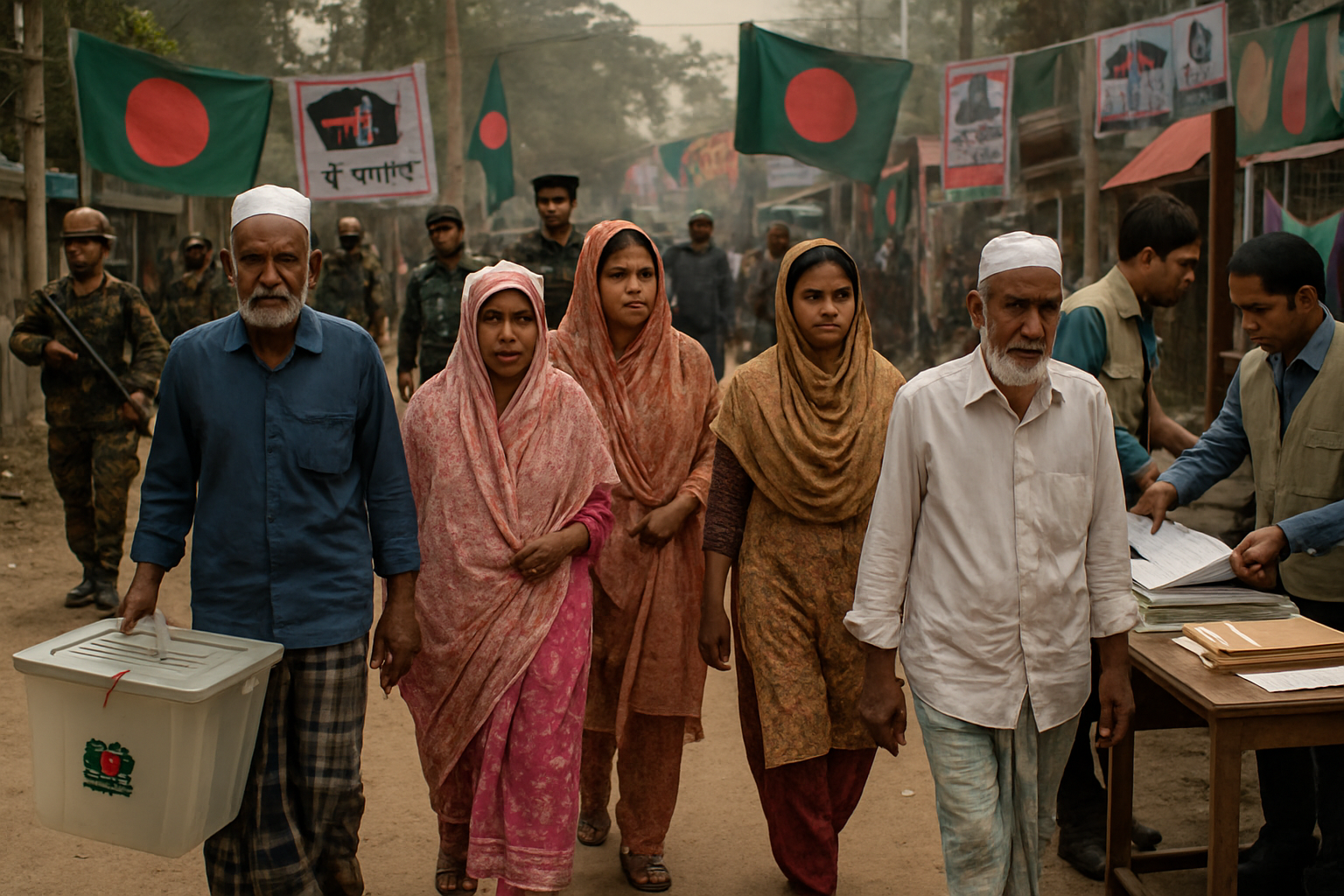
Bangladesh held its thirteenth national parliamentary election on February 12, 2026, marking the first democratic contest since a student-led uprising ended Sheikh Hasina's 15-year rule in August 2024, with nearly 900,000 security personnel deployed in the country's largest peacetime security operation.
Polling commenced at 7:30 AM and continued until 4:30 PM across the nation, with voters simultaneously participating in a referendum on the proposed "July National Charter" using pink ballots alongside white parliamentary ballots. The election represents a crucial test of Bangladesh's democratic consolidation following the unprecedented popular mobilization that transformed the political landscape.
Massive Security Deployment
The Election Commission deployed approximately 900,000 members of armed forces and law enforcement agencies, making this the largest security cordon in Bangladesh's history. Over 700,000 police and Ansar personnel formed the primary security layer, with 103,000 army personnel on duty throughout the country.
Navy and air force units provided special surveillance across 17 constituencies in five districts, while the Border Guard Bangladesh (BGB) and Coast Guard ensured peaceful conditions in border and coastal areas. Technology-driven surveillance systems, including extensive CCTV coverage and body cameras, monitored proceedings at thousands of polling stations.
"This election features the most comprehensive security deployment in our nation's history to ensure free, fair, impartial, and peaceful voting,"
— Election Commission Official
In Comilla alone, 26,000 law enforcement personnel were deployed across 11 constituencies, with 73 executive magistrates and 25 judicial magistrates ensuring overall security. Similar large-scale deployments occurred nationwide, with Rajshahi identifying two-thirds of its polling centers as high-risk requiring enhanced security measures.
Political Transformation and Key Players
The election occurred against the backdrop of fundamental political realignment following the August 2024 uprising that ended the Awami League's rule. Sheikh Hasina, who fled to India and was subsequently convicted by the International Crimes Tribunal in November 2025, saw her party banned from participation.
The Bangladesh Nationalist Party (BNP), led by Tarique Rahman, emerged as the frontrunner after years in opposition. Rahman expressed confidence in securing a two-thirds majority, urging supporters to remain vigilant at polling centers to ensure free and fair voting.
Jamaat-e-Islami formed an alliance with the student-led National Citizen Party, betting on youth momentum and post-uprising reform agenda. Alliance leaders cited the energy of young voters and their commitment to the transformation that began with the July uprising.
Pre-Election Tensions and Incidents
The final days before the election witnessed several security incidents that highlighted ongoing political tensions. A BNP member was attacked in Rajshahi's Charghat area, while authorities recovered cocktails and petrol bombs in Naogaon, demonstrating the volatile atmosphere surrounding the democratic process.
In a significant development, authorities arrested a Jamaat-e-Islami leader at Saidpur Airport with 7.4 million taka, with the party claiming the funds were for legitimate business purposes. These incidents underscored the security challenges facing the electoral process.
Historic First: Overseas Voting
For the first time in Bangladesh's history, the election included overseas voting through the ICPV (International Citizen Postal Voting) system. Over 400,000 expatriate ballots were processed, with the British Bangladeshi community showing particular enthusiasm for participating in their homeland's democratic process.
Election materials and security personnel were transported by helicopter to remote polling centers, including challenging terrain in Khagrachhari, ensuring that all eligible voters could participate regardless of geographical barriers.
International Oversight and Legitimacy
The election attracted unprecedented international attention, with 394 international observers and 197 foreign journalists monitoring the process—more than double the numbers from previous controversial elections. This massive observation mission provided crucial democratic legitimacy to the proceedings.
The European Union deployed over 200 observers from 27 member states, along with representatives from Canada, Norway, and Switzerland. Japan's Election Observer Mission, led by Watanabe Masato, added further international oversight to what became the largest international observation in Bangladesh's recent electoral history.
"This represents the most comprehensive international monitoring we have ever seen for a Bangladeshi election, reflecting the global significance of this democratic transition."
— International Observer Team Leader
Youth Demographics and Generational Shift
The election highlighted a dramatic generational shift in Bangladeshi politics, with over 55 million voters aged 18-37 representing 44% of the electorate. This youth demographic, which led the uprising against authoritarian rule, became the decisive factor in determining the country's political future.
The student-led National Citizen Party, formed in the aftermath of the uprising, capitalized on this demographic change by fielding young candidates and promoting reform agendas that resonated with voters demanding fundamental political transformation.
Economic and Social Stakes
Beyond political change, the election carried significant economic implications. The interim government under Nobel Peace Prize laureate Professor Muhammad Yunus achieved a major breakthrough with the United States, securing a trade agreement that provides a 19% tariff rate with zero tariffs for textiles and apparel using U.S. materials.
This economic diplomacy success during the political transition signals potential strategic realignments in Bangladesh's international relationships, particularly in the context of Indo-Pacific regional dynamics and great power competition.
Challenges and Concerns
Despite the massive security deployment, several incidents threatened the electoral process. Four polling centers in Netrakona were set on fire around 3:30 AM by miscreants, highlighting ongoing security challenges. However, authorities maintained that such isolated incidents would not disrupt the overall democratic process.
The deployment of 1,191 Ansar striking teams demonstrated the authorities' commitment to preventing electoral violence and ensuring voter safety. Mobile phone restrictions were implemented, with only five authorized categories of personnel allowed to carry devices near polling stations.
Regional and International Implications
The successful conduct of Bangladesh's election has broader implications for South Asian democracy and regional stability. As the world's eighth-largest country by population, Bangladesh's democratic consolidation influences regional cooperation frameworks and international partnerships.
The election results will determine Bangladesh's foreign policy orientation, economic development trajectory, and role in regional organizations. Success could establish Bangladesh as a model for democratic transition in the region, while failure might impact institutional credibility and international standing.
Looking Forward
As vote counting proceeded throughout the day, international observers and domestic stakeholders closely monitored the process for signs of the democratic renewal that began with the student uprising. The election represents not merely a routine transfer of power but a fundamental test of whether popular movements can successfully transform into sustainable democratic institutions.
Chief Adviser Professor Muhammad Yunus described the week as "very crucial" for the nation, emphasizing the challenge of achieving "perfect voting execution." The success of this democratic exercise will determine whether Bangladesh emerges as a regional model for peaceful political transformation or faces continued institutional challenges.
The results of Bangladesh's thirteenth national election will shape the country's political trajectory for years to come, representing either a democratic landmark achievement or a critical test of institutional resilience in one of the world's most populous nations.