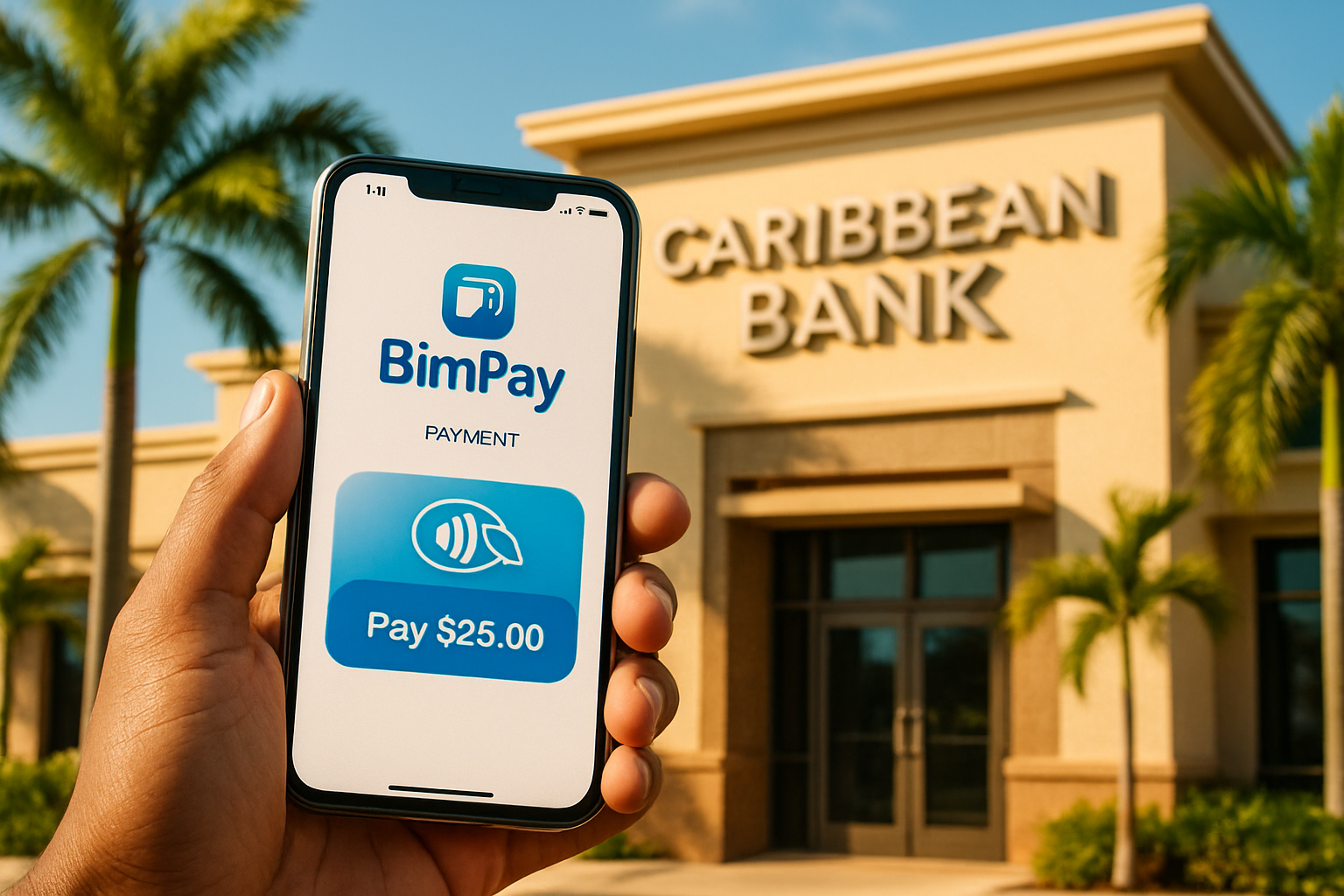
The Central Bank of Barbados has completed successful interoperability testing for BimPay, its revolutionary instant payment system, with Governor Kevin Greenidge confirming the platform will not replace existing payment options but rather enhance the island's digital financial infrastructure.
Governor Kevin Greenidge dismissed suggestions that BimPay, scheduled to launch in two months, would disrupt current payment methods used across Barbados. Speaking during a comprehensive update on system readiness, Greenidge emphasized that the new national instant payment platform represents an expansion of payment choices rather than a replacement for established financial services.
The announcement comes after successful completion of interoperability testing among all participating institutions, marking a critical milestone in what industry experts describe as the Caribbean's most ambitious digital payment initiative. Trevor Thorpe provided detailed coverage of the technical achievements and strategic positioning as Barbados emerges as a regional fintech leader.
Strategic Positioning in Global Digital Payment Landscape
BimPay's development occurs within a rapidly evolving global digital payment ecosystem where government-backed systems are demonstrating superior stability compared to volatile cryptocurrency markets. While Bitcoin has crashed over 50% from its October 2025 peak of $126,199, losing approximately $2 trillion in global crypto market value, practical government-supported digital payment systems continue gaining traction worldwide.
Nigeria currently processes 43% of fuel sales through digital payments with same-day settlements, solving critical liquidity challenges for businesses. Slovakia has pioneered a €1.3 billion digital euro pilot project, positioning the nation ahead of EU-wide implementation. Zimbabwe's innovative Ndarama platform bridges tokenized real-world assets to fiat currency, enabling $1 minimum investments without cryptocurrency complexity.
These successful implementations provide valuable templates for BimPay's strategic approach, emphasizing practical utility over speculative trading and regulatory clarity over experimental technology frameworks.
Technical Infrastructure and Security Protocols
The completion of interoperability testing represents a significant technical achievement, demonstrating that BimPay can seamlessly integrate with existing banking infrastructure while maintaining the highest security standards. The system incorporates advanced fraud detection and monitoring capabilities, building on lessons learned from global digital payment implementations.
Central Bank Deputy Governor Michelle Doyle previously outlined the system's comprehensive scope, including real-time payment processing, secure patient data integration for healthcare applications, and connectivity with healthcare management systems. The platform is designed to facilitate faster, more efficient digital transactions across multiple economic sectors, addressing payment processing delays that have historically affected both consumers and service providers.
"The system will enable instant payments without traditional banking delays, reduced transaction fees, and seamless integration with government services for taxes, benefits, and business transactions."
— Michelle Doyle, Deputy Governor, Central Bank of Barbados
Learning from Previous Implementation Challenges
BimPay's development has not been without challenges. The medical payment component experienced a delay from the original March 31 launch date to June 12, 2026, providing valuable lessons about the technical complexity of integrating instant payment infrastructure with specialized sector requirements such as medical billing systems.
However, Governor Greenidge's firm commitment to maintaining the original budget despite these delays demonstrates the strategic importance of establishing Barbados as a Caribbean fintech leader. The additional three-month development timeline for medical integration allows comprehensive testing and refinement before full deployment, avoiding the peak tourist season while ensuring system reliability.
Regional Context and Caribbean Integration
BimPay's success could establish Barbados as a template for other Caribbean nations modernizing their payment infrastructure. The system is positioned within broader Caribbean digital transformation initiatives, with future phases including government payment processing and regional integration capabilities that could revolutionize cross-border transactions within the Caribbean Community (CARICOM).
This regional approach aligns with global trends toward practical digital payment solutions that serve real economic needs. Unlike speculative cryptocurrency systems that have lost trillions in value, government-backed digital payment platforms consistently demonstrate stability and user adoption through regulatory clarity and institutional support.
Economic Impact and Financial Inclusion
The BimPay system represents a significant investment in Barbados' digital financial infrastructure, addressing longstanding challenges in payment processing efficiency while maintaining the Central Bank's commitment to financial inclusion. The platform operates alongside traditional payment methods, ensuring that all citizens can benefit from digital payment advances without being forced to abandon familiar financial tools.
Industry analysis suggests that instant payment systems generate substantial economic benefits through reduced transaction costs, improved cash flow management for businesses, and enhanced government service delivery. Small and medium enterprises particularly benefit from same-day settlement capabilities, addressing the cash flow challenges that have historically constrained Caribbean business development.
Global Infrastructure Constraints and Innovation
BimPay's development has proceeded despite global semiconductor shortages that have created sixfold memory chip price increases affecting Samsung, SK Hynix, and Micron supplies until 2027. These constraints have paradoxically accelerated innovation in efficient, practical fintech solutions that leverage existing infrastructure rather than requiring resource-intensive parallel systems.
The Barbados approach demonstrates how countries can implement sophisticated digital payment systems by integrating with established banking infrastructure, emphasizing practical utility over technological complexity. This strategy proves particularly valuable during periods of global supply chain disruption affecting advanced technology components.
Future Phases and Long-term Vision
Governor Greenidge's emphasis on public education as critical for platform security maintenance reflects lessons learned from global digital payment implementations. Successful adoption requires not just technical excellence but comprehensive user education and community engagement to maximize benefits while minimizing security risks.
The platform's design for future expansion into government payments and regional Caribbean integration positions Barbados at the forefront of Caribbean digital financial transformation. Success could influence payment system development throughout the region, potentially creating a Caribbean digital payment zone that enhances trade and financial cooperation among member nations.
Investment Strategy and Market Positioning
BimPay represents the type of government-backed digital payment innovation that investment analysts increasingly favor over speculative cryptocurrency ventures. The system combines technological advancement with regulatory clarity, existing infrastructure integration with practical utility, demonstrating the characteristics that define successful fintech implementations in the current global environment.
As traditional financial institutions implementing digital transformation achieve superior risk-adjusted returns compared to purely speculative ventures, BimPay positions Barbados to attract fintech investment while serving the real economic needs of its citizens and businesses.
The successful completion of interoperability testing marks a crucial milestone in Caribbean digital payment evolution, positioning Barbados as a regional leader in practical, government-supported financial technology innovation that prioritizes user needs over technological experimentation.