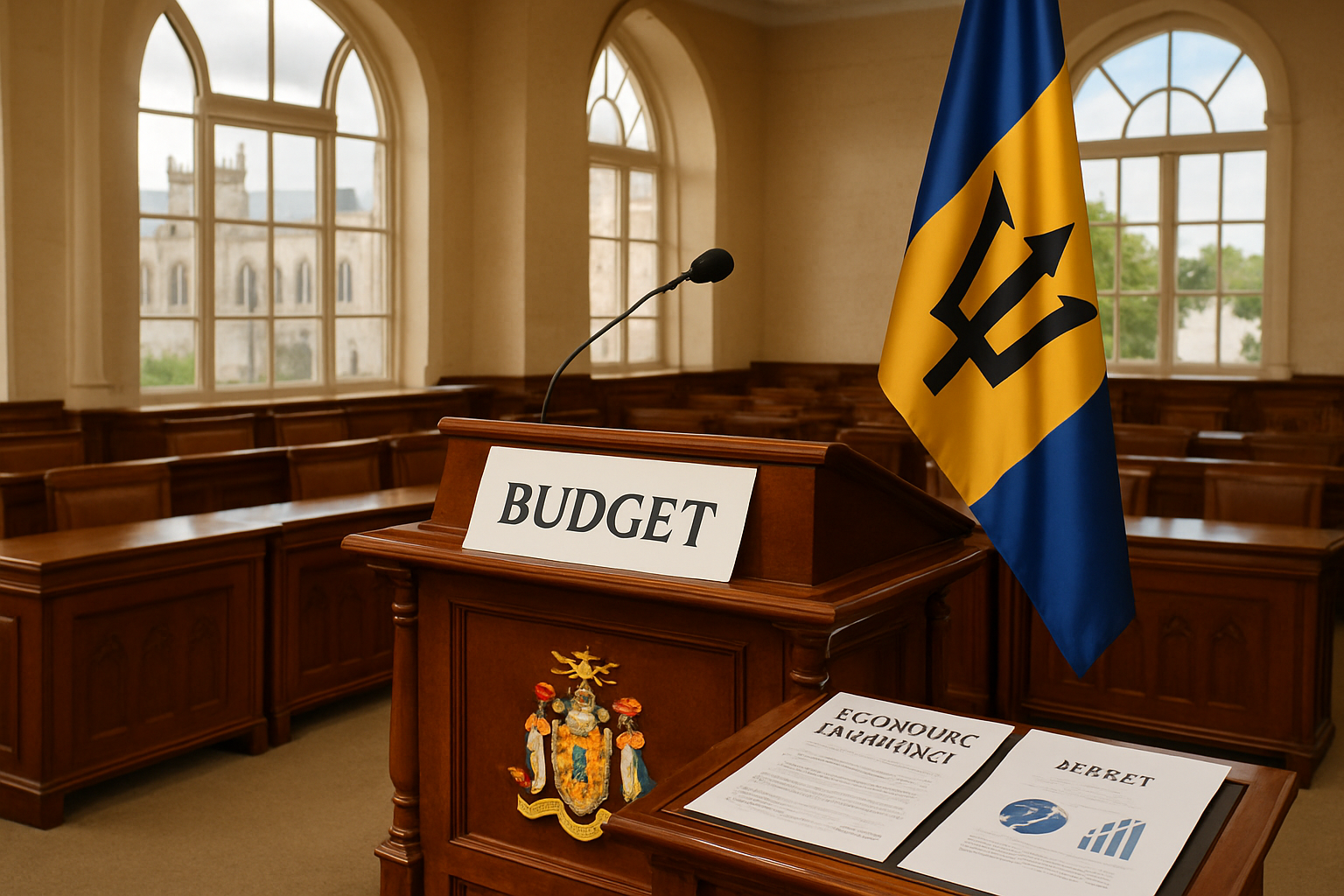
Barbados Finance Minister Ryan Straughn has announced a comprehensive package of budget measures designed to cushion citizens from escalating global oil prices while simultaneously addressing rising gun crime through enhanced security initiatives and judicial reforms.
The timing of these measures is particularly significant, coming as global oil prices have surged past $100 per barrel for the first time since 2022, creating unprecedented pressure on small island economies like Barbados that are heavily dependent on energy imports.
Tax Relief for Middle-Income Earners
Acknowledging the severe impact of rising costs on ordinary Barbadians, Minister Straughn announced targeted tax relief measures specifically designed to put money back into the pockets of middle-income earners. The Finance Minister emphasized that these measures recognize the legitimate concerns of Barbadians about the high cost of living, which has been exacerbated by global supply chain disruptions and energy price volatility.
Additionally, the government will provide enhanced assistance for pensioners, with new measures taking effect from April 1, 2026. These initiatives form part of a broader social protection framework designed to shield the most vulnerable populations from economic headwinds.
Strategic Response to Global Energy Crisis
The budget measures come at a critical juncture as the global energy crisis intensifies. Iran's closure of the Strait of Hormuz has blocked 40% of global seaborne oil transit, driving prices to levels not seen since the Russia-Ukraine conflict began. For energy-importing nations like Barbados, this represents a fundamental threat to economic stability.
Minister Straughn outlined a three-pronged approach to mitigate the impact on Barbadian consumers: securing the island's fuel supply while protecting electricity bills, implementing price caps on essential petroleum products, and accelerating renewable energy initiatives to reduce long-term dependence on volatile fossil fuel markets.
Comprehensive Duty and Tax Reductions
In a significant move to reduce the cost of living, the government announced that from April 1, 2026, to March 31, 2027, the Barbados Customs and Excise Department will use free-on-board values to calculate customs duty and VAT on essential imports including food, personal care items, and construction materials.
This technical adjustment represents substantial savings for consumers, as free-on-board calculations exclude insurance and freight costs that have skyrocketed due to global shipping disruptions. The measure directly addresses one of the key drivers of inflation affecting household budgets across the island.
"These measures will provide immediate relief to families struggling with rising costs while ensuring we maintain fiscal responsibility during challenging global conditions."
— Ryan Straughn, Minister of Finance
Security Enhancement Through Economic Incentives
Recognizing the interconnection between economic hardship and security challenges, the government announced that security systems, dashboard cameras, and monitoring devices will become duty and VAT-free. This innovative approach aims to improve personal security while assisting law enforcement with investigations when incidents occur.
The security-focused measures extend beyond consumer incentives to include significant upgrades for the Barbados Police Service, acknowledging that effective crime prevention requires both community participation and enhanced law enforcement capabilities.
Revolutionary Gun Court System
Perhaps the most significant judicial reform announced was the establishment of specialized gun courts, building on initiatives announced the previous week by Minister of Legal Affairs and Criminal Justice Michael Lashley. These courts are specifically designed to handle firearm offenses more efficiently and clear the existing backlog of gun-related cases that have clogged the traditional court system.
Minister Straughn emphasized that the gun courts represent a comprehensive approach to addressing the troubling rise in gun crime that has affected communities across Barbados. The specialized courts will allow for faster processing of firearms cases while ensuring appropriate judicial oversight.
Economic Context and Global Pressures
The comprehensive nature of these budget measures reflects the complex challenges facing Barbados in an increasingly volatile global environment. The ongoing Middle East crisis has not only driven energy prices higher but has also disrupted global supply chains, affecting everything from food imports to construction materials.
Historical context from recent global events shows how quickly regional conflicts can impact small island developing states. The current crisis, involving the closure of the Strait of Hormuz, has created the most severe energy security challenge since the 1970s oil shocks, with implications extending far beyond the immediate region.
Infrastructure and Development Support
Beyond immediate crisis response, the budget measures include provisions for accelerating infrastructure development and supporting local businesses. The duty reductions on construction materials are designed to maintain momentum in Barbados' infrastructure development programs while making housing more affordable for residents.
The government's approach recognizes that economic resilience requires both short-term crisis management and long-term structural improvements to reduce vulnerability to external shocks.
Regional and International Cooperation
The timing of these measures coincides with broader Caribbean initiatives to address shared challenges. Regional governments have been coordinating responses to global supply chain disruptions and energy price volatility, sharing best practices and exploring joint procurement opportunities.
Barbados' approach of combining fiscal relief with structural reforms reflects lessons learned from previous global crises, when countries that maintained both economic flexibility and social cohesion proved most resilient.
Implementation Timeline and Monitoring
The government has established clear timelines for implementation, with most measures taking effect from April 1, 2026. This rapid implementation schedule reflects the urgency of providing relief to consumers facing immediate pressure from rising costs.
Minister Straughn emphasized that the government will closely monitor the effectiveness of these measures, with provisions for adjustment based on evolving global conditions. The comprehensive nature of the package demonstrates recognition that effective crisis response requires coordinated action across multiple policy areas.
As global energy markets continue to experience unprecedented volatility, Barbados' comprehensive response represents a model for how small island developing states can protect their populations while maintaining fiscal responsibility. The success of these measures will likely influence policy approaches across the Caribbean region as governments seek to balance immediate crisis response with long-term economic development goals.