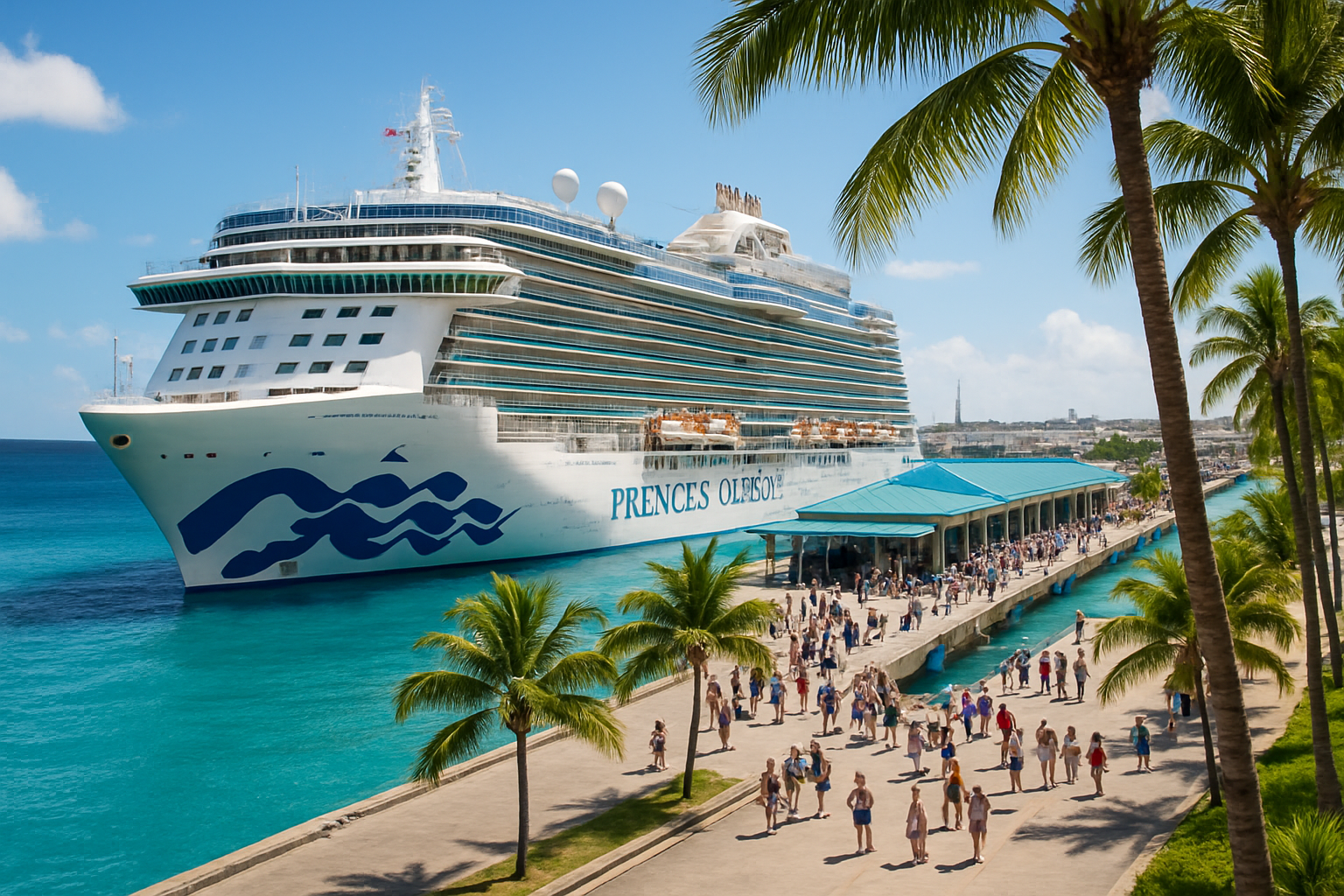
Barbados is set to reintroduce cruise inter-porting services between the Port of Bridgetown and San Juan in partnership with Princess Cruises, marking a significant milestone in the Caribbean's ongoing tourism recovery and consolidating the island's position as the region's leading cruise homeport.
The announcement comes as Barbados prepares to serve as the second homeport for Princess Cruises' expanded 2027 and 2028 Southern Caribbean programmes, offering travelers unprecedented flexibility to begin and end their Caribbean adventure on the island. This development represents more than a simple route restoration—it exemplifies the sophisticated destination management strategies that have emerged from the region's post-pandemic transformation.
Strategic Partnership Expansion
The inter-porting arrangement, commencing this winter cruise season, will see more than 30 voyages across 15 Caribbean destinations integrated into Princess Cruises' comprehensive programme. The Crown Princess will operate from January through March 2027, followed by the Emerald Princess from November 2027 through March 2028, creating a sustained presence that underscores industry confidence in Barbados' infrastructure capabilities.
Tia Broomes, Senior Business Development Officer (Cruise) at Barbados Tourism Marketing Inc., emphasized the strategic significance of this partnership during recent industry discussions. The collaboration builds upon Barbados' demonstrated capacity to manage multiple cruise operations simultaneously, as evidenced by similar success stories across the Caribbean, where ports like Saint Kitts and Nevis have accommodated six major cruise ships concurrently through sophisticated coordination systems.
Caribbean Cruise Sector Leadership
This announcement positions Barbados within the broader context of Caribbean cruise industry excellence that has characterized 2026. The region has demonstrated unprecedented operational sophistication, with destinations like the Dominican Republic projecting 1.4+ million cruise passengers for 2026 across facilities like Taíno Bay and Port Cabo Rojo, maintaining remarkable 90-95% disembarkation rates that significantly boost local economies.
The success reflects a fundamental transformation in Caribbean tourism strategy, moving from volume-based approaches toward quality-focused destination management. Regional integration has replaced individual competition, with collaborative infrastructure development and coordinated marketing efforts creating multi-destination experiences that benefit the entire Caribbean basin.
"This development further confirms Barbados' position as the number one cruise homeport in the Southern Caribbean and opens new opportunities for visitors."
— Barbados Tourism Marketing Inc.
Infrastructure and Economic Impact
The inter-porting program's success builds upon Barbados' proven infrastructure capabilities. Grantley Adams International Airport achieved its busiest year on record with 2.4 million passengers, demonstrating the island's capacity to handle sustained growth while maintaining operational excellence. This aviation success complements the port's enhanced cruise capabilities, creating a comprehensive transportation hub that serves both air and sea arrivals seamlessly.
The economic implications extend far beyond traditional hospitality metrics. Cruise operations generate substantial multiplier effects through local transportation services, retail establishments, cultural attractions, and artisan networks. The sustained presence of Princess Cruises vessels will create year-round employment opportunities and establish Barbados as a consistent presence in travelers' Caribbean experiences.
Regional Cooperation Model
The Barbados-Princess Cruises partnership exemplifies the sophisticated regional cooperation that has emerged as a defining characteristic of Caribbean tourism recovery. Rather than competing individually for market share, destinations have embraced collaborative approaches that enhance the entire region's competitiveness. This strategy has proven particularly effective in attracting major cruise lines seeking reliable, high-quality port partnerships.
The success stories extend throughout the region, from Antigua's $60 million upland development program enhancing cruise port facilities to Saint Lucia's record-breaking January performance with 150,323 cruise passengers representing 10.8% growth. These achievements demonstrate how strategic infrastructure investment combined with professional destination management creates sustainable competitive advantages.
Technology and Service Excellence
Modern cruise operations require sophisticated technological integration, from advanced booking systems to digital passenger management platforms. Barbados has invested substantially in these capabilities, enabling the seamless coordination required for inter-porting operations between multiple destinations. This technological foundation supports the flexible itinerary options that contemporary cruise passengers increasingly demand.
The emphasis on service excellence aligns with broader industry trends toward enhanced visitor experiences. Generation Z travelers, who represent 50% of multiple annual trips exceeding five days, drive demand for authentic cultural experiences enhanced by technological convenience rather than replaced by it. Barbados' approach successfully balances cultural authenticity with modern operational efficiency.
Sustainable Tourism Development
The Princess Cruises partnership reflects Barbados' commitment to sustainable tourism development that benefits both visitors and local communities. Unlike previous tourism models that prioritized rapid expansion, contemporary approaches emphasize long-term viability through environmental responsibility, cultural preservation, and meaningful community engagement.
This philosophy extends throughout the Caribbean, where destinations have learned from global best practices like Rome's Trevi Fountain model, which generates €6 million annually through managed access while preserving heritage sites. Similar approaches in the Caribbean balance economic objectives with cultural and environmental protection, ensuring tourism development serves as a community benefit rather than a burden.
Climate Resilience and Adaptation
The timing of this announcement is particularly significant given the increasing importance of climate-resilient infrastructure in tourism planning. With January 2026 marking the 18th consecutive month of global temperatures exceeding 1.5°C above pre-industrial levels, destinations must demonstrate adaptive capacity to maintain visitor confidence and operational reliability.
Barbados has invested substantially in climate-resilient infrastructure, enabling continued operations during weather challenges that might disrupt less prepared destinations. This reliability factor has become increasingly important for cruise lines planning multi-year commitments and seeking partners capable of maintaining schedule integrity despite climate variability.
International Recognition and Future Prospects
The Princess Cruises partnership represents international recognition of Barbados' evolution into a sophisticated cruise destination capable of managing complex inter-porting operations. This recognition positions the island advantageously for additional partnerships and expanded cruise industry relationships, potentially including homeporting agreements with other major cruise lines.
The success also provides a template for other Caribbean destinations seeking to enhance their cruise industry relationships. The combination of infrastructure investment, professional destination management, regional cooperation, and sustainable development practices creates a replicable model for tourism industry advancement throughout the region.
Looking Forward
As the Caribbean tourism industry continues its remarkable recovery and transformation, the Barbados-Princess Cruises inter-porting program represents more than a business partnership—it exemplifies the sophisticated destination management, regional cooperation, and sustainable development principles that define contemporary Caribbean tourism excellence.
The program's success will be measured not only in passenger numbers and economic returns but in its contribution to the broader Caribbean tourism narrative: a region that has emerged from pandemic challenges stronger, more collaborative, and better positioned for long-term success in an increasingly competitive global marketplace.
This development confirms that the Caribbean's tourism recovery has evolved beyond simple restoration to represent a fundamental transformation toward quality, sustainability, and international cooperation—setting new standards for island destination management worldwide.