Barbados is experiencing a historic transformation in its education sector as the government announces the restoration of teachers' term leave after a 12-year suspension, while simultaneously unveiling cutting-edge vocational training facilities that position the Caribbean nation at the forefront of educational innovation.
The developments, announced on March 30, 2026, represent the culmination of years of advocacy, negotiations, and legal battles that have finally resulted in comprehensive improvements benefiting both educators and students across the island nation.
Term Leave Victory After Decade-Long Battle
After years of protest, negotiations, and legal challenges, teachers in Barbados are finally receiving their long-awaited term leave benefits. Minister of Education Transformation, Chad Blackman, described the resolution as "a momentous day that has brought significant relief to educators."
The term leave program, suspended in 2014 under the Democratic Labour Party administration, will be reinstated from April 1st for teachers with fifteen years of service, recurring every five years. Permanent Secretary in the Ministry of Education Transformation, Kim Belle, confirmed that the Ministry is addressing a 12-year backlog of eligible teachers.
"This resolution was the result of dedicated efforts by both the Ministry and the teachers' unions. We are grateful to the unions for their strong advocacy and to teachers for their patience."
— Chad Blackman, Minister of Education Transformation
Both the Barbados Secondary Teachers' Union (BSTU) and the Barbados Union of Teachers (BUT) have welcomed the announcement. BSTU President Senator Mary Redman thanked Prime Minister Mia Amor Mottley and other stakeholders for their role in reaching this conclusion, while BUT's General Secretary, Gilbert Carmichael, noted that "the road to reinstating term leave has been a long, hard fight."
Revolutionary Cosmetology Lab Opens Doors
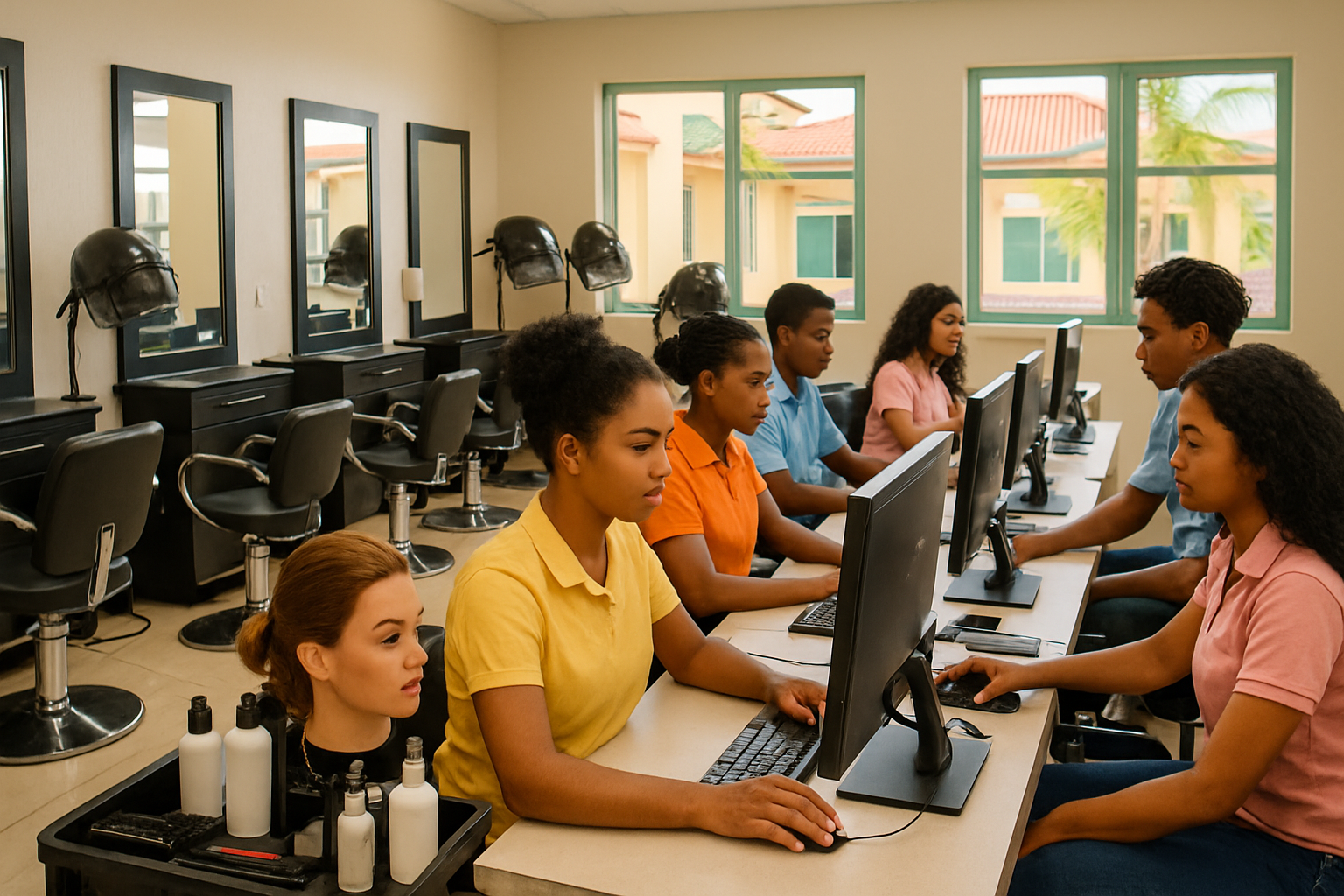
Simultaneously, Barbados is making significant strides in technical and vocational education with the official launch of a state-of-the-art cosmetology laboratory at Lester Vaughn School. The new facility represents a major boost for technical and vocational training, designed to prepare students for careers in the rapidly expanding beauty industry.
The laboratory features modern equipment and professional-grade facilities that mirror industry standards, providing students with hands-on experience using the same tools they will encounter in their professional careers. This investment reflects the government's commitment to diversifying educational pathways and ensuring students have access to market-relevant skills training.
Part of Global Educational Renaissance
These developments occur within what educational experts are calling the "2026 Educational Technology Renaissance" – a coordinated international movement toward thoughtful integration of digital tools with traditional educational values. Barbados joins nations like Malaysia, which achieved a 97.82% teacher placement rate with the world's first AI-integrated Islamic school, and Singapore's WonderBot 2.0 heritage education program.
The restoration of term leave and establishment of vocational training facilities demonstrates Barbados' sophisticated approach to educational modernization – one that balances innovation with tradition, global competencies with local identity, and technological advancement with human development priorities.
Economic and Social Impact
Educational experts emphasize that these improvements represent more than policy changes – they constitute strategic infrastructure investments for 21st-century prosperity. Prevention-first educational approaches, such as those being implemented in Barbados, demonstrate superior economic outcomes through reduced crisis intervention costs, decreased unemployment, and improved workforce productivity.
The vocational training expansion particularly addresses Caribbean workforce development needs, providing students with immediately applicable skills while creating pathways to entrepreneurship and economic independence. The beauty industry represents a significant growth sector in Caribbean tourism economies, making the cosmetology program strategically valuable.
Regional Leadership and International Recognition
Barbados' comprehensive approach to educational reform is attracting international attention as a template for small island developing states. The nation's success in balancing teacher welfare with student opportunity creation provides valuable insights for Caribbean Community (CARICOM) partners facing similar challenges.
The restoration of term leave demonstrates the government's commitment to treating education as strategic infrastructure requiring sustained investment rather than a cost center. This approach aligns with global best practices showing that countries implementing comprehensive educational reforms report enhanced community resilience, reduced long-term social service demands, and improved international competitiveness.
Challenges and Future Outlook
While celebrating these achievements, educational leaders acknowledge ongoing challenges. Global semiconductor shortages affecting educational technology programs until 2027 require adaptive approaches combining digital tools with traditional methods. Additionally, ensuring sustainable funding for expanded programs requires continued political commitment beyond electoral cycles.
The success factors identified in Barbados – sustained political commitment, comprehensive stakeholder engagement, innovation-tradition balance, and adequate resource allocation – provide a roadmap for other nations pursuing educational transformation.
Looking Ahead
March 2026 represents a critical juncture in global educational policy development, and Barbados is positioning itself as a leader in comprehensive reform approaches. The combination of restored teacher benefits and expanded vocational opportunities creates a foundation for educational excellence that serves both individual student needs and national development goals.
As Minister Blackman noted, the education sector improvements reflect a broader understanding that educational transformation requires thoughtful adaptation to specific cultural, economic, and social contexts rather than standardized solutions. The success in Barbados demonstrates that effective modernization can preserve human creativity and critical thinking while preparing students for an interconnected global economy requiring both technical competence and cultural authenticity.
The convergence of teacher welfare improvements and student opportunity expansion represents a mature approach to educational development – one that recognizes that sustainable reform must serve both educators and learners while contributing to broader community prosperity and national competitiveness.