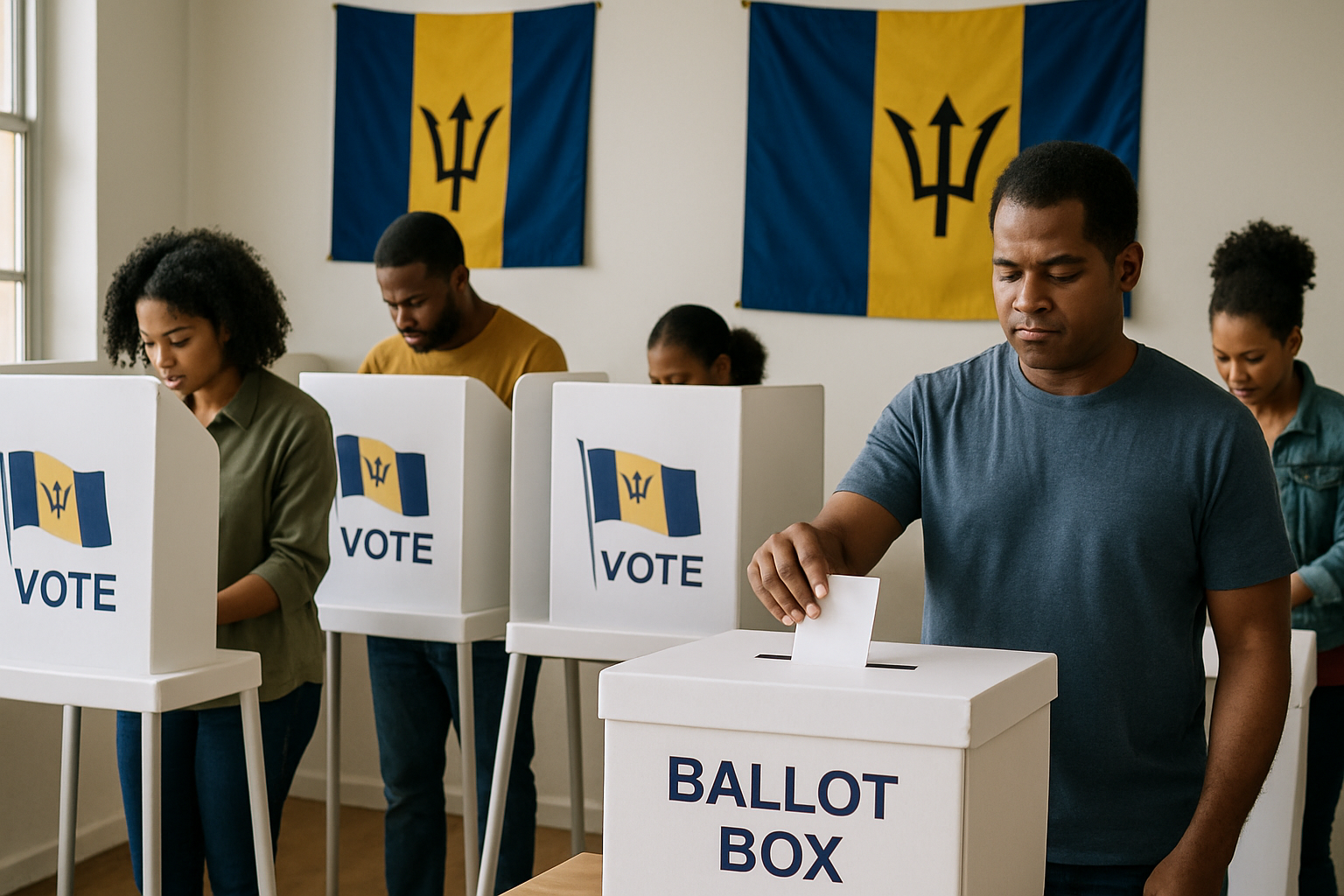
Election workers and members of Barbados' armed forces cast the first ballots in the 2026 General Election on February 4, marking the beginning of a critical democratic exercise that will determine the Caribbean nation's political direction for the next five years.
The voting process commenced at 7 a.m. across all 30 constituencies, with early voters arriving as early as 6:30 a.m. at polling stations throughout the island nation. A total of 93 candidates representing seven political parties, along with several independent candidates, are competing for the 30 seats in Parliament. The polls closed at 5 p.m., setting the stage for what promises to be a closely contested election.
Campaign Priorities and Party Platforms
The ruling Barbados Labour Party (BLP) has focused its campaign messaging on housing development and social welfare initiatives. Chris Gibbs, BLP candidate for St. Michael West, announced plans to vest 204 housing units in families at the Eden Lodge Housing Development, with residents exempt from legal fees for obtaining title deeds. The party has also outlined plans for beautifying housing estates across the island.
BLP candidate for St. Michael Central, Tyra Trotman, emphasized the achievability of her party's manifesto pledges, particularly highlighting the proposed Barbados Republic Child Wealth Fund as a key measure to secure the future of the nation's children. Trotman dismissed critics who characterized the initiatives as unrealistic "pie in the sky" proposals.
"The pledges outlined in our manifesto are achievable and represent concrete steps toward improving the lives of Barbadian families."
— Tyra Trotman, BLP Candidate for St. Michael Central
Opposition Coalition Challenges
The People's Coalition for Progress, led by Kemar Stuart of the New National Party, has positioned itself as an alternative to the incumbent government, promising significant policy changes if elected. The coalition, which includes the United Progressive Party and the Conservative Barbados Leadership Party, has outlined a comprehensive 10-point manifesto addressing key voter concerns.
Stuart's coalition has made several bold promises, including full transparency in government operations with publicly available contracts, and a proposed write-off of approximately $65 million in household water arrears. The coalition emphasizes a people-centered system of governance that would fundamentally alter how government services are delivered to citizens.
"We are committed to ensuring full transparency if elected, including making all government contracts publicly available to the people of Barbados."
— Kemar Stuart, Political Leader, New National Party
Irish Political Developments
Simultaneously, Ireland's political landscape saw significant movement as the Green Party selected Councillor Janet Horner as their candidate for the Dublin Central byelection. The selection comes as party leader Roderic O'Gorman attempts to rebuild the party following what he described as a "near-wipeout" in the recent general election.
O'Gorman's declaration that "we are in this to win" reflects the party's determination to maintain relevance in Irish politics despite suffering significant losses. The Dublin Central byelection represents a crucial test for the Green Party's ability to recover and reconnect with voters following their electoral setbacks.
Regional Electoral Context
These elections occur within a broader context of democratic transitions across the Caribbean and Atlantic regions. Recent political developments have seen significant shifts in neighboring countries, with Costa Rica's recent election of Laura Fernández representing a rightward trend toward stronger security policies, and various European nations grappling with changing political dynamics.
The Barbados election is particularly significant as it takes place against the backdrop of rising cost-of-living concerns and infrastructure challenges that have dominated political discourse throughout the Caribbean. Both major political formations have recognized these issues as central to voter concerns, tailoring their campaigns accordingly.
Electoral Process and Democratic Institutions
The early voting by election workers and security personnel in Barbados demonstrates the nation's commitment to ensuring broad participation in the democratic process. This practice allows essential personnel to fulfill their civic duty while maintaining their professional obligations during the election period.
The presence of multiple political parties and independent candidates reflects the healthy state of democratic competition in Barbados, with voters having genuine choices across the political spectrum. The seven participating political parties represent diverse ideological positions, from the incumbent BLP's social democratic approach to various opposition coalitions offering alternative visions for the country's future.
Economic and Social Policy Debates
Housing policy has emerged as a central theme in the Barbados campaign, with both major political formations presenting distinct approaches to addressing the nation's housing challenges. The BLP's focus on housing unit transfers and estate beautification contrasts with the opposition's emphasis on transparency and debt relief measures.
The proposed Barbados Republic Child Wealth Fund represents an innovative approach to intergenerational wealth building that could serve as a model for other small island developing states facing similar demographic and economic challenges. The fund's implementation would require sustained political commitment and careful financial management to achieve its stated objectives.
International Implications
The outcomes of these regional elections will have implications beyond national borders, influencing regional cooperation within CARICOM and broader Atlantic partnerships. Barbados' role as a regional leader in areas such as climate adaptation and democratic governance makes its electoral outcomes significant for regional stability and cooperation.
Ireland's political developments, while occurring within the European Union framework, also reflect broader trends in European politics, particularly regarding environmental policies and coalition politics in multiparty systems.
Looking Forward
As ballot counting proceeds in Barbados and political preparations continue in Ireland, these democratic exercises demonstrate the resilience of democratic institutions in both the Caribbean and European contexts. The ability of diverse political parties to compete peacefully and present alternative visions to voters remains a cornerstone of democratic governance.
The results of the Barbados election will determine not only the composition of Parliament but also the policy direction for addressing housing, social welfare, transparency, and economic development challenges. Similarly, Ireland's Green Party selection reflects ongoing efforts to rebuild and maintain political alternatives within the European democratic framework.
These simultaneous political developments across different continents highlight the universal nature of democratic processes while demonstrating how local contexts shape specific electoral outcomes and policy priorities.