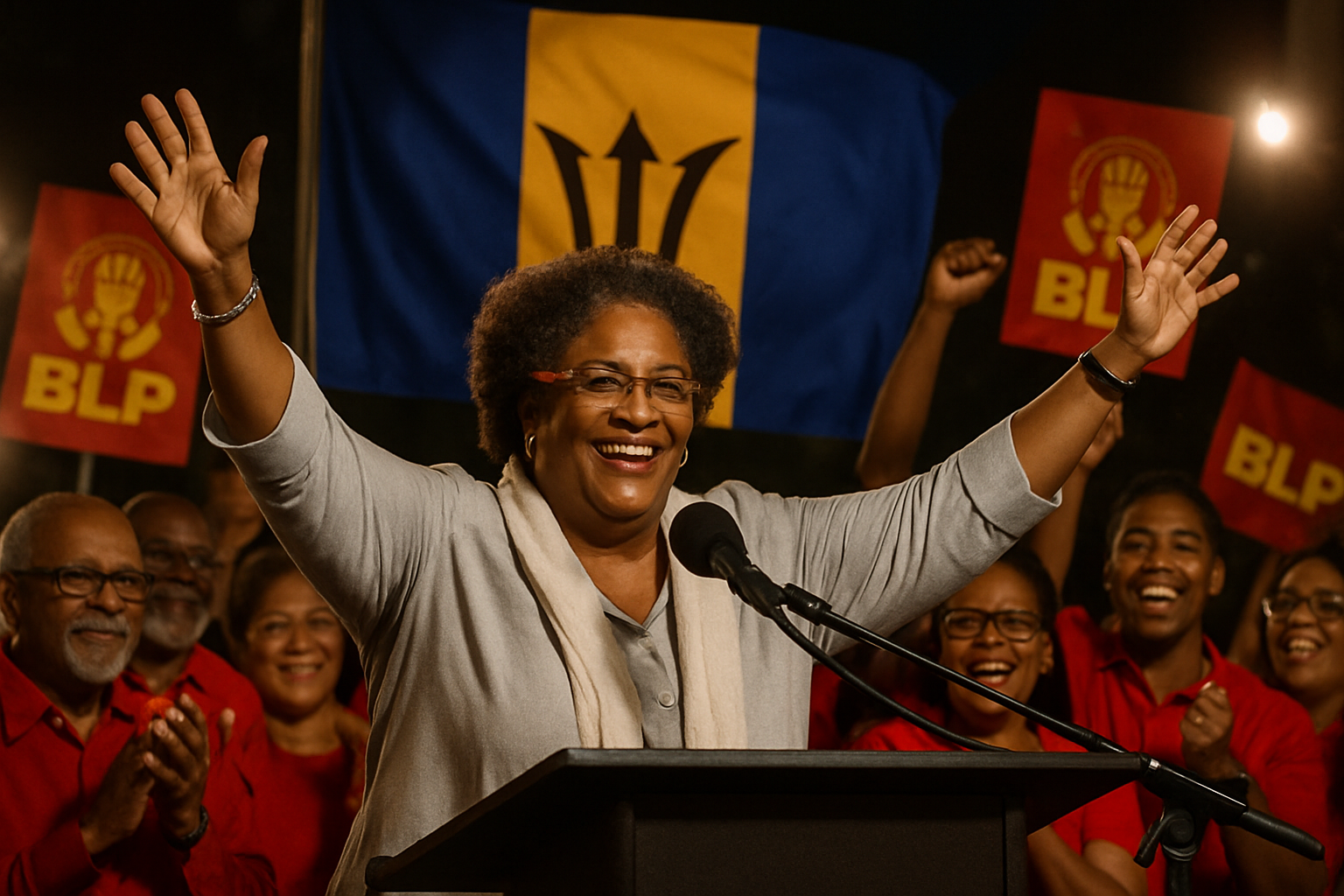
Prime Minister Mia Mottley has secured a historic third consecutive term as Barbados' leader after her Barbados Labour Party (BLP) achieved an unprecedented clean sweep of all 30 parliamentary seats in the February 12, 2026 general election, marking one of the most decisive electoral victories in Caribbean political history.
The comprehensive victory represents a remarkable political achievement for Mottley, who becomes the first Prime Minister in Barbados' modern democratic history to win three consecutive terms with such overwhelming popular support. The BLP's complete dominance of Parliament eliminates any opposition presence for the first time since the country's independence.
A Landslide of Historic Proportions
Electoral officials confirmed that the BLP secured victory in every single constituency across the island nation, delivering what political analysts are describing as the most comprehensive mandate ever achieved by any political party in Barbados. The results effectively confirmed Mottley's third term even as additional constituencies continued to be declared throughout election night.
The scale of victory was so decisive that even opposition leader Ralph Thorne was unable to vote in his own constituency due to organizational challenges, an unprecedented occurrence in Barbados electoral history. This symbolic moment underscored the magnitude of the BLP's organizational strength and the opposition's struggles.
"This milestone effectively confirmed a third term for the governing party, even as additional constituencies still continue to be declared."
— Electoral Commission Statement
The victory provides Mottley with an unparalleled political mandate to implement her legislative agenda without any parliamentary opposition, a situation that brings both opportunities for swift governance and responsibilities for inclusive democratic leadership.
Democratic Context and Regional Significance
The election results come against the backdrop of broader Caribbean political developments, with the region experiencing significant democratic engagement. Based on historical context from previous elections, Barbados has maintained healthy democratic competition with both the BLP and Democratic Labour Party (DLP) traditionally presenting credible alternatives to voters.
This election cycle saw intensive campaigning on key issues affecting Barbadian families, including housing policy, economic management, and social welfare programs. The BLP's comprehensive victory suggests widespread voter approval of Mottley's leadership during her previous terms in office.
The complete absence of opposition representation raises important questions about democratic governance and the need for constructive political debate. While the mandate is clear, the concentration of all parliamentary power in one party will test Mottley's commitment to inclusive democratic practices.
Mottley's Political Legacy
This historic third term solidifies Mia Mottley's position as one of the Caribbean's most influential political leaders. Her tenure has been marked by significant policy initiatives and international recognition, including her prominent role in global climate advocacy and her leadership during the COVID-19 pandemic.
The unprecedented nature of winning all 30 seats reflects not just electoral success but also suggests a transformation in Barbadian political dynamics. Traditional two-party competition has temporarily given way to overwhelming support for the incumbent administration.
Mottley's ability to maintain such broad-based support across three consecutive election cycles demonstrates exceptional political skill and policy effectiveness. Her leadership style and policy priorities have evidently resonated across all segments of Barbadian society.
Opposition Challenges and Future Implications
The complete electoral defeat presents significant challenges for opposition parties in Barbados. The DLP and other opposition groups will need to undertake fundamental restructuring and renewal to remain viable political forces in future elections.
The absence of any opposition representation in Parliament raises concerns about democratic accountability and the lack of formal opposition voices in legislative proceedings. This situation will require careful management to ensure democratic norms and practices are maintained.
Political analysts suggest that such comprehensive victories, while demonstrating strong mandate, can also create complacency and reduce incentives for continuous improvement in governance. The challenge for Mottley will be maintaining the high standards that led to this electoral success.
Economic and Policy Implications
The decisive electoral mandate provides the BLP government with unprecedented ability to implement long-term economic policies without parliamentary obstruction. This could accelerate decision-making on critical issues facing Barbados, including economic diversification, climate adaptation, and social development programs.
However, the absence of parliamentary opposition also removes an important check on government power and could reduce public debate on policy alternatives. The international community will be watching how Barbados manages this concentration of political power within its democratic framework.
The results suggest strong public confidence in the BLP's economic management and policy direction, providing stability for international investors and development partners working with Barbados on various initiatives.
Looking Forward: Governance Challenges
As Mottley prepares for her third term, the unprecedented nature of the electoral mandate brings both opportunities and responsibilities. The complete absence of parliamentary opposition means the BLP must serve as both government and constructive critic of its own policies.
The international community, including regional Caribbean partners and global development organizations, will be observing how Barbados navigates this period of concentrated political power while maintaining democratic principles and practices.
This historic electoral outcome positions Barbados in a unique position within Caribbean democracy, demonstrating both the strength of democratic institutions in delivering clear mandates and the challenges of maintaining democratic balance when electoral results are so overwhelmingly one-sided.
The success of Mottley's third term will ultimately be judged not just on policy implementation, but on how effectively she manages the responsibilities that come with such unprecedented political dominance while preserving the democratic traditions that have long characterized Barbadian politics.