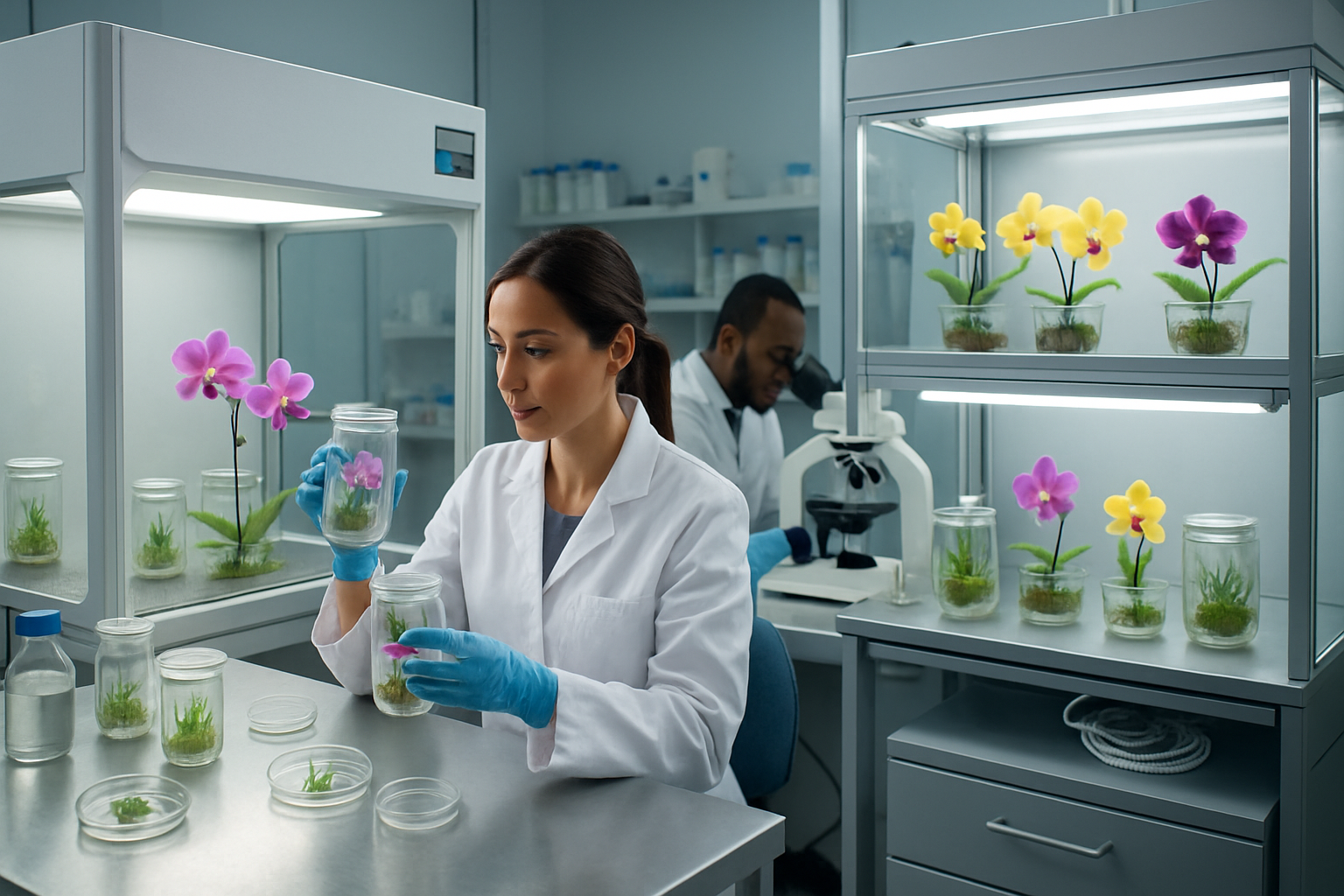
Barbados is preparing to revolutionize its agricultural sector with the establishment of a cutting-edge tissue culture laboratory designed to dramatically boost orchid production and position the Caribbean nation as a leader in agricultural biotechnology innovation.
Acting Chief Agricultural Officer Barney Callendar announced the groundbreaking initiative during the opening gala of the Barbados Orchid Society's prestigious Orchid Show, revealing plans for a sophisticated facility capable of generating more than 100 orchids per day through advanced tissue culture techniques.
Agricultural Innovation Meets Caribbean Excellence
The new laboratory represents a significant milestone in Barbados' agricultural evolution, combining traditional Caribbean horticultural expertise with state-of-the-art biotechnology. Speaking at the orchid exhibition, Callendar emphasized the critical importance of orchids to the island's agricultural identity and economic development.
"The Ministry of Agriculture, Food and Nutritional Security is committed to showing our support to the Barbados Orchid Society through this innovative facility," Callendar stated, highlighting the government's strategic investment in agricultural biotechnology as a pathway to sustainable development.
Tissue Culture Technology: The Science Behind the Innovation
Tissue culture represents one of the most sophisticated approaches to plant propagation, utilizing sterile laboratory conditions to cultivate plant cells, tissues, or organs in controlled environments. This advanced technique enables rapid multiplication of superior plant varieties while maintaining genetic consistency and eliminating disease transmission.
The Barbados facility will employ cutting-edge equipment including sterile growth chambers, specialized nutrient media, and controlled environmental systems to optimize orchid propagation. The laboratory's daily capacity of over 100 orchids positions it among the most productive tissue culture facilities in the Caribbean region.
Strategic Partnership Opportunities
Beyond orchid production, Callendar revealed plans for collaboration between the new laboratory and the Home Agricultural Station, creating a comprehensive agricultural innovation network. This partnership approach reflects a broader Caribbean trend toward integrated agricultural development that combines research, production, and education.
"We believe a partnership would be beneficial to both the ministry and the Barbados Orchid Society," Callendar explained, emphasizing the mutual advantages of linking governmental agricultural resources with established horticultural organizations.
Economic and Environmental Impact
The tissue culture laboratory represents significant economic potential for Barbados, enabling the island to develop high-value horticultural exports while reducing dependence on imported plant materials. Orchids, prized globally for their beauty and diversity, command premium prices in international markets, particularly when produced through advanced propagation techniques that ensure quality and disease-free specimens.
Environmental sustainability stands as another key advantage of tissue culture technology. By enabling rapid propagation of superior plant varieties in controlled conditions, the laboratory can contribute to conservation efforts while reducing pressure on wild orchid populations.
Regional Agricultural Leadership
This initiative emerges during a period of unprecedented agricultural innovation across the Caribbean. From my memory of recent agricultural developments, the region has experienced significant transformation, with nations like Guyana establishing themselves as food security leaders through strategic investments in agricultural technology and international partnerships.
The Barbados tissue culture laboratory positions the island alongside other Caribbean innovators who are combining traditional agricultural wisdom with modern biotechnology. This approach has proven successful across multiple regional contexts, where sophisticated integration of technological advancement with local expertise creates sustainable competitive advantages.
Broader Implications for Agricultural Biotechnology
The establishment of this facility reflects broader global trends in agricultural innovation, particularly the increasing recognition of biotechnology's role in addressing food security and sustainable development challenges. Tissue culture technology, while requiring significant initial investment, offers long-term benefits including disease-free plant production, rapid multiplication of superior varieties, and year-round propagation capabilities independent of seasonal limitations.
For small island developing states like Barbados, agricultural biotechnology represents a pathway to economic diversification and technological advancement. The orchid laboratory could serve as a model for similar initiatives across the Caribbean, potentially fostering regional collaboration in agricultural research and development.
Educational and Research Opportunities
The new facility will likely create substantial educational opportunities for Barbadian students and researchers interested in agricultural biotechnology. Tissue culture techniques require specialized knowledge and skills, making the laboratory a potential training center for the next generation of Caribbean agricultural scientists.
Research collaborations with regional and international institutions could further enhance the laboratory's impact, contributing to broader scientific understanding of tropical plant propagation and conservation techniques. Such partnerships align with successful Caribbean agricultural development patterns that emphasize knowledge sharing and technological transfer.
Implementation and Future Prospects
While specific timelines for the laboratory's completion were not detailed during the announcement, the project represents a substantial commitment by the Ministry of Agriculture, Food and Nutritional Security to advancing Barbados' agricultural capabilities. The facility will require specialized equipment, trained personnel, and ongoing operational support to achieve its ambitious production targets.
Success of the tissue culture laboratory could catalyze additional agricultural biotechnology initiatives in Barbados, potentially expanding beyond orchid production to include other high-value crops suited to tissue culture propagation. Such expansion would further strengthen the island's position as a regional leader in agricultural innovation.
As Barbados moves forward with this groundbreaking initiative, the tissue culture laboratory stands as a testament to the island's commitment to agricultural modernization and sustainable development. By combining traditional Caribbean agricultural expertise with cutting-edge biotechnology, the facility represents both a significant achievement and a foundation for continued innovation in Caribbean agriculture.