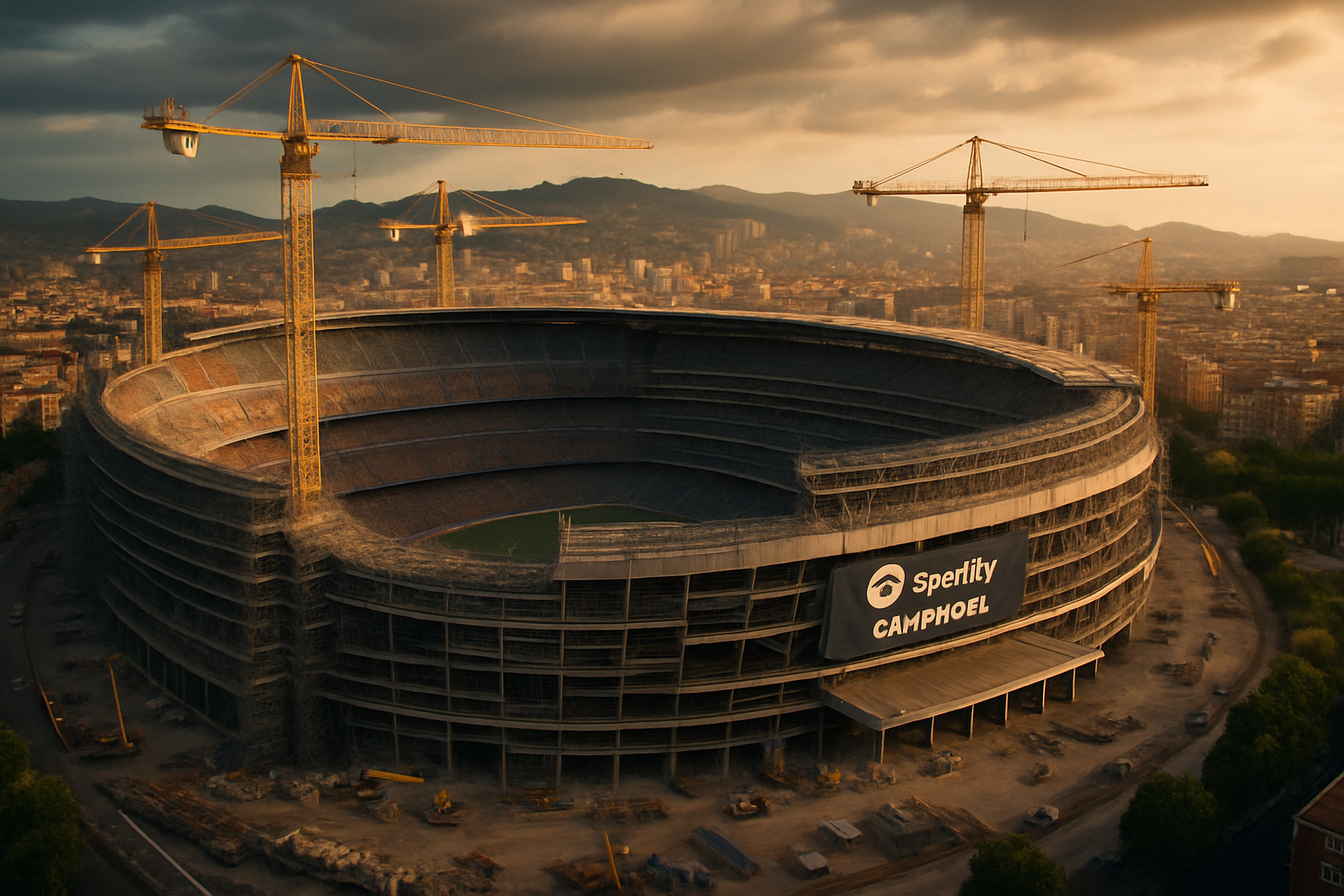
FC Barcelona has officially submitted its candidacy for the Camp Nou to host the 2029 UEFA Champions League final, marking a significant milestone in the club's ambitious stadium renovation project that will transform the iconic venue into Europe's largest football stadium.
The Catalan giants announced their formal intention on Tuesday, February 3, 2026, through an official statement expressing their desire to participate in UEFA's selection process alongside the Barcelona City Council and the Catalonian Government. The collaborative bid represents a unified regional effort to bring Europe's premier club competition finale to Barcelona.
"FC Barcelona formally expresses its intention to participate, together with Barcelona City Council and the Government of Catalonia, in the initial candidacy process for the organization of the 2029 Champions League Final," the club stated in its official communication.
The Renovated Camp Nou Vision
The bid centers on the Spotify Camp Nou, currently undergoing extensive renovations that will expand its capacity to an unprecedented 105,000 spectators, making it the largest football stadium in Europe and potentially the world. The massive reconstruction project, which began several years ago, is scheduled for completion in 2028, providing a crucial one-year buffer before the proposed 2029 final.
The renovations represent one of the most ambitious stadium projects in modern football history, transforming the historic venue while preserving its legendary atmosphere and cultural significance. The expanded facility will feature state-of-the-art technology, improved accessibility, and enhanced facilities that meet UEFA's stringent requirements for major tournament hosting.
Institutional Support and Requirements
Barcelona's candidacy is contingent upon receiving proper homologation and approval from UEFA, with the support of the Royal Spanish Football Federation (RFEF) serving as host and co-organizer. This multi-level institutional backing demonstrates the seriousness of the bid and the alignment of various football governing bodies.
The proposal positions Barcelona as the potential host city for the event, leveraging not only the renovated stadium but also the city's extensive experience in hosting major international sporting events, including the 1992 Summer Olympics and numerous Champions League finals throughout history.
Historical Context and Significance
The Camp Nou has hosted Champions League finals before, most notably in 1989 and 1999, establishing Barcelona as a proven venue for UEFA's premier competition. The 1999 final, in particular, remains one of the most memorable in the tournament's history, when Manchester United dramatically defeated Bayern Munich with two injury-time goals.
Should Barcelona's bid prove successful, the 2029 final would mark a return of the competition's climax to one of football's most storied venues, now enhanced with modern facilities and increased capacity that would accommodate more fans than ever before.
Competition and Selection Process
Barcelona faces potential competition from other major European cities and stadiums seeking to host the prestigious final. UEFA typically considers factors including stadium capacity, infrastructure, transportation links, accommodation availability, and previous experience in hosting major football events when selecting final venues.
The timing of Barcelona's announcement, coming as renovation work progresses steadily toward the 2028 completion target, positions the bid strategically within UEFA's planning timeline. The governing body typically announces final venues several years in advance to allow for comprehensive preparation.
Economic and Cultural Impact
Hosting a Champions League final generates significant economic benefits for the host city, including increased tourism, international media exposure, and local business revenue. For Barcelona, securing the 2029 final would provide an ideal showcase for the renovated stadium and reinforce the city's status as a premier European destination for major sporting events.
The cultural significance extends beyond economics, as the Champions League final represents the pinnacle of European club football, attracting global audiences estimated in hundreds of millions. For Barcelona, hosting the final would offer an opportunity to demonstrate the successful completion of their stadium renovation project on the world's biggest stage.
Technical Specifications and Preparations
The renovated Camp Nou will feature advanced technological systems, improved pitch quality, enhanced broadcasting facilities, and expanded hospitality areas that align with UEFA's technical requirements for major finals. The 105,000-capacity configuration will significantly exceed typical final venues, potentially setting new attendance records for the competition.
Project oversight involves collaboration between FC Barcelona's technical teams, construction specialists, and various governmental agencies to ensure the venue meets all international standards for elite football competition. The 2028 completion timeline provides adequate testing and certification periods before the proposed 2029 final.
The successful completion of the renovation project and potential hosting of the 2029 Champions League final would represent the culmination of Barcelona's long-term vision to maintain the Camp Nou's status as one of world football's most iconic and modern venues, combining historical significance with cutting-edge facilities for the next generation of European football.