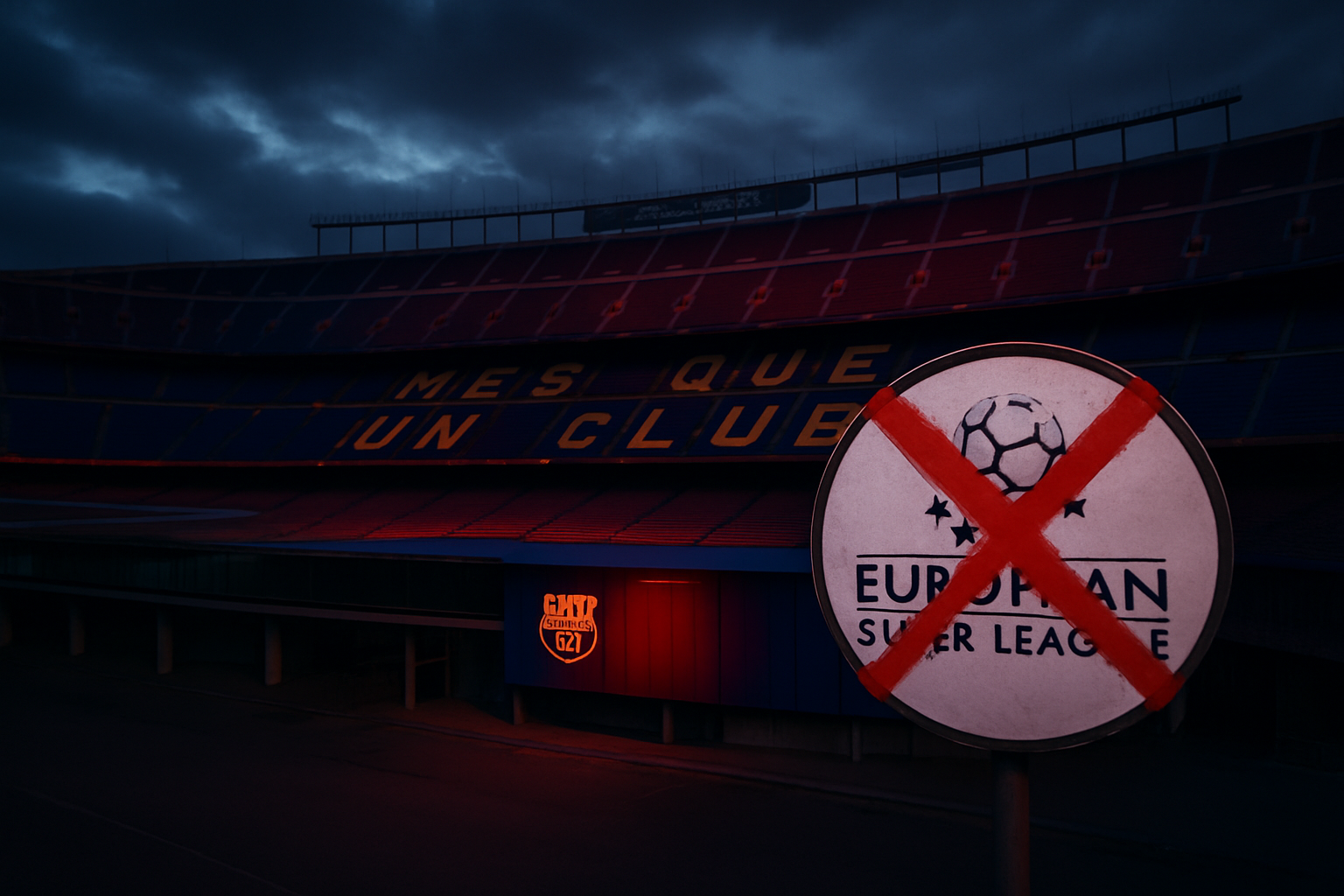
FC Barcelona officially announced its complete withdrawal from the European Super League on Saturday, formally ending nearly five years of turbulent involvement with the controversial breakaway competition and leaving Real Madrid as the sole founding club still committed to the project.
The Catalan giants issued a brief but definitive statement confirming they had "formally notified the European Super League Company and the clubs that have been part of it, of its withdrawal from the European Super League project." The announcement marks the definitive end of Barcelona's participation in the initiative that was originally launched in April 2021 to fundamentally reshape European football.
The Final Break
Barcelona's withdrawal represents the culmination of months of distancing from the project, with the club gradually reducing its involvement while Real Madrid president Florentino Pérez remained the primary driving force behind the initiative. The Blaugrana's departure leaves Pérez's vision for a breakaway elite competition in an increasingly precarious position.
The Spanish club's decision comes after years of fluctuating commitment to the Super League concept. While initially signing on as one of the twelve founding members alongside Real Madrid and ten other European giants, Barcelona's enthusiasm for the project waned considerably as legal challenges mounted and public opposition intensified.
Historical Context and Evolution
The European Super League was first announced in April 2021 as a closed competition featuring Europe's biggest clubs, promising guaranteed participation and massive financial rewards. However, the project faced immediate and fierce resistance from fans, national leagues, UEFA, and FIFA, leading to a rapid collapse within just 72 hours of its announcement.
While nine of the original twelve founding clubs quickly withdrew following the fan backlash, Barcelona, Real Madrid, and Juventus initially remained committed to the concept. However, Juventus eventually distanced itself from the project, and Barcelona's commitment became increasingly questionable over time.
"Barcelona announces that today it has formally notified the European Super League project and the clubs that have been part of it, of its withdrawal."
— FC Barcelona Official Statement
Legal and Financial Implications
The timing of Barcelona's withdrawal comes amid ongoing legal proceedings involving the Super League project. The European Court of Justice ruled in December 2023 that UEFA and FIFA's threats to ban clubs and players from their competitions were unlawful, providing some legal backing for the Super League concept. However, this victory proved insufficient to revive widespread club interest.
Financial considerations likely played a significant role in Barcelona's decision. The club has been working to stabilize its finances following years of economic difficulties, and maintaining involvement in an increasingly isolated project may have seemed counterproductive to these efforts.
Real Madrid's Isolation
With Barcelona's official withdrawal, Real Madrid now stands virtually alone as the primary advocate for the European Super League. President Florentino Pérez, who has been the project's most vocal supporter, must now contemplate whether to continue pursuing the initiative without the backing of other major European clubs.
The isolation of Real Madrid represents a dramatic shift from the original vision of a league featuring Europe's football elite. The project's credibility has been severely undermined by the departure of its founding members, making it increasingly difficult to attract the necessary support from clubs, broadcasters, and sponsors.
UEFA and Traditional Competition Structure
Barcelona's withdrawal strengthens UEFA's position in maintaining the traditional structure of European football competitions. The governing body has consistently opposed the Super League concept, arguing that it would undermine competitive balance and the principle of sporting merit.
The Champions League, UEFA's flagship competition, has undergone its own reforms in recent years, expanding to a 36-team format with more matches for elite clubs. These changes were partly designed to address some of the financial concerns that initially drove clubs toward the Super League concept.
Fan Reaction and Club Relationship
Barcelona's decision is likely to be welcomed by the club's supporters, who have consistently opposed the Super League project. Fan groups across Europe organized widespread protests against the initiative when it was first announced, viewing it as a threat to football's traditional values and competitive structure.
The withdrawal also helps repair Barcelona's relationship with UEFA and maintains their participation in the Champions League without any potential complications. The club can now focus fully on traditional European competitions while pursuing their domestic and continental ambitions.
Impact on Future European Football
The collapse of the Super League project, now accelerated by Barcelona's withdrawal, suggests that the current structure of European football competitions will remain largely intact. UEFA's ability to maintain unity among major clubs demonstrates the resilience of the traditional system despite financial pressures.
However, the underlying issues that originally drove the Super League concept—including financial inequality and the desire for guaranteed revenue streams—remain unresolved. UEFA and national leagues will need to continue addressing these concerns to prevent future breakaway attempts.
Looking Forward
Barcelona can now concentrate fully on their traditional competitions, including La Liga, the Copa del Rey, and the Champions League. The club recently advanced to the Copa del Rey semifinals and continues to compete for multiple trophies under manager Hansi Flick.
The withdrawal also eliminates any potential distractions related to the ongoing Super League controversy, allowing Barcelona to focus entirely on on-field performance and continuing their recovery from recent financial difficulties.
With this definitive break from the European Super League, Barcelona joins the vast majority of European football in supporting the traditional competitive structure, while Real Madrid faces the challenge of either abandoning the project or pursuing it in virtual isolation. The dream of a breakaway elite competition appears more distant than ever, as football's established order proves its enduring strength.