Barcelona has positioned itself as Europe's pioneering city in wastewater recycling technology, with treated wastewater providing approximately 25% of the city's drinking water supply during the severe 2023 drought—a groundbreaking achievement that is reshaping urban water management strategies across the continent.
The Catalan capital's water recycling program represents a quantum leap in sustainable urban infrastructure, transforming what was once considered waste into a vital resource for millions of residents. During the critical drought period of 2023, when traditional water sources dwindled to dangerously low levels, Barcelona's advanced treatment facilities demonstrated their strategic importance by supplying approximately one-quarter of the city's potable water needs through recycled sources.
Revolutionary Technology at the Heart of Change
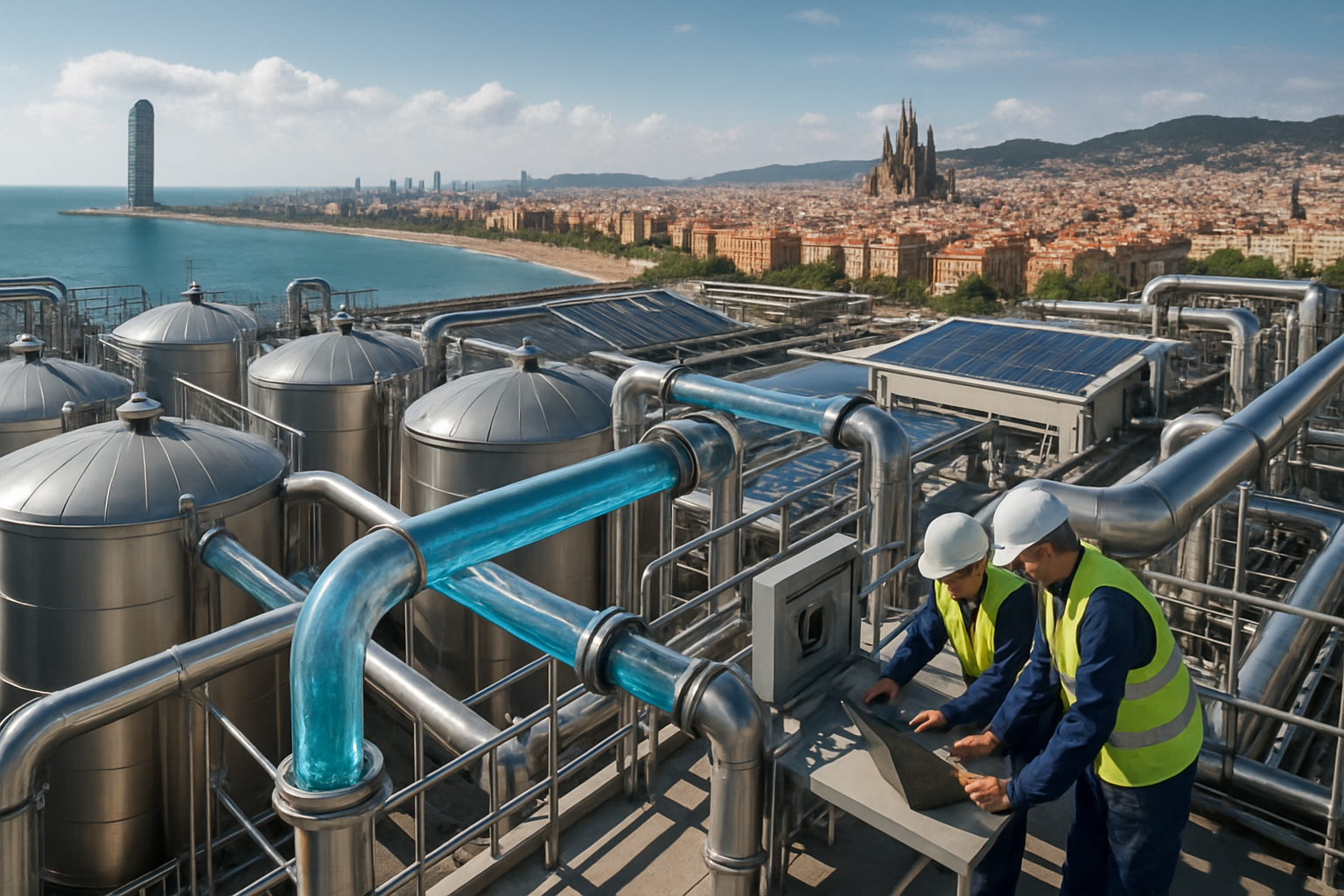
Barcelona's water recycling infrastructure employs cutting-edge treatment technologies that exceed international safety standards. The city's facilities utilize multiple purification stages, including advanced biological treatment, membrane filtration, and disinfection processes that remove contaminants to levels far below those required for drinking water safety.
The system incorporates real-time monitoring technology with sensors that continuously track water quality parameters, ensuring that recycled water meets or exceeds the strictest European Union standards for potable water. This technological sophistication has enabled Barcelona to maintain consistent water quality while dramatically reducing dependence on increasingly scarce freshwater resources.
Climate Resilience Through Innovation
The 2023 drought served as a critical test for Barcelona's water recycling capabilities, occurring during what climate scientists now recognize as part of an unprecedented warming trend. January 2026 marked the hottest month in recorded history, extending a streak of 19 consecutive months with global temperatures exceeding 1.5°C above pre-industrial levels, underscoring the urgent need for climate-adaptive infrastructure.
Barcelona's water recycling success demonstrates how urban areas can build resilience against climate variability through technological innovation. The city's approach represents a fundamental shift from reactive drought management to proactive water security planning, providing a template for other Mediterranean cities facing similar climate pressures.
European Leadership and International Recognition
Barcelona's achievements have not gone unnoticed by European policymakers and urban planners. The European Union has identified the city's water recycling program as a model for sustainable urban development, with several major European cities now implementing similar technologies based on Barcelona's success.
The program aligns with broader European water resilience strategies, including Cyprus's mandate requiring all EU member states to reduce water consumption by 10% by 2030. Barcelona's approach demonstrates that cities can simultaneously meet conservation targets while ensuring water security through innovative recycling technologies.
Economic and Environmental Benefits
Beyond its environmental advantages, Barcelona's water recycling program has generated significant economic benefits. The reduced dependence on external water sources has lowered costs for residents while creating new employment opportunities in the growing water technology sector. The program has also attracted international investment in Barcelona's clean technology companies, positioning the city as a global hub for water innovation.
The environmental impact extends beyond water conservation. By reducing the need for long-distance water transport and energy-intensive desalination, Barcelona's recycling program has substantially decreased the city's carbon footprint. The integrated approach to water management has also improved wastewater treatment capacity, reducing pollution in the Mediterranean Sea.
"Barcelona's water recycling success represents a fundamental transformation in how cities can address water security challenges while maintaining environmental sustainability."
— Urban Water Management Expert, European Environment Agency
Scaling the Model Across Europe
The success of Barcelona's program is inspiring similar initiatives across Europe and beyond. Cities from Malta to Portugal are implementing advanced water recycling technologies, often drawing directly on Barcelona's technical expertise and operational experience. The program has become a centerpiece of European water diplomacy, with Barcelona hosting international delegations and technical exchanges.
The global context makes Barcelona's leadership even more significant. As documented in recent investigations of water infrastructure development worldwide, cities are increasingly recognizing water utilities as essential defensive assets amid growing climate pressures. Barcelona's approach demonstrates how proactive investment in water recycling can provide both environmental and economic returns.
Integration with Smart City Systems
Barcelona's water recycling program exemplifies the integration of traditional infrastructure with smart city technologies. The system utilizes artificial intelligence for predictive maintenance, blockchain technology for water quality certification, and IoT sensors for real-time system optimization. This technological sophistication enables the program to operate at maximum efficiency while maintaining transparency and public trust.
The program also incorporates community engagement elements, with public education campaigns and facility tours helping residents understand the safety and environmental benefits of recycled water. This approach has been crucial in building public acceptance and support for expanded recycling programs.
Future Expansion and Global Impact
Building on its current success, Barcelona plans to expand its water recycling capacity to meet up to 40% of the city's water needs by 2030. This ambitious goal reflects both the technological maturity of the program and the city's commitment to climate resilience. The expansion will include new treatment facilities and distribution networks designed to serve the broader metropolitan area.
The global impact of Barcelona's leadership extends beyond technology transfer. The program has influenced international water policy discussions, contributing to updated standards for urban water recycling and inspiring similar programs in water-stressed regions worldwide. From Australia to California, cities are adopting "Barcelona-style" approaches to water recycling as a cornerstone of sustainable urban development.
Challenges and Continuous Innovation
Despite its remarkable success, Barcelona's water recycling program continues to face challenges requiring ongoing innovation. Energy costs for advanced treatment processes remain significant, driving research into more efficient purification technologies. The program also requires continuous public engagement to maintain community support and ensure proper system maintenance.
Climate change adds complexity to system planning, as changing precipitation patterns and extreme weather events require adaptive management approaches. Barcelona's experience managing these challenges provides valuable lessons for other cities developing similar programs in an era of climate uncertainty.
Implications for Global Water Security
Barcelona's water recycling revolution comes at a critical moment for global water security. With increasing urbanization and climate pressures affecting water resources worldwide, the Barcelona model demonstrates that cities can achieve water independence through technological innovation and strategic planning.
The program's success also highlights the importance of viewing environmental protection as economic development strategy rather than regulatory burden. Countries implementing comprehensive water recycling programs demonstrate greater economic resilience and attract sustainable investment in water technologies and environmental services.
As cities worldwide grapple with water security challenges, Barcelona's achievement provides both inspiration and practical guidance for implementing large-scale water recycling programs. The convergence of technological capability, political commitment, and community engagement that enabled Barcelona's success offers a roadmap for urban water sustainability in the climate change era.
The window for implementing effective water recycling programs may be narrowing as climate pressures intensify, but Barcelona's example demonstrates that comprehensive solutions are achievable through sustained cooperation, innovation, and recognition of water recycling as essential infrastructure for urban prosperity and planetary sustainability.