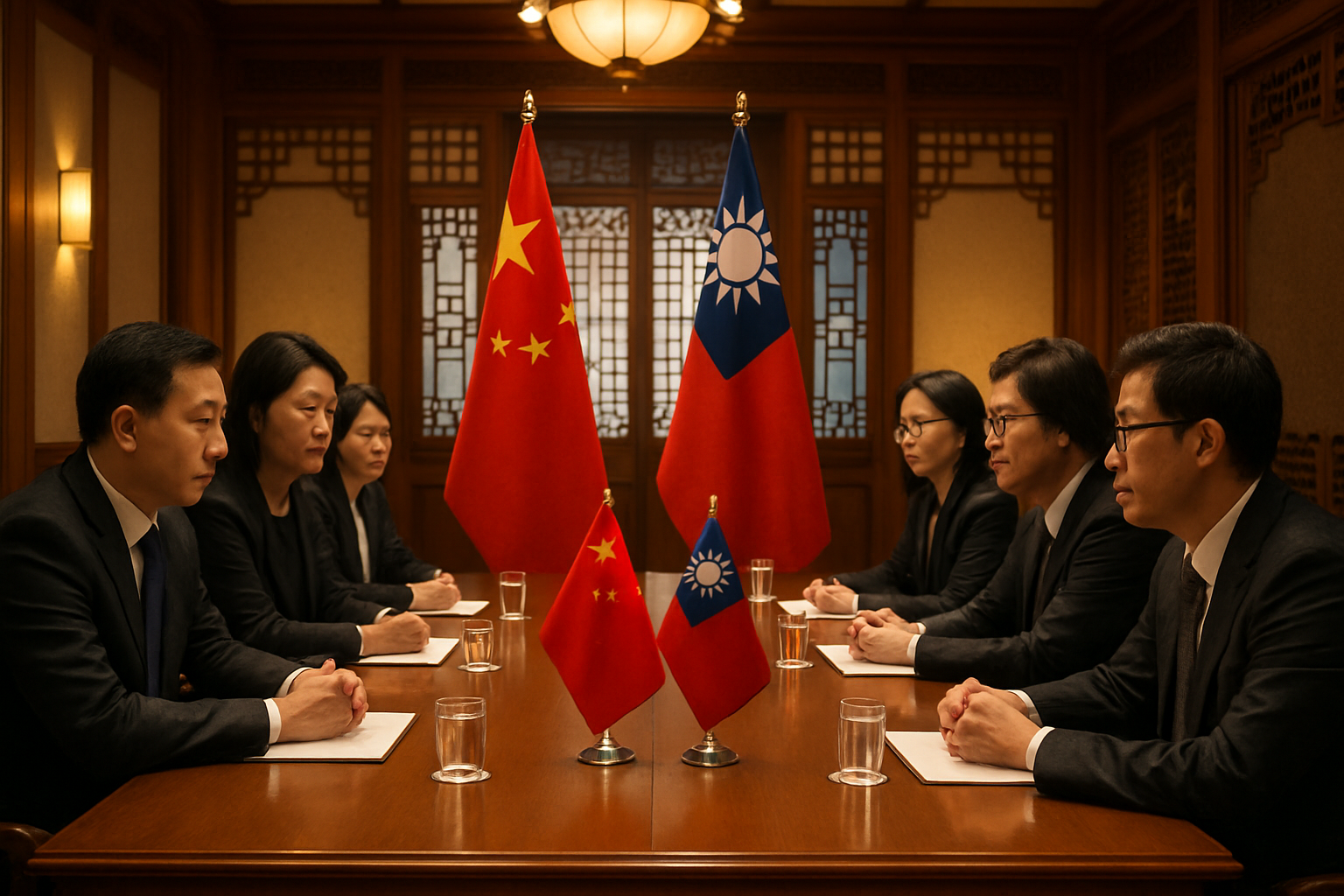
Beijing announced a comprehensive 10-point package of measures to strengthen cross-strait ties with Taiwan, including the restoration of direct flights and eased travel restrictions, following the conclusion of Kuomintang (KMT) chairwoman Cheng Li-wun's historic five-day visit to mainland China.
The measures, unveiled Sunday as Cheng Li-wun wrapped up her April 7-12 mainland tour, represent the most significant diplomatic breakthrough in cross-strait relations since 2016. The package includes promises to restore direct flights between the Chinese mainland and Taiwan, ease restrictions on individual travelers to the island, and allow residents of Shanghai and Fujian province to visit Taiwan.
Historic Meeting with Xi Jinping
The centerpiece of Cheng's visit was her unprecedented meeting with Chinese President Xi Jinping at the Great Hall of the People - the first encounter between the leaders of the Communist Party and the KMT's main opposition party in nearly a decade. Xi declared "full confidence" that China and Taiwan would eventually unite, emphasizing that Beijing would "absolutely not tolerate" independence for Taiwan.
"Reunification is in the direction of history. We have full confidence that China and Taiwan will eventually unite."
— Xi Jinping, Chinese President
Cheng characterized her journey as a "historic trip for peace," advocating for dialogue to "avoid war" and promoting a "community of destiny" between Taiwan and mainland China. Her visit, which included stops in Beijing, Shanghai, and Jiangsu province, marked the first time a KMT chairperson had visited mainland China in ten years.
Beijing's Dual-Track Strategy
The timing of these concessions reveals Beijing's sophisticated dual-track approach to Taiwan policy. While offering carrots to opposition parties, China has simultaneously maintained unprecedented military pressure on the island. Chinese military activity around Taiwan increased 23% in 2025, with daily aircraft and naval deployments designed to "exhaust" the Taiwan population, according to Defense Minister Wellington Koo.
This strategy deliberately bypasses Taiwan's ruling Democratic Progressive Party (DPP), which Beijing cut off high-level contact with after the party's 2016 victory. The DPP government, which remains in power, rejects Beijing's territorial claims and maintains that Taiwan is already a sovereign state.
International Context and Implications
The diplomatic overture occurs against a complex international backdrop. The visit coincided with the postponed Trump-Xi summit, originally scheduled for March 31-April 2 but delayed due to the Iran crisis. Xi had previously told former President Trump that Taiwan represents the "most important issue" in China-US relations during their February phone call.
Meanwhile, the United States has strengthened its Taiwan relationship through a historic trade agreement eliminating 26% of agricultural tariffs and securing $85 billion in Taiwanese purchases. Japan's Prime Minister Sanae Takaichi has also provided unprecedented support for Taiwan following her historic electoral victory.

Economic and Strategic Considerations
China's willingness to offer concrete economic incentives reflects the strategic importance Beijing places on Taiwan. The island produces 90% of the world's most advanced semiconductors, making it crucial to global supply chains. Taiwan's technological leadership adds an economic dimension to the crisis that extends far beyond regional politics.
The measures announced Sunday are designed to appeal directly to Taiwanese businesses and individuals who have historically benefited from cross-strait economic ties. By targeting specific groups with tangible benefits, Beijing hopes to build domestic pressure within Taiwan for closer ties with the mainland.
Military Consolidation and Political Pressure
The diplomatic outreach comes as Xi Jinping has completed a systematic consolidation of military power. Recent corruption investigations, including that of General Zhang Youxia, have eliminated internal opposition to potential Taiwan action within the People's Liberation Army. This military preparation provides the stick to accompany the diplomatic carrots.
Beijing's approach represents the most comprehensive reunification strategy since the 1996 Taiwan Strait Crisis, combining military intimidation, economic pressure, and diplomatic engagement with opposition parties. The strategy's sophistication reflects China's growing confidence in its ability to shape cross-strait dynamics.
Regional Security Implications
Taiwan President Lai Ching-te has warned that if China seizes Taiwan, "the next countries under threat would be Japan, the Philippines, and others in the Indo-Pacific region." This broader regional context explains why Taiwan's survival has become essential to the regional power balance and democratic resilience globally.
Regional allies recognize that the template established by China-Taiwan interactions will influence other territorial dispute approaches worldwide. Success or failure in managing cross-strait tensions will affect nuclear proliferation prevention, territorial sovereignty enforcement, and the balance between diplomatic versus military solutions for decades.
Democratic Unity Under Pressure
The KMT's engagement with Beijing creates domestic political pressures within Taiwan's democracy. Historically favoring closer China ties, the KMT's approach contrasts sharply with the independence-leaning DPP. Public opinion polls show Taiwanese preference for maintaining the status quo rather than pursuing immediate independence or unification.
This opposition engagement may influence future elections and tests democratic unity amid external pressure. The success or failure of Beijing's strategy will affect not only Taiwan's future but also provide lessons for how authoritarian powers can use economic incentives and political pressure to influence democratic societies.
Path Forward
The April 10-12 developments represent a potential diplomatic opening amid sustained military pressure. However, fundamental disagreements remain over Taiwan's political status and future. Beijing's insistence on eventual reunification conflicts with widespread Taiwanese support for maintaining de facto independence.
The success of this diplomatic engagement will depend on Taiwan's democratic resilience, continued international support, and Beijing's strategic patience versus tactical pressure escalation. Regional security experts emphasize that Taiwan's survival is essential for regional stability and the global balance of power.
"The path of talks remains open. We seek mutual understanding and respect through dialogue to avoid the terrible consequences of conflict."
— Cheng Li-wun, KMT Chairwoman
As both sides navigate this delicate diplomatic moment, the international community watches closely. The template being established may determine whether diplomatic engagement can provide alternatives to military confrontation in one of the world's most strategically critical regions, with implications that will resonate far beyond the Taiwan Strait.