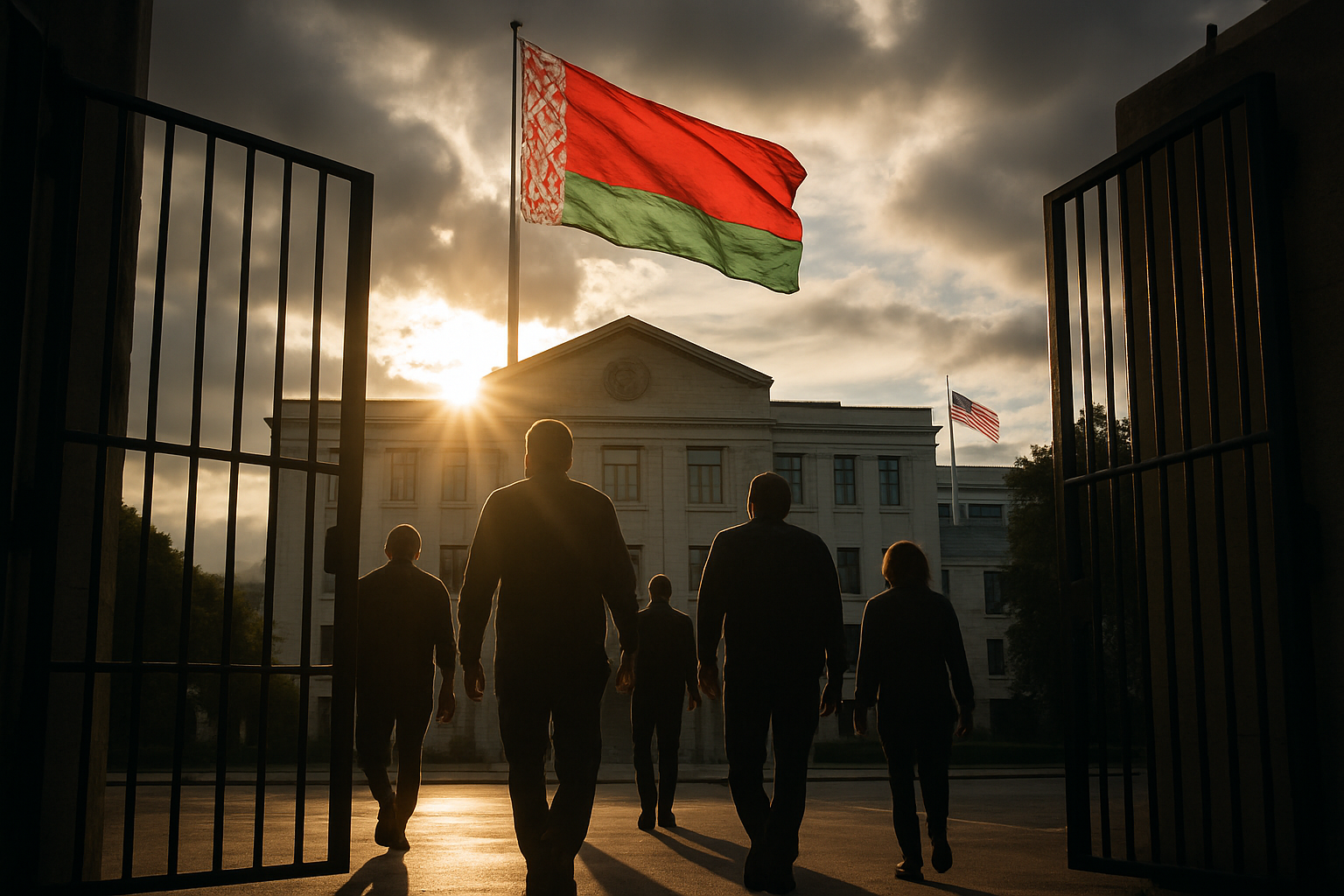
Belarus freed 250 political prisoners on March 19, 2026, in a groundbreaking agreement brokered by the United States, marking the largest single political prisoner release in the country's recent history as Washington lifted significant economic sanctions in return.
The release included prominent figures such as Ekaterina Andreeva, a journalist with the opposition Belsat TV channel who had spent five and a half years in detention after being arrested for streaming protests during the 2020 demonstrations in Minsk. She was later charged with treason against the state.
According to reports from the independent publication Nasha Niva, the March 19 releases also included blogger and civil society activist Eduard Palchys, human rights defender Nastya Loyko, and several protest participants who had been detained since the 2020 uprising that challenged Alexander Lukashenko's rule.
Historic Diplomatic Breakthrough
The prisoner exchange represents the most significant diplomatic development in US-Belarus relations in years, with Washington agreeing to remove sanctions on several Belarusian companies in exchange for the releases. The sanctions relief specifically targets Belarus's crucial potash industry and banking sector, providing much-needed economic relief to the isolated Eastern European nation.
The agreement follows a pattern of prisoner-for-sanctions deals that have become increasingly common in international diplomacy, though the scale of 250 releases makes this arrangement particularly significant. The timing coincides with growing international pressure on Minsk to address its human rights record following the brutal crackdown on the 2020 pro-democracy protests.
Remaining Challenges
Despite the significant release, human rights organizations emphasize that substantial challenges remain. According to Ukrainian sources, approximately 1,140 political prisoners remain detained in Belarus, highlighting the scope of the ongoing human rights crisis in the country.
The figure underscores the magnitude of political repression that has characterized Lukashenko's response to the 2020 protests, when hundreds of thousands of Belarusians took to the streets demanding his resignation after a disputed presidential election.
"While we welcome any release of political prisoners, the fact remains that over 1,000 people continue to suffer behind bars for their political beliefs."
— Human Rights Advocate
International Context and Implications
The Belarus deal emerges against the backdrop of similar diplomatic breakthroughs in other regions. Most notably, Venezuela has seen the release of over 750 political prisoners since January 2026 under a comprehensive amnesty program, representing the most ambitious Latin American political reconciliation effort in recent history.
The Venezuelan model, which has seen unprecedented US diplomatic engagement and oil export increases, may have provided a template for the Belarus arrangement. Both cases demonstrate how prisoner releases can serve as stepping stones toward broader diplomatic normalization, even with authoritarian governments.
Sanctions Relief Details
The US sanctions relief package specifically targets Belarus's potash industry, a critical export sector that has faced international restrictions since 2021. Potash, used in fertilizer production, represents one of Belarus's most valuable export commodities and a key source of foreign currency revenue.
The banking sector sanctions relief will also provide significant economic benefits, potentially improving Belarus's ability to conduct international transactions and access global financial markets. These measures suggest Washington's willingness to use economic incentives as diplomatic tools while maintaining pressure on other fronts.
Domestic Political Dynamics
The prisoner releases come at a crucial time for Lukashenko's government, which has faced sustained international isolation since the 2020 crackdown. The arrangement may represent an attempt to ease some international pressure while maintaining domestic political control.
For the released prisoners and their families, the development brings long-awaited relief after years of detention. Andreeva's case, in particular, had drawn significant international attention given her role as a journalist covering the 2020 protests and the lengthy sentence she faced.
Regional Implications
The Belarus agreement could have broader implications for diplomatic relations in Eastern Europe, particularly given the ongoing conflict in neighboring Ukraine. Any thaw in US-Belarus relations might influence regional dynamics, though significant challenges remain given Belarus's support for Russia's military operations.
The timing of the releases, occurring in March 2026, also comes during a period of heightened diplomatic activity globally, with various prisoner exchange and diplomatic normalization efforts underway in multiple regions.
Looking Forward
While the release of 250 political prisoners represents significant progress, observers caution that sustained improvements in Belarus's human rights situation will require continued international engagement and pressure. The arrangement demonstrates that diplomatic solutions remain possible even in seemingly intractable situations.
The success of this initial agreement may pave the way for future prisoner releases and broader diplomatic engagement. However, with over 1,100 political prisoners still detained, substantial work remains to address the full scope of political repression in Belarus.
The international community will likely closely monitor both the implementation of the sanctions relief and any future developments in Belarus's treatment of political prisoners and civil society activists. The March 19 releases, while significant, represent just the beginning of what advocates hope will be a broader process of political reconciliation and human rights improvements.