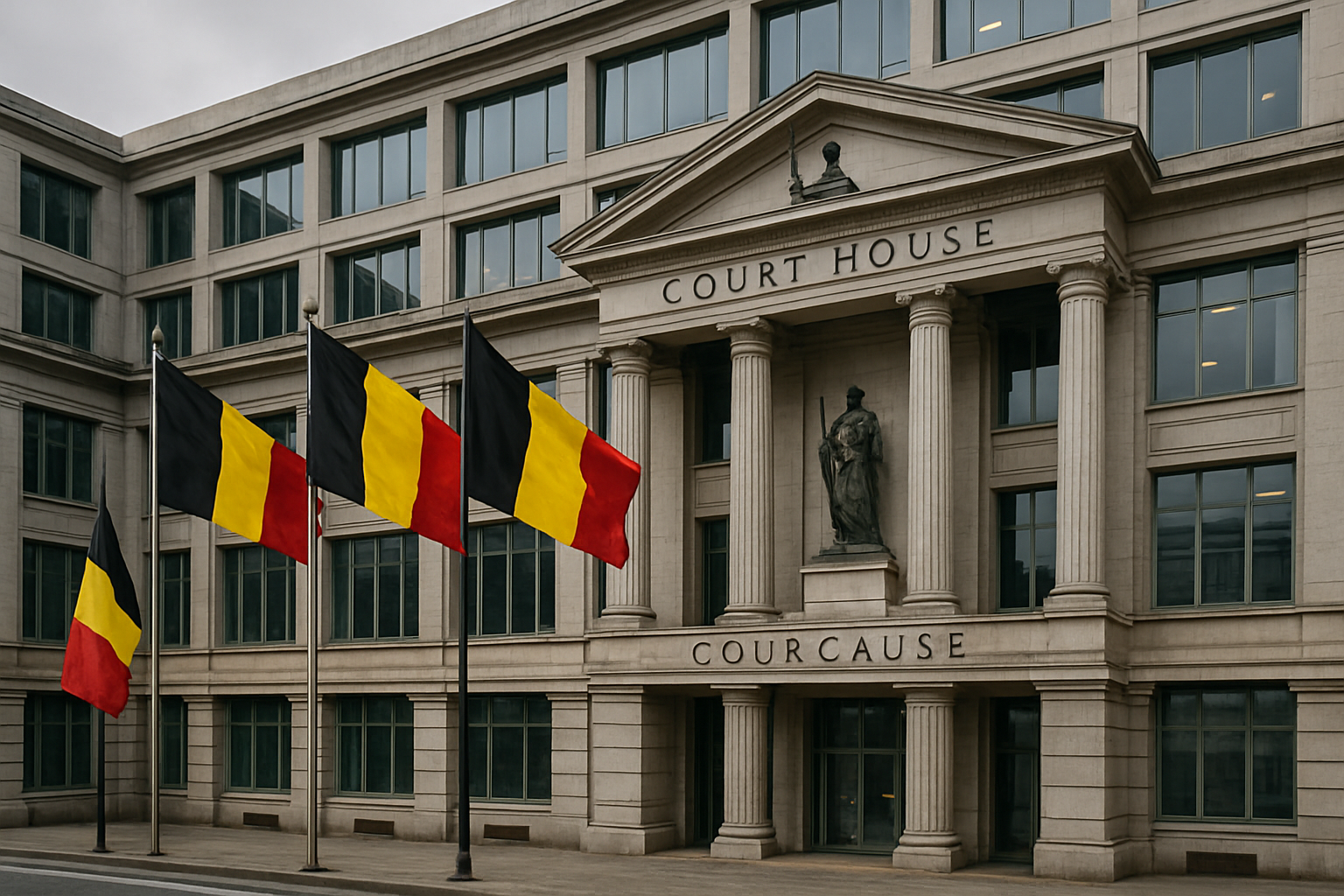
A Brussels court of appeal has ruled that former top diplomat and European Commissioner Etienne Davignon, 93, must face trial for his alleged involvement in the 1961 murder of Patrice Lumumba, Congo's first Prime Minister. The landmark decision represents the first time anyone has been prosecuted for the assassination that shocked the world 65 years ago.
The Brussels court of appeal's ruling on March 17, 2026, ordered Davignon to appear before a criminal court to answer questions about his possible role in orchestrating or facilitating the killing of Lumumba, who was murdered just months after Congo gained independence from Belgium in 1960. Davignon, now 93 years old, retains the right to appeal this groundbreaking decision.
This historic prosecution comes as international legal systems increasingly confront colonial-era crimes and systematic accountability for political assassinations. Multiple sources, including Belgian state broadcaster VRT NWS and French international media outlets, confirmed the court's decision represents an unprecedented step toward justice for one of Africa's most consequential political murders.
The Historical Context of Lumumba's Assassination
Patrice Lumumba served as Congo's first Prime Minister following the country's independence from Belgium on June 30, 1960. His tenure was brief but transformative, as he advocated for genuine independence and pan-African unity while challenging continued Belgian economic interests in the mineral-rich nation.
Lumumba was captured and killed on January 17, 1961, in circumstances that have remained controversial for over six decades. His assassination occurred during the Congo Crisis, a period of political upheaval that followed independence and involved multiple international powers vying for influence in the strategically important Central African nation.
The murder of Lumumba had profound implications for Congo's subsequent history and broader African decolonization movements. His death eliminated a charismatic leader who had emerged as a symbol of African independence and non-alignment during the Cold War era.
Davignon's Role and Career
Etienne Davignon served as a senior Belgian diplomat during the crucial period surrounding Congo's independence and Lumumba's assassination. His diplomatic career later flourished, culminating in his appointment as European Commissioner, where he played a significant role in European integration efforts.
The specific allegations against Davignon involve his potential knowledge of or participation in plans to eliminate Lumumba. Court documents suggest prosecutors have gathered evidence linking the former diplomat to communications or decisions that may have contributed to the assassination plot.
Davignon's advanced age - he is currently 93 years old - adds complexity to the proceedings. Legal experts note that while age does not preclude prosecution for serious crimes, it raises questions about the practical challenges of conducting a trial involving events that occurred more than six decades ago.
Legal Precedent and International Significance
This prosecution represents a watershed moment in international criminal justice, particularly regarding accountability for colonial-era crimes. Legal scholars emphasize that the decision to prosecute Davignon establishes important precedents for addressing historical injustices that have long remained unexamined by judicial systems.
"This case demonstrates that the passage of time does not eliminate the possibility of seeking justice for serious international crimes, even those committed during the colonial period."
— International Criminal Law Expert
The timing of this prosecution aligns with broader global movements demanding accountability for historical crimes and colonial injustices. Similar efforts have emerged across Europe as former colonial powers grapple with their historical legacies and the long-term consequences of their policies in Africa, Asia, and Latin America.
Belgium's decision to allow this prosecution reflects evolving attitudes toward colonial history and accountability. The country has faced increasing pressure to confront its colonial past in Congo, which included systematic exploitation of natural resources and widespread human rights abuses under King Leopold II's personal rule.
Challenges and Obstacles
The prosecution faces significant challenges typical of cases involving events from decades past. Key witnesses have died, documents may have been destroyed or lost, and memories of participants have faded. These evidentiary challenges are compounded by the political sensitivities surrounding colonial-era prosecutions.
Legal experts note that proving criminal liability in such cases requires demonstrating not just knowledge of events, but active participation in criminal conspiracies. The prosecution must establish clear links between Davignon's actions or decisions and the ultimate murder of Lumumba.
Furthermore, the advanced age of the defendant raises questions about his ability to participate meaningfully in his own defense. Courts must balance the pursuit of justice with considerations of fairness and the practical limitations imposed by the passage of time.
Impact on Congo-Belgium Relations
The prosecution has significant implications for contemporary relations between Belgium and the Democratic Republic of Congo. Congolese officials and civil society organizations have long demanded accountability for colonial-era crimes and recognition of historical injustices.
This case provides an opportunity for both countries to address historical grievances through legal rather than purely political channels. Success in prosecuting colonial-era crimes could establish frameworks for addressing other historical injustices and contribute to reconciliation efforts.
However, the case also risks reopening historical wounds and complicating diplomatic relationships if not handled sensitively. Both governments must navigate the complex intersection of historical justice, contemporary politics, and international law.
Broader International Context
The Davignon prosecution occurs within a broader context of international efforts to address historical crimes and colonial legacies. Courts in various European countries have increasingly been willing to examine colonial-era abuses, though prosecutions remain relatively rare.
This case may influence similar efforts in other former colonial powers, potentially encouraging victims' families and advocacy organizations to pursue legal remedies for historical injustices. The outcome could establish important precedents for the application of international criminal law principles to colonial-era crimes.
International human rights organizations are closely monitoring the proceedings, viewing them as a test of European commitment to accountability for historical crimes. The case's progress will likely influence broader discussions about transitional justice and the role of courts in addressing systematic historical abuses.
Looking Forward
As the case moves forward, several key questions will determine its ultimate impact. The prosecution must overcome significant evidentiary challenges while ensuring fair proceedings for an elderly defendant. The Belgian judicial system will be tested in its ability to handle a case of such historical and political significance.
The proceedings will likely attract international attention, serving as a focal point for broader discussions about colonial legacy, accountability, and the pursuit of historical justice. Regardless of the outcome, the mere fact that such a prosecution is proceeding represents a significant shift in how European societies approach their colonial past.
For Lumumba's family and supporters, the trial represents long-awaited recognition that his assassination was not merely a political tragedy but potentially a prosecutable crime deserving of judicial examination. The case offers hope that even decades-old injustices can ultimately face legal scrutiny.
The trial's timeline remains uncertain, as Davignon retains the right to appeal the court's decision. If the case proceeds to trial, it will mark a historic moment in the intersection of colonial history, international criminal law, and the ongoing pursuit of justice for one of Africa's most significant political assassinations.