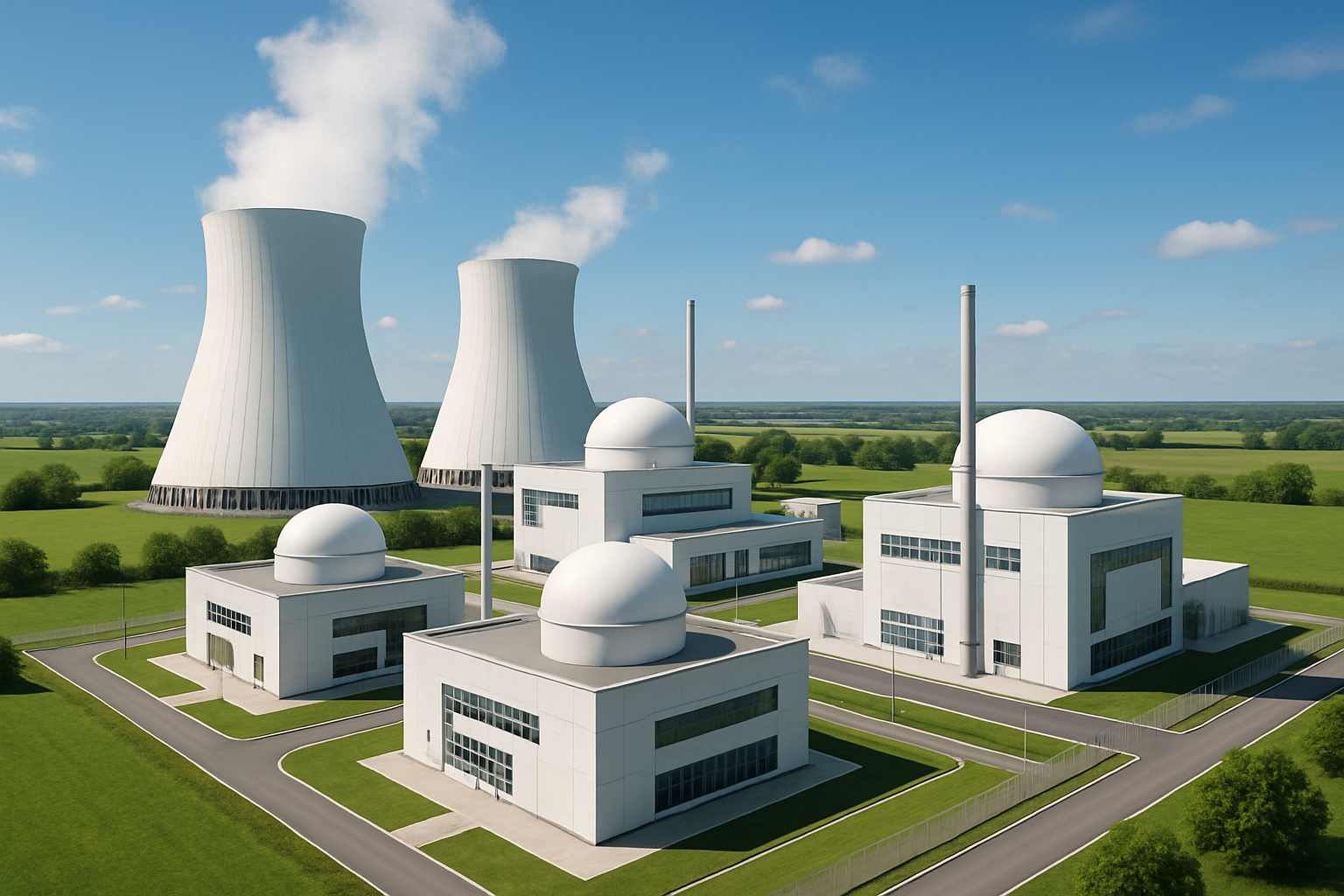
Belgium is actively hunting for four strategic sites to build small modular reactors (SMRs), marking a decisive shift in European nuclear policy as the continent embraces atomic energy to secure its energy independence amid global uncertainties.
Flemish Prime Minister Matthias Diependaele announced the ambitious nuclear expansion program, declaring it "a long-term project, but someone has to get it started." The initiative represents Belgium's commitment to next-generation nuclear technology that promises enhanced safety, reduced construction costs, and greater operational flexibility compared to traditional large-scale nuclear facilities.
European Nuclear Renaissance Takes Shape
Belgium's SMR initiative comes as Europe experiences its most significant nuclear revival since the 1970s. Across the continent, nations are abandoning previous nuclear phase-out plans in favor of expanded atomic energy programs driven by energy security imperatives exposed during recent geopolitical crises.
France has committed €72.8 billion to construct the first six reactors of its next-generation nuclear program, positioning itself at the forefront of European nuclear expansion. The ambitious French program represents the largest nuclear investment in European history and establishes a template for continental energy transformation.
"It's a long-term project, but someone has to get it started. Nuclear energy provides the reliable baseload electricity we need for our energy transition."
— Matthias Diependaele, Flemish Prime Minister
European Commission President Ursula von der Leyen declared reducing nuclear power share a "strategic mistake" during the World Nuclear Energy Summit in Paris, announcing €200 million in guarantees for innovative nuclear technologies. This represents a fundamental shift from the Commission's previous stance and signals institutional support for nuclear expansion across member states.
Small Modular Reactors: The Technology Revolution
Small modular reactors represent a paradigm shift from traditional nuclear technology. These advanced systems feature digital monitoring, automated control mechanisms, and passive safety systems that dramatically reduce both costs and construction timelines. Unlike conventional nuclear plants that can take decades to build, SMRs utilize factory manufacturing and modular deployment for faster, more predictable construction.
The technology offers enhanced safety through design innovations that prevent reactor meltdowns without human intervention. Advanced fuel cycles minimize waste production while maximizing efficiency, addressing traditional public concerns about nuclear power. Factory manufacturing in controlled environments reduces complexity and cost overruns that plagued previous nuclear construction projects.
Romania has emerged as a European leader in SMR development through its innovative project in Deutschești, incorporating cutting-edge safety systems and positioning the country as a potential technology exporter. The Romanian experience demonstrates how smaller European nations can lead in advanced nuclear technology development.
Energy Security Drives Nuclear Adoption
Europe's nuclear renaissance stems from harsh lessons learned during recent energy crises. The continent's over-dependence on energy imports from geopolitically unstable regions created dangerous vulnerabilities exposed during Middle Eastern conflicts that disrupted global energy markets.
Hungary is constructing Europe's largest nuclear project, the €39.1 billion Paks II facility, with IAEA backing. Greece has established a ministerial committee exploring SMR deployment under Prime Minister Mitsotakis's carbon neutrality framework. Slovakia positions nuclear energy as central to achieving climate goals while maintaining energy independence.
The crisis response has been comprehensive. Countries previously opposed to nuclear power are reconsidering their positions. Denmark's center-right coalition reached consensus to eliminate atomic energy prohibition, marking a dramatic policy reversal. Switzerland's parliament overturned its 2017 referendum ban on new nuclear power plants, demonstrating how energy security concerns override previous anti-nuclear sentiment.
Supply Chain Vulnerabilities Accelerate Nuclear Interest
European nuclear expansion addresses critical vulnerabilities in renewable energy supply chains. China controls 60% of global production and 90% of refining capacity for lithium, cobalt, and rare earth elements essential for renewable energy infrastructure. This dependence creates strategic risks that nuclear power helps mitigate.
The US-EU-Japan Critical Minerals Partnership involving 55 countries represents efforts to diversify supply chains, but nuclear energy provides immediate energy independence that doesn't rely on Chinese-controlled materials. Memory chip shortages causing sixfold price increases affect renewable control systems, while nuclear power operates independently of such vulnerabilities.
Estonia demonstrates the challenges even renewable energy leaders face. Despite achieving 88% renewable electricity and operating Europe's largest battery storage facility serving 90,000 households, the country is exploring nuclear baseload complement to address intermittency challenges that threaten grid stability.
Opposition and Environmental Concerns Persist
Despite growing momentum, nuclear expansion faces significant opposition. Austria's environment commissioner criticized the "dangerous path" of nuclear expansion, while Spain maintains reservations about international legality and environmental protection. Environmental groups, including Greenpeace, denounce nuclear expansion as a "betrayal of the European Green Deal."
Nuclear waste management remains a primary concern, with critics citing the thousands of years dangerous materials remain hazardous. Historical accidents like Chernobyl and Fukushima continue to influence public opinion, despite significant safety advances in modern reactor design. The debate reflects broader tensions between immediate energy security needs and long-term environmental considerations.
Economic and Employment Benefits
Nuclear expansion promises significant economic benefits across Europe. Projects create thousands of specialized, high-paying jobs during construction phases, followed by hundreds of permanent operational positions with century-plus facility lifetimes. The economic multiplier effects extend to research and development, advanced manufacturing, and supporting services around nuclear facilities.
Nuclear power provides stable electricity pricing that reduces energy cost volatility for consumers and businesses. This pricing stability offers competitive advantages over fossil fuel dependence and complements renewable energy sources that experience price fluctuations due to weather dependency.
The technology export potential positions European nations as global leaders in next-generation nuclear systems. Success in SMR deployment could establish new paradigms for safe, efficient, economically viable nuclear power that reshapes global energy markets for decades.
Integration with Climate Goals
Nuclear energy provides carbon-free electricity generation that complements renewable sources in achieving climate goals. The weather-independent reliability of nuclear power addresses grid stability requirements as renewable energy penetration increases across European electricity systems.
The European Parliament approved a historic 90% emissions reduction target for 2040, with flexibility mechanisms including forest-based compensation and international carbon credits. Nuclear power enables these ambitious targets by providing reliable baseload electricity while maintaining industrial competitiveness.
Nuclear facilities offer resilience during extreme weather events that increasingly challenge renewable energy systems. As climate change intensifies weather variability, nuclear power provides consistent electricity generation regardless of seasonal or weather-related disruptions.
Global Competition Context
European nuclear expansion occurs amid intensifying international competition. The United States approved TerraPower's sodium-cooled small modular reactor in Wyoming, representing America's commitment to next-generation nuclear technology. Japan restarted the Kashiwazaki-Kariwa reactor, the world's largest nuclear facility, demonstrating renewed confidence in atomic energy.
China's nuclear expansion and Russia's reactor export programs challenge Western nuclear technology leadership. The international competition adds urgency to European nuclear development, as technological sovereignty in energy infrastructure becomes increasingly important for geopolitical influence and economic competitiveness.
Strategic Implications for European Energy Architecture
Belgium's SMR site selection and France's massive nuclear investment represent foundational decisions that will determine European energy architecture for decades. Success in nuclear deployment could establish energy independence pathways that reduce geopolitical vulnerabilities while achieving climate commitments.
The nuclear renaissance provides a template for balancing energy security with environmental protection. European leaders must navigate climate commitments and security requirements while maintaining public acceptance and democratic governance standards. The coming months will test whether strategic pivots toward nuclear energy deliver practical implementation results.
The stakes are maximum: successful nuclear deployment strengthens European strategic autonomy and provides conflict resolution frameworks for energy disputes. Failure could fragment European energy cooperation and undermine climate goal achievement, affecting continental energy architecture and international energy market stability.
As Belgium begins its search for SMR sites and France commits unprecedented resources to nuclear expansion, Europe stands at a critical juncture. The decisions made in 2026 regarding nuclear energy will shape the continent's energy future, economic competitiveness, and geopolitical independence for generations to come.