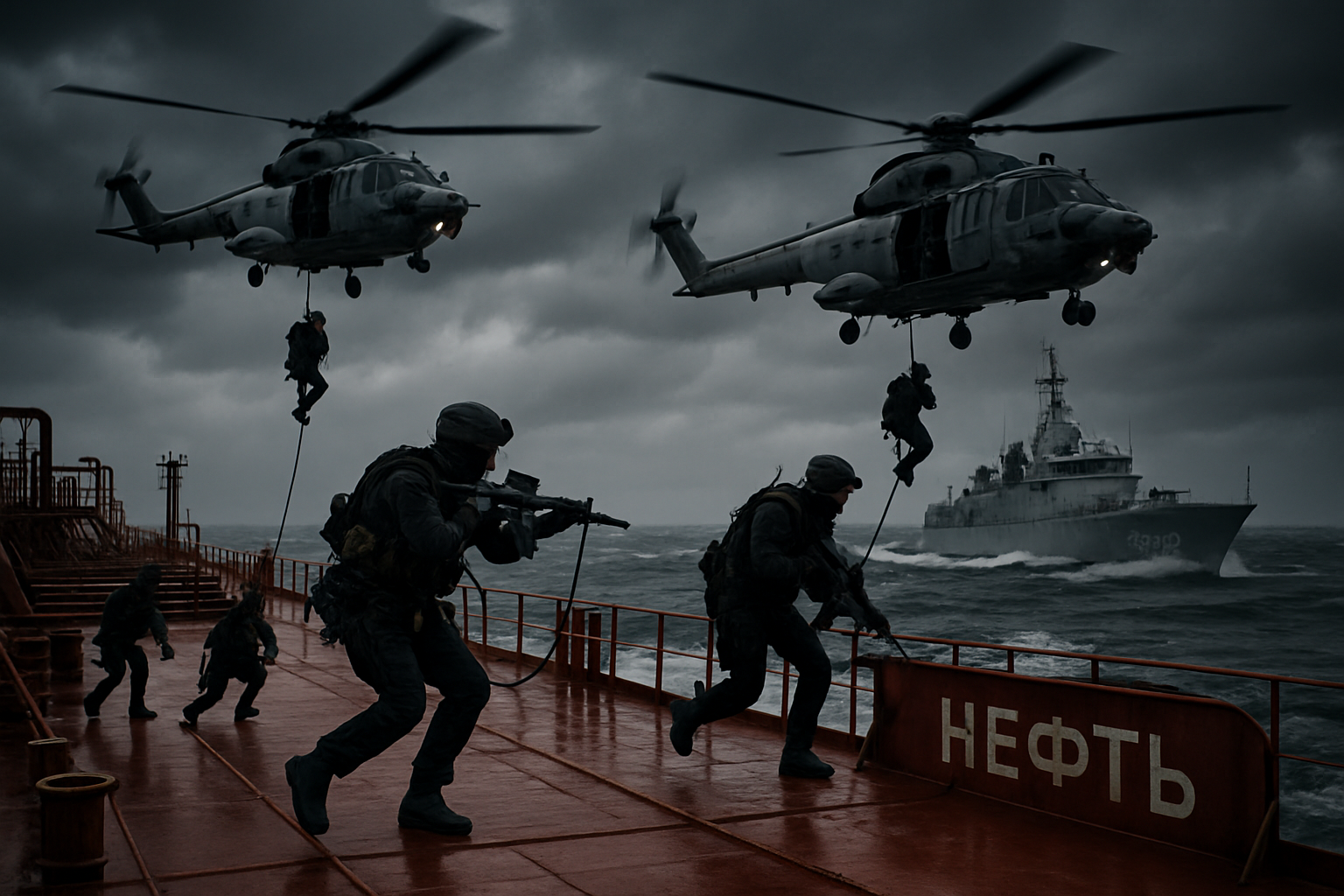
Belgian special forces conducted a dramatic nighttime operation in the North Sea, intercepting and seizing a Russian "shadow fleet" oil tanker in what Deputy Prime Minister Maxime Prévot called a decisive blow against sanctions evasion.
The operation, carried out with support from France and in coordination with G7, Nordic and Baltic partners, represents the most significant maritime enforcement action against Russia's shadow fleet to date. Belgian authorities confirmed the vessel will be formally seized upon arrival at port, sending a strong message about European resolve in enforcing sanctions.
Operation Details and International Cooperation
"Today, a ship from Russia's shadow fleet was intercepted at sea," Deputy Prime Minister Maxime Prévot announced Sunday, describing the coordinated effort as part of broader international cooperation to counter sanctions circumvention.
The seizure follows the implementation of the EU's 20th sanctions package, which introduced a comprehensive ban on maritime services for Russian crude oil exports, including insurance, maintenance, port access, and technical support. The package added 43 additional vessels to the shadow fleet blacklist, bringing the total number of sanctioned vessels to unprecedented levels.
"Belgium, with the support of France, has boarded a ship suspected of belonging to the Russian ghost fleet."
— Le Monde.fr, French Media
Russia's Shadow Fleet Strategy
Intelligence estimates suggest over 600 vessels worldwide participate in Russia's sophisticated shadow fleet operations, using false documentation and concealed ownership structures to circumvent international sanctions imposed after the 2022 invasion of Ukraine. These aging tankers with opaque ownership have become Russia's primary means of maintaining lucrative oil exports despite Western restrictions.
The shadow fleet represents a critical challenge to sanctions enforcement, with vessels employing sophisticated networks to obscure their ownership, destinations, and cargo origins. Previous investigations by German outlets NDR, WDR, and Süddeutsche Zeitung revealed that one-third of Russia's shadow fleet operates without correct flag state authorization, creating legal enforcement opportunities that EU states have been reluctant to utilize until now.
EU Sanctions Evolution and Maritime Enforcement
The seizure occurs against the backdrop of the EU's most comprehensive sanctions regime to date. European Commission President Ursula von der Leyen's 20th sanctions package represents a dramatic expansion from previous oil import restrictions to a complete maritime services ban affecting the entire infrastructure supporting Russian oil exports.
The maritime services ban is expected to significantly increase global oil transportation costs and force Russia into expensive, inefficient shipping arrangements requiring state-controlled infrastructure development. EU economists acknowledge complete enforcement challenges given the complexity of global commerce but view the comprehensive approach as essential for maintaining pressure on Russian revenues sustaining military operations.
Technical and Legal Challenges
Maritime enforcement of shadow fleet operations requires unprecedented international cooperation on port inspections and maritime surveillance. The sophisticated evasion methods employed by these vessels include ballast modifications, false documentation systems, and complex ownership structures designed to obscure connections to Russian entities.
Advanced technology integration has become standard in enforcement efforts, including satellite tracking, AI-powered monitoring systems, and real-time analytics enabling better surveillance of suspicious activities. However, coordination across different jurisdictions remains challenging, requiring enhanced cooperation frameworks between European and allied nations.
Strategic and Economic Implications
The North Sea operation demonstrates European confidence in absorbing potential economic costs through successful energy diversification strategies developed since the conflict began. The seizure represents a shift toward comprehensive economic isolation of Russia beyond targeted restrictions, fundamentally altering the cost-benefit calculations for continued sanctions evasion.
Regional security concerns also play a crucial role, with maritime officials emphasizing the need for enhanced monitoring of suspicious vessels amid increased illegal activities in European waters. The operation builds on recent enforcement successes that have disrupted criminal networks valued at hundreds of millions of dollars.
International Response and Future Enforcement
The Belgian-led operation has received broad support from international partners, reflecting growing consensus on the need for more aggressive enforcement measures. The coordination with G7, Nordic, and Baltic partners suggests a new phase in sanctions implementation, moving beyond economic measures to direct maritime interdiction.
Success in this operation provides a template for future enforcement efforts, demonstrating that coordinated international action can effectively counter complex sanctions violations. The operation's success depends on operational excellence, strategic flexibility, and sustained international cooperation in maintaining pressure on sanctions-evading networks.
Looking Forward
The seizure represents a critical test of European unity and enforcement capabilities in the face of sophisticated evasion networks. As the conflict in Ukraine approaches its fourth anniversary, maritime enforcement has become increasingly important for maintaining the effectiveness of economic sanctions.
The operation's success will likely influence future enforcement strategies, potentially leading to more aggressive maritime operations against shadow fleet vessels. With hundreds of vessels still operating in violation of sanctions, the North Sea seizure may represent the beginning of a more intensive phase of maritime enforcement across European waters.
The implications extend far beyond this single vessel, affecting global shipping patterns, insurance markets, and the broader framework of international sanctions enforcement in the 21st century. As European officials noted, the operation demonstrates that sophisticated evasion networks can be effectively countered through enhanced international cooperation and decisive action.