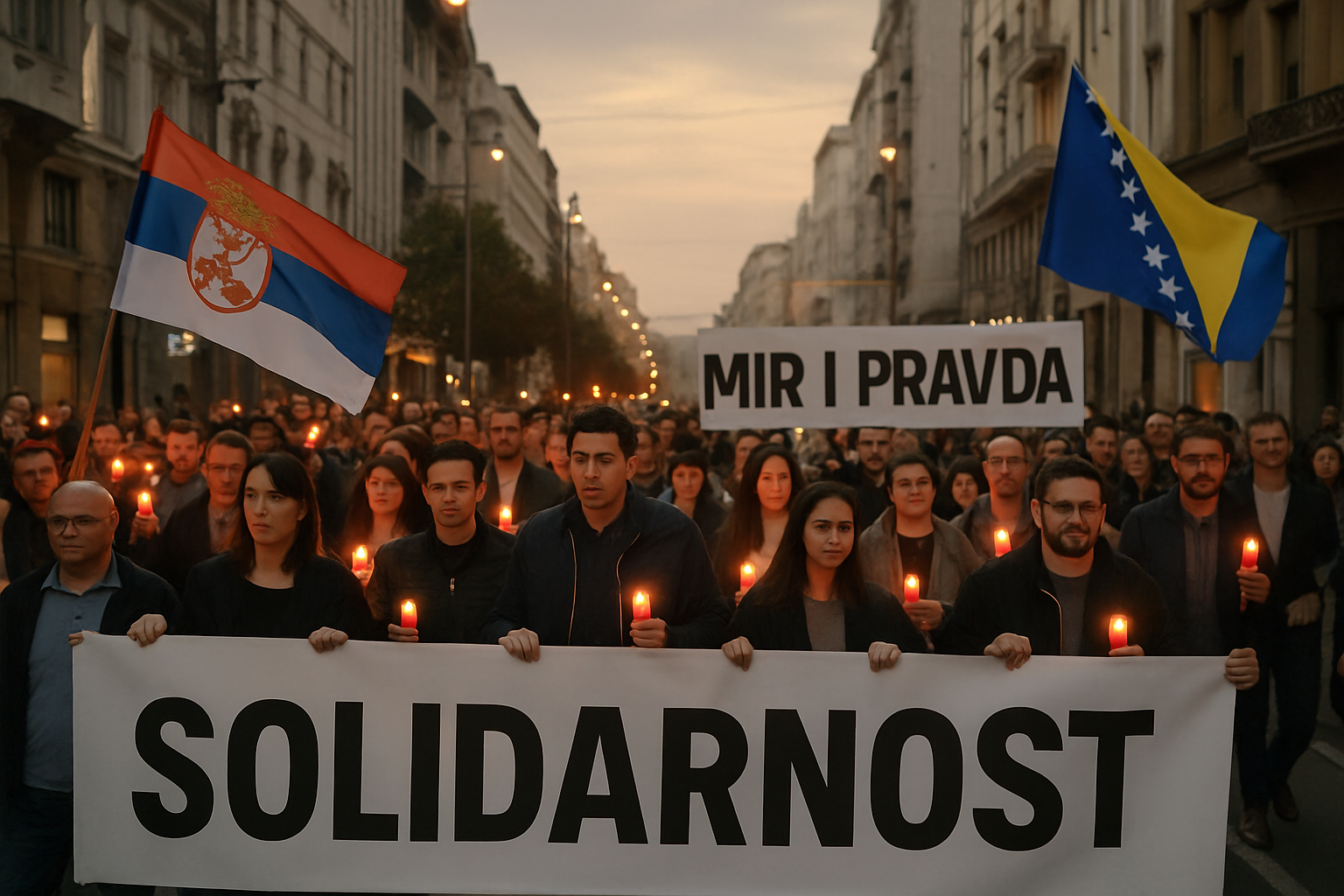
Citizens of Belgrade gathered on Saturday, February 28, 2026, for a solidarity march dedicated to the victims of the devastating tram accident in Sarajevo, expressing cross-border support and calling for systemic transportation safety reforms across the region.
The Youth Initiative for Human Rights (YIHR) organized the march under the banner "One struggle, with Sarajevo in our hearts" ("Jedna borba, srcem uz Sarajevo"), which began at 12:00 PM at Student Square in Belgrade. The demonstration honored 23-year-old Erdoan Morankić from Brčko, who was killed in the February 12 tram derailment, as well as four others injured in the accident, including 17-year-old medical student Ella Jovanović.
A Tragedy That Sparked Regional Outrage
The February 12, 2026, tramway accident occurred at 12:02 PM at the intersection of Prva transverzala and Ulica Zmaja od Bosne in Sarajevo. A tram traveling from the Railway Station direction jumped tracks while making a left turn, striking a passenger vehicle, metal pole, and protective barrier at the tramway station before coming to rest on Ulica Zmaja od Bosne.
Erdoan Morankić was waiting at the tram station when the derailment occurred, and his death was confirmed by a doctor at the scene. Among the injured, 17-year-old Ella Jovanović required surgical treatment and remained in critical condition, while three other patients were treated at the Clinical Center University of Sarajevo (KCUS) before being discharged.
"This tragedy is not just the result of a technical malfunction, but the consequence of years of neglecting public safety, lack of responsibility, and systemic neglect of human lives."
— YIHR Organizers, Solidarity March Statement
Sustained Protests and Political Impact
The accident triggered the largest and most sustained civil action in post-war Bosnia and Herzegovina. For seven consecutive days, thousands gathered at the National Museum site in Sarajevo, demanding comprehensive public transportation renewal, international experts in the investigation, and urgent parliamentary sessions within seven days.
The movement achieved a significant political victory when Sarajevo Canton Prime Minister Nihad Uk resigned on February 15, stating that he chose "the voice and courage of young people" over his political position. The protests, organized by the informal group "Reci dosta" (Say Enough), combined peaceful demonstrations with flowers, candles, and support banners, particularly for Ella Jovanović.
Driver Adnan Kasapović was initially arrested but was later released from detention when the court refused the prosecution's custody request. The investigation continues to examine whether the accident was caused by technical failure or human error.
Cross-Border Solidarity Movement
The Belgrade solidarity march represented a broader regional response to the tragedy. Similar demonstrations occurred in Zenica, where 70 participants held a silent protest under the banner "Young Zenica for Young Sarajevo," carrying signs asking "How many more lives?"
The YIHR organizers emphasized that solidarity among cities and societies in the region is "not only an act of compassion but also an expression of a joint struggle for safety, responsibility, and the dignity of every human life." They connected the Sarajevo tragedy to broader issues of infrastructural neglect affecting the entire region.
Infrastructure Challenges Across the Balkans
The Sarajevo accident highlighted systemic problems with aging transportation infrastructure throughout the Western Balkans. The incident occurred on a tram system that has long struggled with deferred maintenance and insufficient investment, issues common across post-war Bosnia and Herzegovina's urban transport networks.
Students and young people, who rely heavily on public transportation, have been particularly vocal about safety concerns. The accident site near the National Museum of Bosnia and Herzegovina became a focal point for community solidarity, with hundreds laying flowers and lighting candles in memory of the victim.
The Government of Sarajevo Canton declared February 14 an official Day of Mourning and emphasized priorities including family support, effective investigation, full accountability, and appropriate sanctions. Officials also addressed misinformation concerns and requested that media respect the privacy of injured families.
Regional Transportation Safety Crisis
The Sarajevo tram accident occurred within a broader context of transportation safety challenges across the Balkans and Europe in early 2026. The incident has become emblematic of the need for comprehensive infrastructure renewal and enhanced safety protocols, particularly for aging public transport systems serving educational communities.
The case has raised serious questions about the vulnerability of students and other regular public transport users, highlighting the need for enhanced safety measures in urban transport infrastructure. Community response has demonstrated traditional Sarajevo solidarity during tragedy, with peaceful memorial gatherings praised by authorities for their dignified approach to demanding systemic change.
Calls for Systematic Reform
The Belgrade march organizers called for comprehensive reforms extending beyond the immediate crisis response to broader democratic change. Their demands included constitutional guarantees of freedom of assembly, new government structures, and systematic improvements to prevent future incidents.
The movement has evolved from responding to a single tragic accident to advocating for comprehensive public safety reforms and government accountability measures. The sustained nature of the protests and their spread to other cities demonstrates the deep resonance of demands for improved public safety throughout the region.
"We believe that solidarity between cities and societies in the region is not only an act of empathy but also an expression of a common struggle for safety, responsibility, and the dignity of every human life."
— Youth Initiative for Human Rights
The success of the protest movement in achieving political change while maintaining peaceful, dignified demonstrations has created a template for regional civic engagement. The combination of honoring victims with demands for systemic institutional improvements suggests the movement's continued influence beyond the immediate aftermath of the tragedy.
As the investigation into the Sarajevo tram accident continues, the cross-border solidarity demonstrated in Belgrade and other cities reflects a broader understanding that transportation safety and government accountability are shared regional concerns requiring coordinated responses and sustained civic engagement.