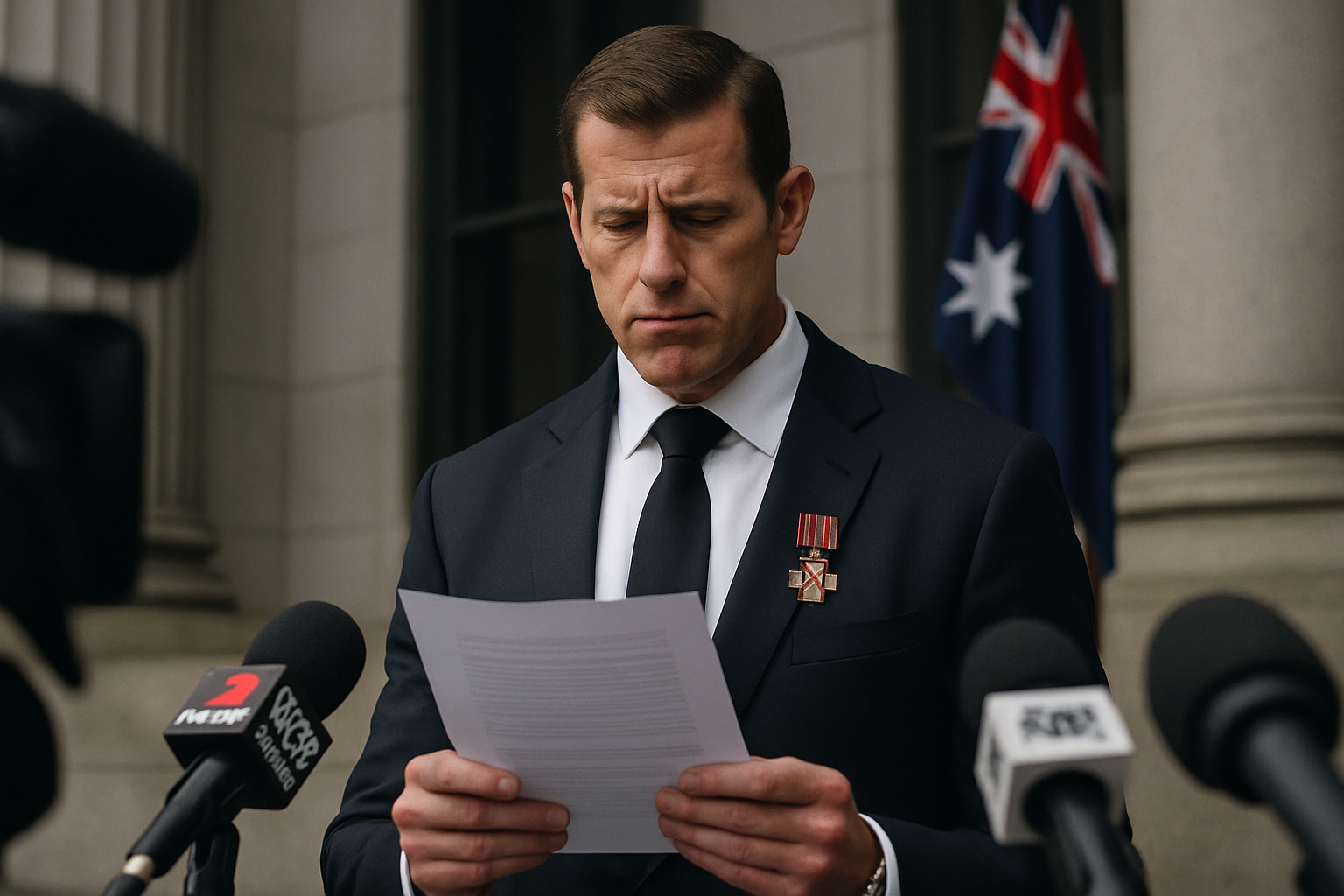
Ben Roberts-Smith, Australia's most decorated living soldier, has issued his first public statement since being released from prison on bail, categorically denying all war crimes allegations against him and declaring his commitment to fighting the charges in court.
The 47-year-old Victoria Cross recipient was released on bail from custody after being arrested on April 7 and charged with murdering or ordering the murders of five unarmed detainees while deployed in Afghanistan between 2009 and 2012. Reading from a prepared statement on the Gold Coast, Roberts-Smith rejected all allegations against him.
"I categorically deny all allegations made against me," Roberts-Smith declared in his first public appearance since his arrest. "I have never committed any war crimes, nor have I ordered or been complicit in any such actions. These charges are based on false accusations and I look forward to proving my innocence in court."
Historic Nature of the Charges
The charges against Roberts-Smith represent the most significant test of Australia's commitment to international humanitarian law and military accountability. According to AFP Commissioner Krissy Barrett, the five counts of war crimes murder under Commonwealth legislation carry a maximum sentence of life imprisonment each. The victims were allegedly "not participating in hostilities" and were "detained, unarmed, and under the control of ADF members when killed."
The charges include allegations that Roberts-Smith personally shot victims or ordered subordinate soldiers to carry out killings in his presence during his service with the Special Air Service Regiment (SAS) between 2006 and 2012.
"This is an unprecedented moment in Australian military history, testing our justice system's commitment regardless of an accused person's status or decorations."
— Legal Expert Commentary
Distinguished Service Record
Roberts-Smith holds Australia's highest military honor, the Victoria Cross, awarded in 2011 for "conspicuous gallantry" during the Battle of Tizak in Kandahar Province in 2010. He also received the Medal for Gallantry, making him one of only four Australians to hold both prestigious decorations. His citation praised his exceptional courage in combat operations against Taliban forces.
The contrast between his decorated service record and the serious criminal charges has divided public opinion and created unprecedented political tensions. The case represents the first time Australia's most decorated soldier has faced criminal charges related to military service conduct.
The Brereton Report Context
The charges stem from a comprehensive five-year joint investigation by the Australian Federal Police (AFP) and the Office of the Special Investigator (OSI) following the landmark 2020 Brereton Report. Justice Paul Brereton's inquiry identified credible information regarding 39 potential war crimes committed by Australian special forces personnel in Afghanistan.
The report found evidence of a "warrior culture" within certain SAS elements that contributed to alleged criminal conduct. It recommended that 25 Australian Defence Force personnel be investigated for potential criminal charges, with Roberts-Smith's case being the most high-profile prosecution to emerge from these investigations.
Political Divisions and Support
The charges have exposed deep political divisions, with some prominent figures maintaining their support for Roberts-Smith despite the serious allegations. One Nation leader Pauline Hanson has vowed "not to abandon" the former soldier, emphasizing his distinguished service record. Former Prime Minister Tony Abbott has also maintained his support.
Mining magnate Gina Rinehart, Australia's richest person, has publicly backed Roberts-Smith, calling for "compassion and Aussie spirit" and questioning the justification for the extensive investigation. However, other political leaders have emphasized the importance of the legal process, stressing that no one is above the law regardless of their service record or decorations.
Legal Proceedings Ahead
Roberts-Smith's legal team, led by lawyer Jordan Portokalli, is expected to mount a vigorous defense challenging both the evidence and potential jurisdictional issues. The case will test the Australian legal system's capacity to handle high-profile war crimes prosecutions while maintaining fair trial principles.
The proceedings are being closely watched internationally as a template for how democratic nations handle the prosecution of decorated military personnel for alleged war crimes. The outcome could establish important precedents for military accountability and the enforcement of international humanitarian law.
Broader Implications
The Roberts-Smith case occurs within a broader context of ongoing investigations by the OSI, with potential for additional charges stemming from the Brereton Report findings. The Australian government has committed to ensuring accountability while simultaneously implementing comprehensive military culture reforms, enhanced oversight mechanisms, and improved international humanitarian law training.
The case represents a critical test of democratic institutions' ability to balance recognition of military service with the enforcement of international law. Legal experts note that the prosecution demonstrates Australia's commitment to the principle that no one, regardless of their status or achievements, is above the law.
International Scrutiny
The prosecution has attracted significant international attention as countries worldwide grapple with questions of military accountability for overseas operations. The case is viewed as a test of democratic governance principles and the effective implementation of international humanitarian law within national legal frameworks.
International observers are monitoring whether Australia can successfully prosecute alleged war crimes while maintaining the integrity of its legal system and preserving the rights of the accused to a fair trial.
Looking Forward
As Roberts-Smith prepares for his legal battle, the case will likely take months or potentially years to resolve fully. The proceedings will examine detailed evidence from his Afghanistan deployments and could involve testimony from numerous military personnel and civilians.
The outcome will have lasting implications for Australia's military culture, its commitment to international law, and the broader question of accountability for military conduct in overseas operations. For Roberts-Smith personally, the case represents the fight of his life to clear his name and preserve his legacy as one of Australia's most decorated soldiers.
The case continues to test the Australian justice system's capacity to handle complex war crimes allegations while ensuring fair proceedings for all parties involved, establishing precedents that will likely influence military accountability cases for years to come.