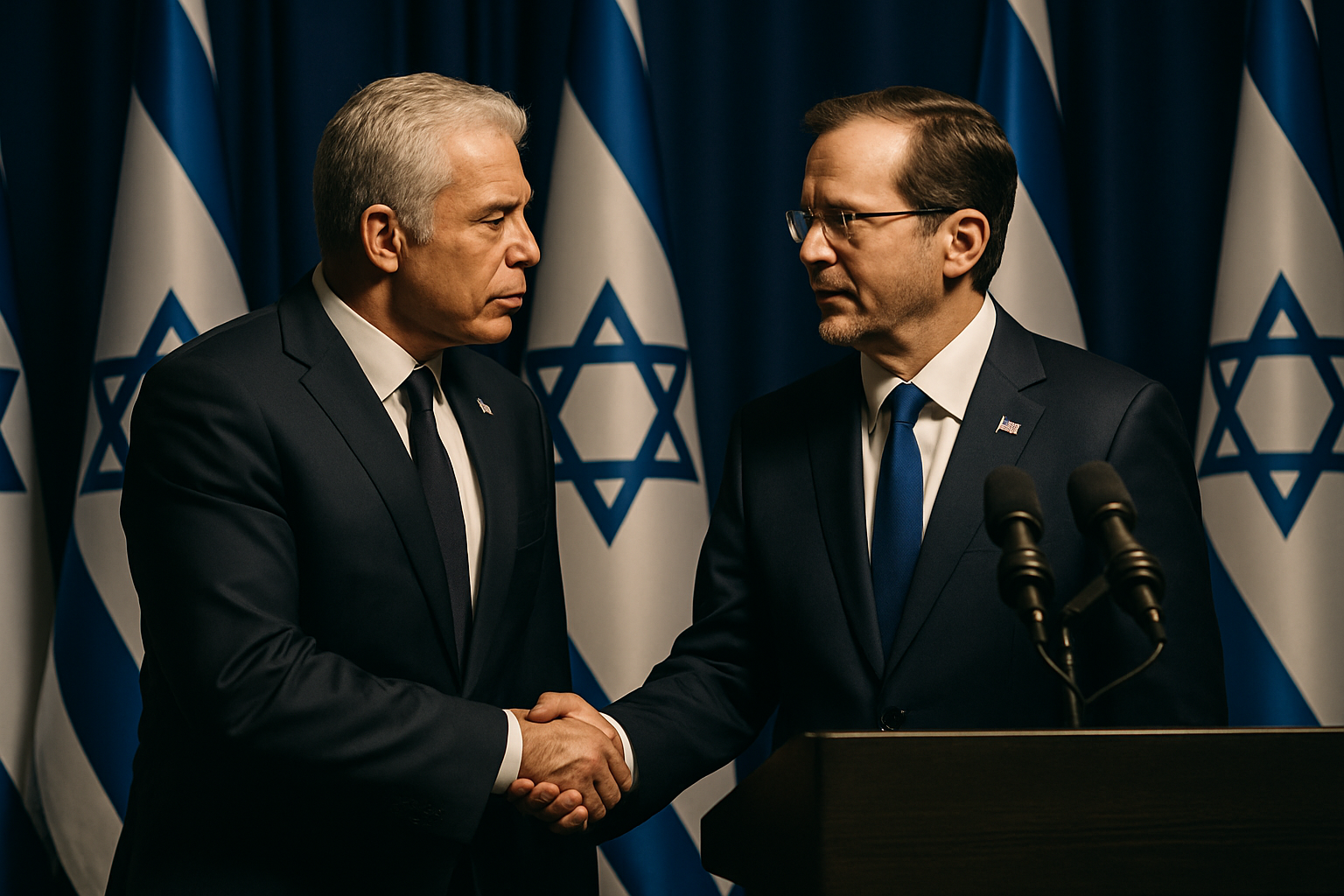
In a dramatic development that could reshape Israeli politics, former Prime Ministers Naftali Bennett and Yair Lapid announced Sunday the merger of their political parties, forming a unified opposition alliance aimed at unseating Benjamin Netanyahu in the upcoming October 2026 elections.
The new party, called "Be-yahad" (Together), will be led by Bennett and represents the most significant political realignment in Israel since the brief "change government" of 2021-2022. The alliance builds on their previous successful cooperation that ended Netanyahu's record tenure, demonstrating their ability to work together despite ideological differences between Bennett's right-wing base and Lapid's centrist appeal.
A Strategic Political Gamble
"I am pleased to announce that tonight, together with my friend Yair Lapid, I am taking the most Zionist and patriotic step we have ever taken for our country," Bennett declared in a joint televised statement. "Tonight, we are uniting and founding the Beyahad (Together) party under my leadership, a party that will lead to a great victory and open a new era for our beautiful country."
The timing of this announcement is particularly significant, coming as Netanyahu faces mounting international pressure over West Bank policies, ongoing Gaza ceasefire violations that have resulted in over 1,600 documented incidents since October 2025, and a complex regional security environment following the Iran crisis earlier this year.
According to multiple international polling organizations, Bennett currently leads among potential Netanyahu challengers, with the unified alliance potentially commanding 25-30 Knesset seats. This represents the most substantial opposition consolidation in recent Israeli political history and could provide a viable path to forming an alternative government.
Building on Proven Cooperation
The Bennett-Lapid partnership has historical precedent. Between 2021-2022, they successfully led the "change government" that briefly ended Netanyahu's dominance, navigating complex security challenges and maintaining governmental stability during a difficult period. Their executive experience distinguishes them from other opposition figures and provides credibility for their renewed challenge.
The merger combines Bennett's "Bennett-2026" party with Lapid's established Yesh Atid party, creating a formidable political machine. The alliance also leaves the door open for former military chief Gadi Eisenkot to join their unified slate, which could further strengthen their appeal to security-conscious voters.
"This alliance puts an end to infighting and allows all efforts to be invested toward a decisive victory."
— Naftali Bennett, Be-yahad Party Leader
International Context and Challenges
The announcement comes during a complex regional period that includes the aftermath of the March 2026 Iran crisis following Supreme Leader Khamenei's death, the collapse of the Lebanon ceasefire that displaced over 1.2 million Lebanese, and ongoing systematic violations of the Gaza ceasefire. International observers view Israeli political stability as crucial for regional peace initiatives.
European diplomatic sources are closely monitoring the developments, given both leaders' previous prime ministerial experience during complex security situations. The international community has expressed growing frustration with Netanyahu's policies, particularly regarding West Bank expansion measures that have drawn condemnation from 85 UN member states and prompted Spain to formally request suspension of the EU-Israel association agreement.
Electoral Mathematics and Coalition Building
Success in Israel's complex multi-party system requires careful navigation of relationships with other opposition parties and potential coalition partners. The Bennett-Lapid alliance must articulate a compelling alternative to Netanyahu's policies while maintaining unity between their distinct political bases.
The merger represents a strategic calculation that consolidating the opposition vote is more effective than competing separately. This approach mirrors successful opposition strategies seen elsewhere, including the recent coordinated effort that ended Viktor Orbán's 16-year rule in Hungary, demonstrating that unified opposition can overcome entrenched incumbents.
Bennett's right-wing credentials combined with Lapid's centrist appeal could attract a broad coalition of voters seeking change while maintaining credibility on security issues – a crucial factor in Israeli politics. The alliance positions them as experienced leaders capable of governing during challenging times.
Regional Security Considerations
The formation of this alliance occurs against the backdrop of heightened regional tensions. Israel faces ongoing challenges including a 23% increase in Chinese military activity around Taiwan affecting regional security calculations, the collapse of the November 2024 Hezbollah ceasefire that had provided over a year of stability, and complex diplomatic negotiations regarding Iran's nuclear program.
Both Bennett and Lapid bring experience managing these security challenges from their time in government. Their previous administration successfully navigated the complex period following the 2021 Gaza conflict and maintained security cooperation with international partners while pursuing diplomatic solutions where possible.
Looking Toward October Elections
The October 2026 elections are positioned as among the most consequential in recent Israeli history. The success of the Bennett-Lapid alliance depends on their ability to present a unified vision for addressing domestic challenges including housing costs, economic recovery from recent regional tensions, and the complex demographic changes facing Israeli society.
The alliance also faces the challenge of maintaining cohesion while appealing to diverse constituencies. However, their previous experience governing together provides a foundation for credible claims of effective leadership during difficult periods.
As the campaign develops, the Bennett-Lapid alliance represents the most serious challenge to Netanyahu's political dominance in years. Their combined executive experience, proven ability to cooperate, and strategic positioning across the political spectrum create conditions for a competitive election that could fundamentally reshape Israeli politics.
The coming months will test whether this historic alliance can translate political cooperation into electoral success, potentially ending Netanyahu's long tenure and opening a new chapter in Israeli governance. With regional stability considerations and international relationships at stake, the outcome will have implications far beyond Israel's borders.