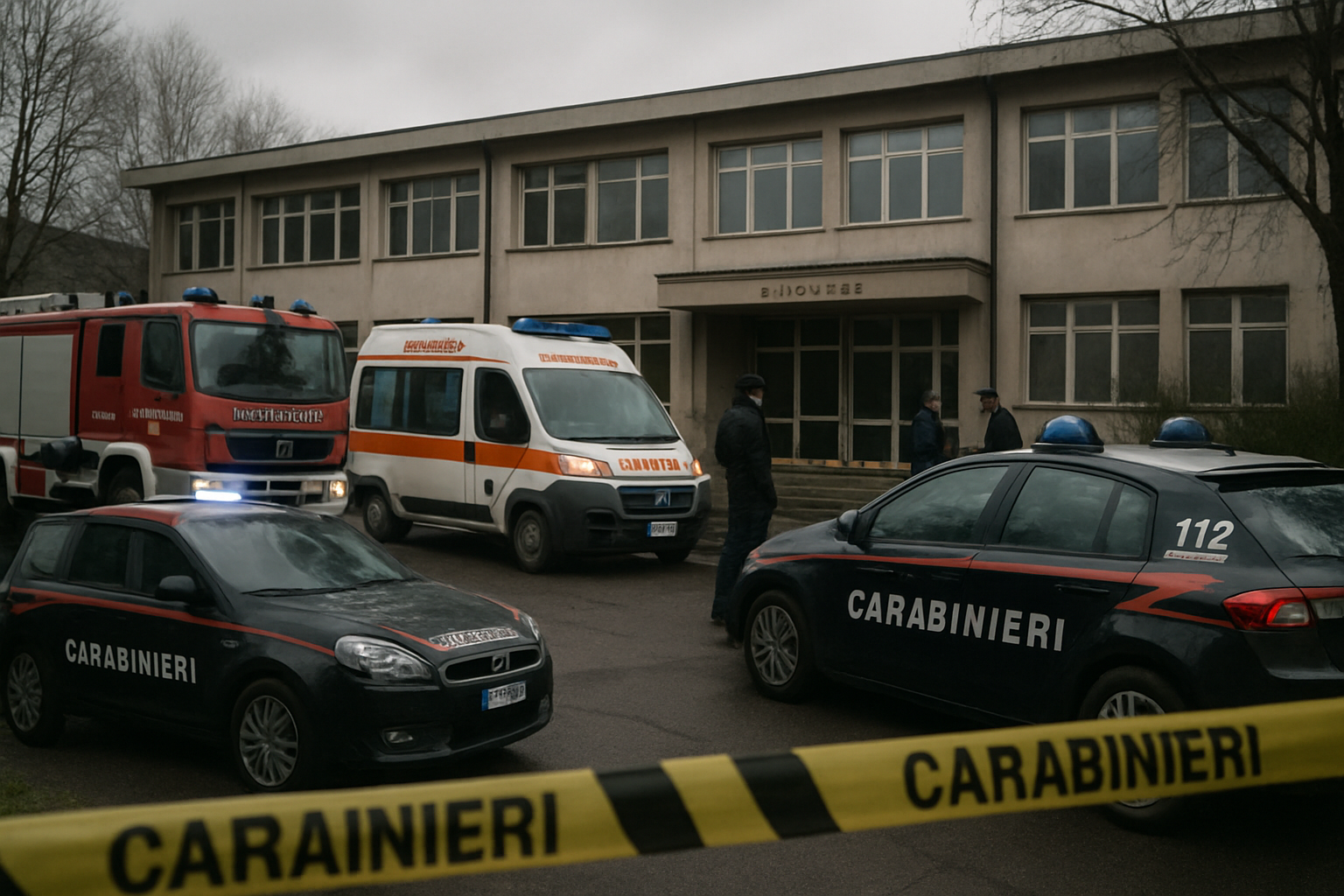
A 13-year-old student stabbed his French teacher, Chiara Mocchi, at a school in Trescore Balneario near Bergamo, Italy, in an attack that has shocked the local community and raised urgent questions about student radicalization and school security protocols across Europe.
The violent incident occurred during regular school hours, leaving Professor Mocchi with serious injuries requiring emergency surgery at Bergamo's Papa Giovanni XXIII Hospital. The student was immediately detained by authorities, while the teacher's condition remains critical but stable following the surgical intervention.
Disturbing Digital Evidence Uncovered
What transformed this incident from a singular act of school violence into a potential terrorism investigation was the discovery of deeply concerning evidence during the subsequent investigation. According to Repubblica.it, the 13-year-old perpetrator livestreamed the attack on Telegram, deliberately broadcasting the violent assault to an unknown audience in real-time.
Even more alarming, investigators found videos on the student's TikTok account demonstrating how to assemble explosive devices. This digital evidence suggests a level of premeditation and potential radicalization that extends far beyond a spontaneous act of classroom violence.
Explosive Materials Discovery
Following the attack, Carabinieri forces conducted a thorough search of the student's family home, where they discovered what authorities describe as "potentially explosive materials." The exact nature and quantity of these materials have not been disclosed, but the discovery is currently under investigation by specialized units of the Italian police force.
This finding elevates the incident from school violence to potential domestic terrorism, raising questions about how a 13-year-old obtained such materials and whether the student was acting alone or had external influences or assistance.
European Context of School Violence
The Bergamo incident occurs within a broader pattern of escalating school violence across Europe and globally throughout 2026. Recent memory from our coverage reveals multiple concerning precedents:
France has experienced repeated school attacks, including a February 3, 2026 stabbing at La Guicharde secondary school in Sanary-sur-Mer, where a 15-year-old student stabbed a 60-year-old art teacher. This marked the fifth knife attack in French schools within a single year according to prosecutor Raphael Balland.
The global pattern extends beyond Europe, with the devastating Tumbler Ridge school shooting in Canada (February 10, 2026) killing 8 people, and various incidents across multiple countries demonstrating what experts describe as a "global educational safety crisis."
Digital Radicalization Concerns
The livestreaming element and explosive device tutorials represent a concerning evolution in school violence, incorporating digital platforms for both recruitment and broadcast purposes. Similar patterns have emerged globally:
In the Philippines, authorities recently uncovered extremist recruitment operations targeting children through the Roblox gaming platform, with seven students caught posting threats including "I will burn down my school."
Research shows 96% of children aged 10-15 use social media, with 70% exposed to harmful content and over 50% experiencing cyberbullying, creating environments where vulnerable youth can be influenced toward violence.
Investigation and Community Response
The Trescore Balneario community, shocked by the unprecedented violence in their schools, is grappling with questions about early warning signs and prevention measures. Local authorities have implemented enhanced security protocols while the investigation continues.
Carabinieri forces are conducting comprehensive forensic analysis of the digital evidence, including the Telegram livestream and TikTok content, to understand the student's path toward radicalization and determine whether external influences played a role.
"The attack has profoundly shaken our community. We must understand how we failed to identify the warning signs and prevent this tragedy."
— Local Education Official, Trescore Balneario
Systemic Reform Urgency
This incident highlights critical gaps in multiple systems designed to protect students and educators:
Digital Monitoring: The presence of bomb-making tutorials on TikTok raises questions about platform content moderation and whether these materials should have triggered earlier intervention.
Threat Assessment: The failure to identify a student with access to explosive materials and violent content suggests inadequate threat assessment protocols in educational settings.
Mental Health Support: The case underscores the urgent need for enhanced mental health screening and support systems that can identify and assist troubled students before they turn to violence.
International Implications
The Bergamo attack contributes to growing international pressure for coordinated responses to school violence and student radicalization. Recent developments include:
Enhanced AI company accountability following the Tumbler Ridge case, where OpenAI's ChatGPT flagged concerning content eight months before the shooting but failed to alert authorities.
Calls for "red flag" laws requiring technology companies to report credible violence threats, similar to mandatory reporting requirements in healthcare and education sectors.
Increased international cooperation in identifying and disrupting online radicalization networks that target vulnerable youth across national boundaries.
Looking Forward: Prevention and Protection
Education experts emphasize that effective prevention requires comprehensive approaches combining multiple elements:
Early Intervention Systems: Schools need robust systems for identifying students showing signs of radicalization or planning violence, including monitoring of digital activities and behavioral changes.
Community Engagement: Successful prevention involves families, communities, law enforcement, and educational institutions working together to identify and address risk factors before they escalate.
Technology Accountability: Social media platforms must take greater responsibility for content that could inspire or facilitate violence, particularly content accessible to minors.
The investigation into the Bergamo attack continues, with authorities working to understand both the immediate circumstances of the violence and the broader factors that contributed to a 13-year-old student's path toward such extreme actions. The outcome will likely influence school safety policies not just in Italy, but across Europe and beyond as educational systems grapple with evolving threats to student and staff safety.
As Professor Chiara Mocchi continues her recovery, the broader educational community faces the urgent challenge of preventing similar incidents while preserving the open, nurturing environments essential for learning and human development.