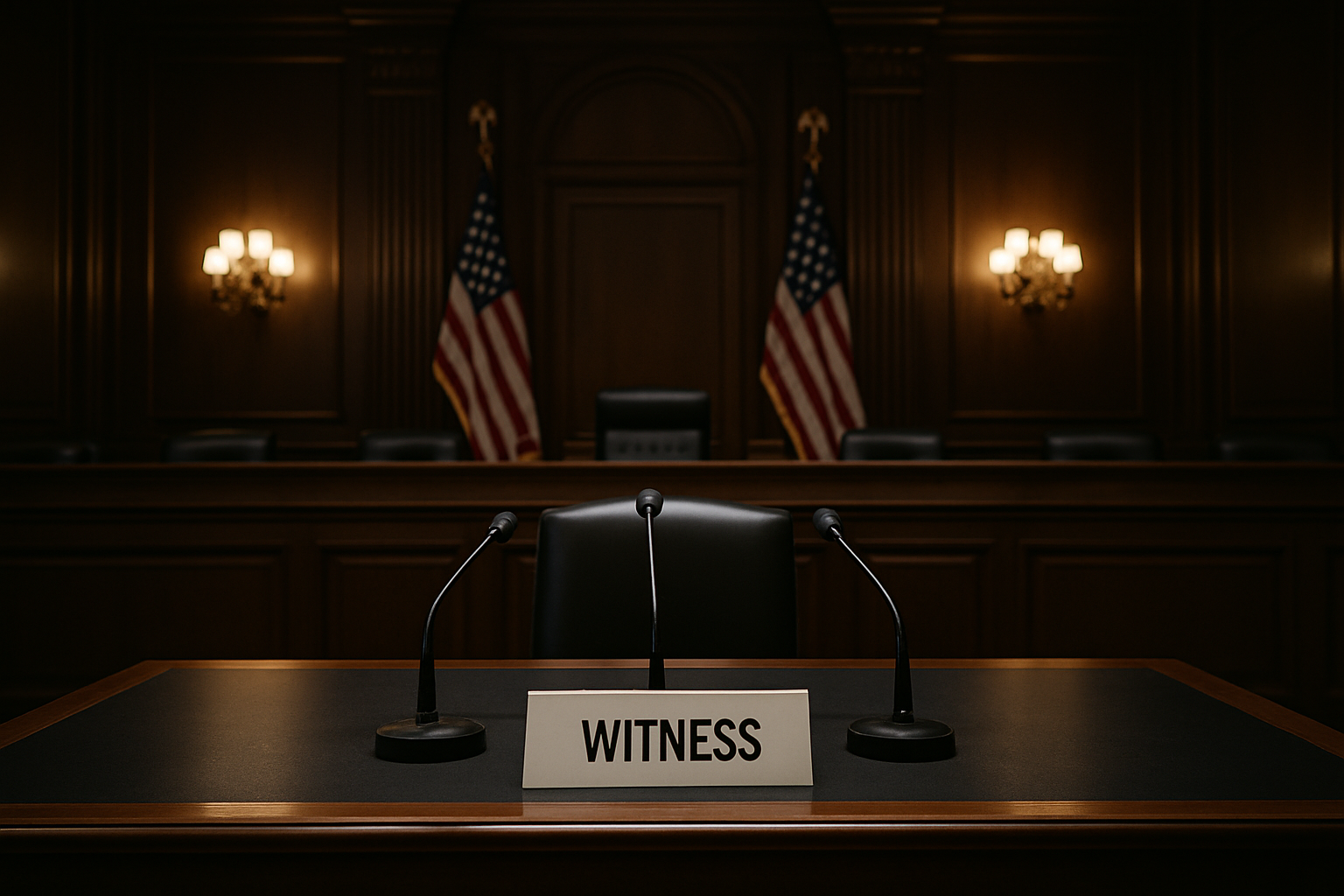
Former President Bill Clinton provided private testimony to Congress on Friday about his connections to deceased financier Jeffrey Epstein, becoming the first former U.S. president compelled to testify in the sprawling investigation that has engulfed political and business elites worldwide.
Clinton's closed-door deposition before the House Oversight Committee came just one day after his wife, former Secretary of State Hillary Clinton, testified for seven hours at their Chappaqua, New York home. The back-to-back appearances mark a pivotal moment in the Republican-led investigation into the late convicted sex offender's network of powerful connections.
Historic Presidential Testimony
The testimony, scheduled for 11:00 AM Eastern Time and conducted behind closed doors, represents the culmination of months of legal wrangling between the Clinton camp and House Republicans. The former president had initially resisted congressional subpoenas before reaching an agreement in February that averted a contempt of Congress vote.
According to sources familiar with the proceedings, questioning focused primarily on Clinton's documented flights aboard Epstein's private aircraft and what knowledge the former president may have possessed regarding Epstein's criminal activities. Norwegian media reports indicate Clinton traveled on Epstein's plane at least 27 times and was photographed in what appeared to be a hot tub with an unidentified woman.
"The purpose of the whole investigation is to try to understand many things about Epstein,"
— James Comer, House Oversight Committee Chairman
House Oversight Committee Chairman James Comer, who has pursued the Clinton testimony as a key victory for Republican investigators, emphasized that the Clintons are not accused of wrongdoing but must answer questions about Epstein's involvement with their charitable foundation.
Hillary Clinton's Defiant Appearance
Hillary Clinton's testimony on Thursday set an combative tone for the proceedings. The former Secretary of State categorically denied ever meeting Epstein or having knowledge of his crimes, while launching a fierce counter-attack against the Republican-led committee.
"I do not recall ever encountering Mr. Epstein. I never flew on his plane or visited his island, homes or offices," Clinton testified, according to sources present at the deposition. She characterized the seven-hour session as "repetitive" and accused the committee of trying to "protect one public official" – a clear reference to President Trump.
Clinton went on the offensive, demanding that Trump testify under oath about his own Epstein connections, citing what she described as "tens of thousands of times he shows up in the Epstein files." The aggressive strategy reflects a broader Democratic effort to turn the investigation's focus toward the current president.
Global Investigation Context
The Clinton testimonies occur amid what European law enforcement officials describe as the "largest international elite criminal network exposure in recent memory." The investigation has expanded beyond U.S. borders, with active probes in six countries examining various aspects of Epstein's operations.
In Norway, Crown Princess Mette-Marit faces potential criminal proceedings after being mentioned over 1,000 times in recently released documents. The crisis has prompted Sex og Samfunn, a major Norwegian organization, to terminate all partnerships with the royal family – the first institutional rejection of its kind in modern Norwegian history.
The Baltic states are coordinating investigations into modeling agencies that allegedly recruited women, "possibly minors," for Epstein's network. Latvia has opened a human trafficking investigation into the "Natalie" modeling agency, which President Egils Levits has declared a national priority.
DOJ Document Controversies
The congressional hearings take place against a backdrop of controversy over the Justice Department's handling of Epstein-related materials. An NPR investigation revealed that the DOJ allegedly withheld 53 pages of FBI interviews containing allegations of sexual assault by both Trump and Epstein involving a minor victim.
Representative Robert Garcia has called this potential suppression "the largest government cover-up in modern history," while the White House maintains Trump has been "totally exonerated," though no formal criminal determination has been made.
Adding to the controversy, the DOJ has faced criticism for accidentally exposing approximately 100 survivor identities, including 31 minors, through what Deputy Attorney General Todd Blanche described as "technical/human error." Federal judges are currently hearing emergency petitions over this massive confidentiality breach.
Corporate Fallout Intensifies
The Epstein revelations continue to reshape the business world, with a wave of high-profile resignations following new document releases. Goldman Sachs' top lawyer Kathy Ruemmler resigned after emails revealed she referred to Epstein as her "big brother," while DP World CEO Sultan Ahmed bin Sulayem was forced out after being mentioned over 9,000 times in documents as Epstein's "most trusted friend."
The business consequences extend beyond individual resignations, with institutional investors withdrawing support from Epstein-connected companies. The UK's development finance agency and Canada's second-largest pension fund have suspended new investments in DP World, demonstrating the ongoing financial impact of the scandal years after Epstein's death.
Intelligence and Security Concerns
Documents have revealed troubling security implications, including allegations that Prince Andrew shared classified Afghanistan intelligence with Epstein in December 2010, violating his protocols as a UK trade envoy. French diplomat Fabrice Aidan is under investigation for allegedly passing UN documents to Epstein, highlighting the network's apparent penetration of government institutions.
The files also show systematic attempts by Epstein to arrange meetings with Russian President Vladimir Putin through various intermediaries, raising questions about potential foreign intelligence interests in the network's operations.
Disinformation Campaign Challenges
Investigators face the additional challenge of sophisticated disinformation campaigns designed to muddy the waters around legitimate revelations. French authorities have detected Russian-linked operations creating false connections between world leaders and Epstein.
Adding to verification challenges, artificial intelligence tools can now generate convincing fake images of world leaders with Epstein "in seconds," according to cybersecurity experts. This technological capability complicates the task of distinguishing between authentic evidence and manufactured content.
No New Prosecutions Planned
Despite the massive scope of evidence – over 3 million pages of documents, 2,000 videos, and 180,000 images – Deputy Attorney General Todd Blanche has confirmed that no new federal prosecutions are planned. This decision has frustrated victim advocates and congressional investigators who argue that the evidence reveals disturbing patterns of criminal behavior.
The lack of new prosecutions, combined with the victim identity exposure crisis, has led to criticism that the investigation has protected powerful figures while further victimizing survivors of Epstein's alleged trafficking network.
Democratic Accountability at Stake
The Clinton testimony represents a critical test of democratic accountability in the 21st century. The investigation's outcome will establish crucial precedents for how democratic institutions handle transnational elite criminal networks that span multiple jurisdictions and involve figures at the highest levels of power.
Enhanced international cooperation has emerged as investigators work across borders to piece together the full scope of Epstein's operations. However, challenges remain significant, including diplomatic immunity protections, institutional resistance, and the complex intersection of law enforcement with international relations.
As more document releases are expected and investigations continue across six countries, the ultimate question remains whether this unprecedented exposure will lead to meaningful accountability or whether powerful elites will continue to operate with effective impunity despite massive public scrutiny.
The resolution of these investigations will likely determine the effectiveness of international justice cooperation for decades to come, establishing whether democratic institutions can successfully address sophisticated criminal networks that transcend national boundaries and traditional law enforcement capabilities.