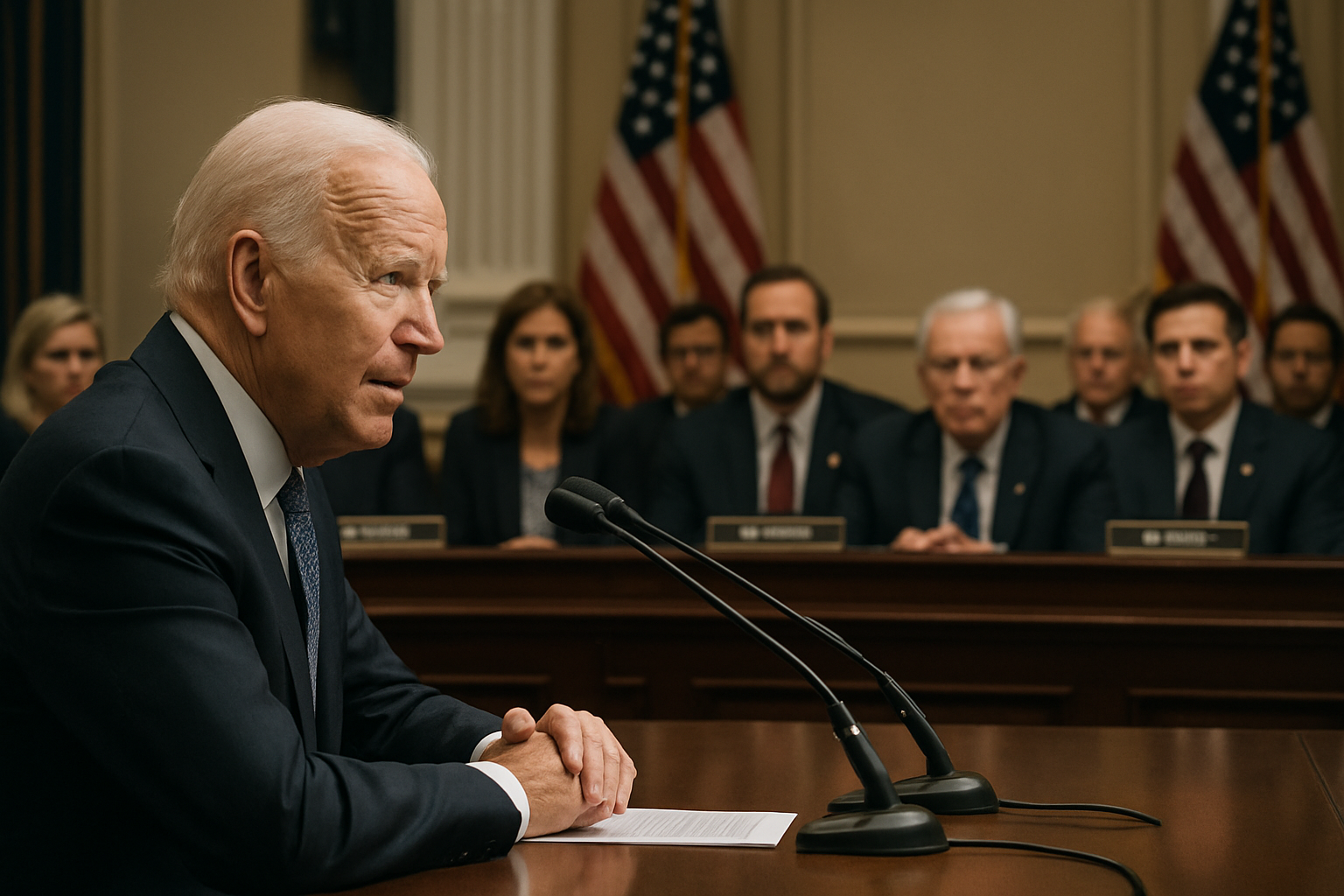
Former President Bill Clinton made history on February 28, 2026, becoming the first former U.S. president compelled to testify before Congress about his relationship with convicted sex offender Jeffrey Epstein in a closed-door deposition that lasted approximately six hours.
The unprecedented testimony took place at the House Oversight Committee, with Clinton appearing under subpoena after months of resistance. The hearing represents a watershed moment in American politics, as no sitting or former president has ever been forced to testify before Congress under such circumstances.
Historic Congressional Testimony
Clinton's appearance followed his wife Hillary Clinton's combative testimony on February 27, where she categorically denied ever meeting Epstein and demanded that former President Trump testify about his own documented connections to the late financier. The former Secretary of State characterized the Republican-led investigation as "partisan political theater" designed to "protect one public official."
The agreement to testify came after the Clintons faced the prospect of contempt of Congress charges. Their spokesperson Angel Ureña announced the reversal in strategy, with Hillary Clinton stating the "political fight should happen publicly with transparency" after months of refusing subpoenas.
Republican committee chair James Comer hailed the agreement as a major victory, noting that Clinton would be questioned under oath about his documented 27 flights on Epstein's private aircraft between 2001-2003, as well as Epstein's 17 recorded visits to the White House during Clinton's presidency from 1993-1995.
Clinton's Defense and Denials
According to sources familiar with the testimony, Clinton maintained his innocence throughout the six-hour session, stating in his opening remarks that he "saw nothing and did nothing wrong" regarding his relationship with Epstein. The former president reportedly denied having sexual relations with a woman photographed with him in a jacuzzi at Epstein's residence, claiming he did not know her identity.
"I saw nothing, and I did nothing wrong"
— Bill Clinton, Opening Statement
Clinton's testimony focused heavily on his explanation of why he traveled extensively on Epstein's aircraft, known colloquially as the "Lolita Express." Sources indicate he maintained that these flights were related to legitimate charitable work with the Clinton Foundation and that he was unaware of Epstein's criminal activities at the time.
The former president also addressed revelations from the latest Epstein document releases, which show extensive correspondence and interactions between his circle and Epstein's network. Clinton reportedly told investigators that Trump had spoken to him about his "falling out" with Epstein around 2000, allegedly over a real estate deal.
Global Context of Epstein Investigations
Clinton's testimony occurs amid what European law enforcement officials describe as the "largest international elite criminal network exposure in recent memory." Investigations are active across six countries, with enhanced cooperation setting new precedents for transnational criminal prosecutions.
The scope of the global scandal has reached the highest levels of power across multiple continents. Norwegian Crown Princess Mette-Marit faces potential criminal proceedings after being mentioned over 1,000 times in Epstein documents, while major corporate figures including Goldman Sachs' former top lawyer Kathy Ruemmler and DP World CEO Sultan Ahmed bin Sulayem have resigned over their documented connections to Epstein.
Baltic states are coordinating investigations into modeling agency trafficking networks that allegedly recruited "women, possibly minors" from Eastern Europe for Epstein's network. Latvia has made its investigation of the "Natalie" modeling agency a national priority, while similar probes are underway in Lithuania, Estonia, and Poland.
Department of Justice Controversies
Clinton's testimony comes as the Department of Justice faces intense criticism over its handling of the Epstein files. An NPR investigation revealed that the DOJ allegedly withheld 53 pages of FBI interviews containing sexual assault allegations against Trump involving a minor victim. Representative Robert Garcia has characterized this as potentially "the largest government cover-up in modern history."
Despite the release of over 3 million pages of documents, 2,000 videos, and 180,000 images, Deputy Attorney General Todd Blanche confirmed that no new federal prosecutions are planned. The DOJ has also come under fire for accidentally exposing the identities of approximately 100 survivors, including 31 minors, through what officials termed "technical and human errors."
Federal judges are currently hearing emergency petitions over this massive confidentiality breach, which threatens to undermine future victim cooperation with law enforcement.
Political Ramifications
The Clinton testimony has intensified political battles over the Epstein investigation. Democrats continue to demand that Trump also testify under oath about his documented relationships with Epstein, pointing to FBI documents that allegedly show Trump told a Palm Beach police chief in 2006 that "everyone knew" about Epstein's behavior.
The investigation has created tensions within both parties. Some Democratic committee members have joined Republicans in supporting the Clinton subpoenas, while others characterize the inquiry as politically motivated. The hearings have also drawn attention to Commerce Secretary Howard Lutnick's admission that he visited Epstein's private island in 2012, which he described as a "family vacation."
International Elite Network Exposure
The Epstein files reveal the unprecedented scope of an international network that spanned from Wall Street executives to European royalty, Silicon Valley tech leaders to Middle Eastern businessmen. Documents show systematic attempts to cultivate relationships with powerful figures across multiple sectors and continents.
Intelligence agencies are examining evidence of potential security breaches, including allegations that Prince Andrew shared classified British military intelligence about Afghanistan with Epstein in 2010, violating his protocols as a trade envoy. French diplomat Fabrice Aidan is under investigation for allegedly passing UN documents to Epstein.
The network's sophisticated operation required extensive planning, surveillance, and financial arrangements across multiple jurisdictions. Investigators describe it not as the work of an isolated individual, but as a systematic enterprise that exploited institutional weaknesses and elite privilege.
Disinformation and Verification Challenges
The investigation faces significant challenges from disinformation campaigns. French authorities have detected Russian-linked operations creating false connections between world leaders and Epstein using artificial intelligence tools that can generate convincing fake images "in seconds." These efforts appear designed to protect actual perpetrators while complicating the verification of legitimate revelations.
The documents also contain various conspiracy theories, including false claims about "body doubles," which investigators must carefully separate from credible evidence. This disinformation warfare adds another layer of complexity to an already challenging international investigation.
Democratic Accountability Test
Legal experts describe Clinton's testimony as a fundamental test of democratic accountability mechanisms. The ability to compel a former president to testify under oath demonstrates that no individual, regardless of their position or influence, is above the law in a functioning democracy.
However, the ultimate test will be whether these investigations produce meaningful accountability and systemic reforms, or whether elite networks continue to operate with impunity despite unprecedented public exposure. Cultural institutions worldwide are conducting relationship reviews, while governments are implementing new vetting procedures for diplomatic appointments and public offices.
Looking Ahead
More document releases are expected as the investigation continues across multiple countries. The resolution of these cases will establish crucial precedents for 21st-century international justice cooperation and determine how democratic institutions respond to sophisticated transnational criminal networks.
The Clinton testimony represents just one chapter in what may be the most significant test of elite accountability in modern history. As investigators continue their work across six countries, the world watches to see whether justice systems can effectively address criminal networks that span continents and involve the most powerful figures in society.
The coming months will reveal whether this historic testimony marks a turning point toward greater accountability, or simply another moment in the long struggle to hold powerful elites responsible for their actions. What remains clear is that the reverberations from these revelations will continue to reshape the international political landscape for years to come.