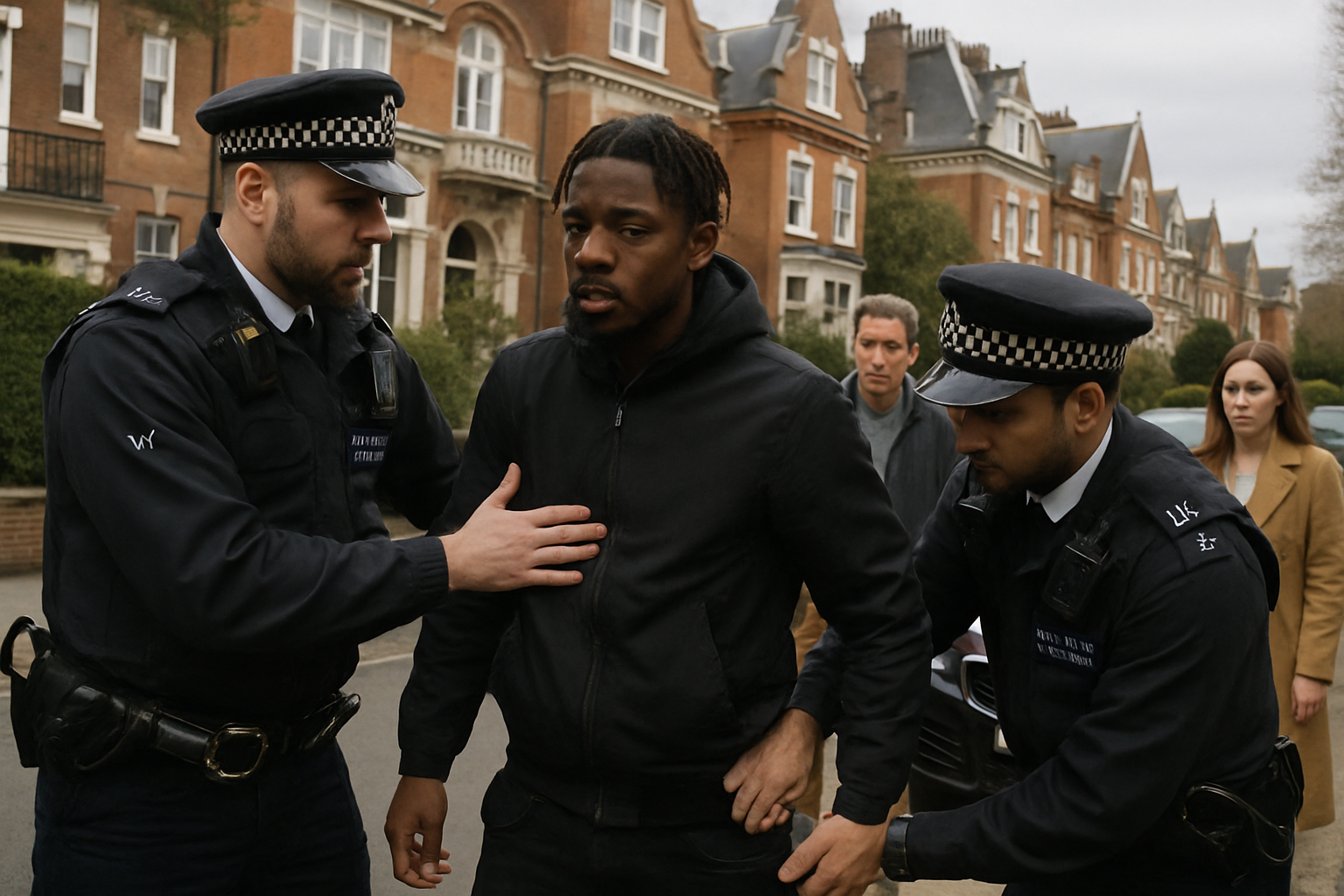
Black people are up to 48 times more likely than white people to be stopped and searched by police in some of London's most affluent areas, according to explosive new research that exposes extreme racial disparities in how Metropolitan Police officers exercise controversial powers in wealthy districts.
The comprehensive study reveals a pattern of discriminatory policing that reaches its most extreme levels in areas like Richmond-upon-Thames, where the racial disproportion in stop and search rates far exceeds anything documented in London's traditional hotspots. The findings represent the most detailed analysis to date of how police powers are deployed across London's socioeconomic divide.
Vague Justifications and "Furtive Glances"
Perhaps most troubling, the research found that officers were significantly more likely to provide vague or subjective justifications when stopping Black individuals in these wealthy areas. Examples documented in the study included officers citing that a Black person gave a "furtive glance" as grounds for conducting a search—a level of subjectivity that legal experts say would be unlikely to meet reasonable suspicion standards in court.
These vague justifications stand in stark contrast to the more specific reasons typically given for stops in other areas of London, suggesting a lower threshold of suspicion is being applied to Black individuals in affluent neighborhoods where their presence appears to be viewed as inherently suspicious.
Geographic Disparities Reveal Systemic Issues
The research analyzed stop and search data across London's 32 boroughs, revealing that the racial disparity actually increases in areas with higher property values and lower crime rates. While previous studies have focused primarily on high-crime areas where stop and search is most frequently used, this investigation exposed how the practice operates in London's wealthiest enclaves.
Richmond-upon-Thames, one of London's most expensive boroughs with an average house price exceeding £800,000, showed the highest disparity rates. The area, known for its riverside properties and proximity to Kew Gardens, has traditionally had low crime statistics, making the extreme racial disparities in police stops even more striking.
"These findings reveal that the problem of disproportionate stop and search isn't confined to high-crime areas—it's actually worse in places where Black people are least expected to be."
— Research team spokesperson
National Context and Historical Patterns
The study builds on decades of research documenting racial disparities in British policing, dating back to the 1981 Scarman Report following the Brixton riots. However, the extreme ratios found in wealthy areas—up to 48 times higher for Black individuals—represent some of the most severe disparities ever documented in UK law enforcement.
Metropolitan Police data shows that across London as a whole, Black people are already stopped and searched at rates approximately four times higher than white people. But the new research reveals this average masks far more extreme disparities in specific geographic areas.
Legal and Constitutional Implications
Civil rights lawyers say the findings raise serious questions about whether stop and search practices in wealthy areas violate anti-discrimination laws and the Police and Criminal Evidence Act 1984, which requires "reasonable suspicion" before conducting searches.
The use of subjective criteria like "furtive glances" particularly concerns legal experts, who argue such justifications fall well below the legal threshold for reasonable suspicion. Several high-profile cases have already seen stop and search evidence thrown out of court when officers have relied on similarly vague reasoning.
Metropolitan Police Response and Reform Pressures
The Metropolitan Police has faced mounting pressure to reform stop and search practices following a series of high-profile incidents and critical reports. The force has implemented body-worn cameras and enhanced training programs, but critics argue these measures have failed to address the underlying issues revealed by the new research.
Police officials maintain that stop and search is an important tool for preventing crime and keeping communities safe, but acknowledge that disproportionate use undermines public trust, particularly in minority communities.
Community Impact and Trust
Community leaders in affected areas report that the extreme disparities are having a devastating impact on police-community relations. Young Black professionals living in or visiting affluent areas describe feeling constantly watched and questioned about their presence in neighborhoods where they work, live, or have legitimate business.
The psychological impact extends beyond those directly stopped, with many Black Londoners reporting they avoid certain wealthy areas altogether to prevent potential confrontations with police. This "geographic profiling" effect essentially creates no-go zones for law-abiding citizens based solely on their race.
Calls for Immediate Action
The research has prompted immediate calls for reform from across the political spectrum, with MPs demanding urgent parliamentary hearings on the findings. Civil rights organizations are threatening legal challenges if the Metropolitan Police fails to address the disparities revealed in the study.
Several local councils in affected areas have announced they will be reviewing their relationships with Metropolitan Police, with some threatening to reduce cooperation unless concrete steps are taken to address the documented discrimination.
"These numbers don't lie—this is institutional racism in action, and it demands immediate intervention at the highest levels of government."
— Community Rights Advocate
Broader Implications for British Policing
The study's findings have implications that extend far beyond London, as similar patterns of discriminatory policing are suspected in other major British cities. The research methodology—combining geographic analysis with qualitative examination of justifications—provides a template for investigating police practices nationwide.
Police forces across England and Wales are now facing pressure to conduct similar analyses of their own stop and search data, with the Home Office indicating it may mandate such studies as part of police accountability measures.
The research represents a watershed moment in the ongoing struggle for police accountability in Britain, providing unprecedented evidence of how racial bias manifests in routine policing practices. As calls for reform intensify, the study's findings are likely to shape police policy and training for years to come, marking a critical step toward addressing one of the most persistent issues in British law enforcement.