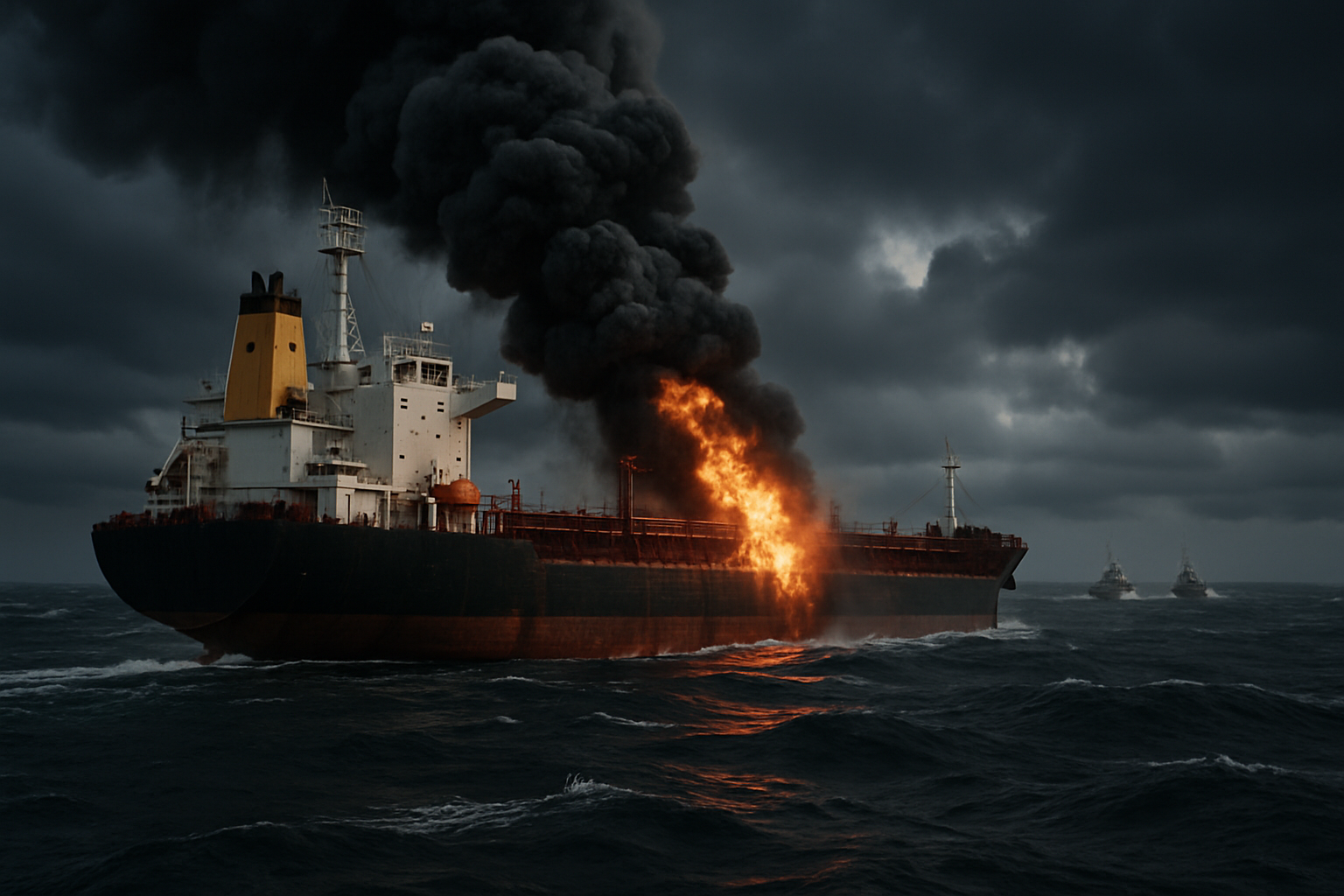
A Turkish-owned crude oil tanker was struck by unmanned aerial vehicle attacks in the Black Sea just 15 nautical miles from the Istanbul Strait, highlighting the growing vulnerability of commercial shipping to modern warfare technologies in critical maritime corridors.
The vessel "Altura," owned by Turkish company Pergamon Shipping and flying under the Sierra Leone flag, sustained damage to its superstructure and captain's bridge after the early morning attack on March 26, 2026. The tanker was transporting approximately 140,000 tons of crude oil from the Russian port of Novorossiysk, according to Turkish Transport Minister Abdülkadir Uraloğlu.
Escalating Maritime Warfare
The incident represents a significant escalation in maritime security threats, with Minister Uraloğlu confirming the attack was carried out using both aerial and maritime drones around 00:30 Turkish time. "We believe the engine room was targeted... the attack was carried out using an unmanned surface vehicle," the minister stated during a televised interview.
Despite the severity of the attack, the vessel is not in danger of sinking and all crew members remain safe. However, the incident has raised alarm bells across the international shipping community, as it demonstrates the vulnerability of even large commercial vessels to relatively inexpensive drone technology.

Critical Energy Supply Routes Under Threat
The attack on the Altura occurs within a broader context of escalating threats to global maritime security, particularly affecting energy transportation routes. The Black Sea serves as a critical corridor for oil and gas exports from Russia and Central Asian states to international markets.
This latest incident follows a pattern of increasing attacks on commercial shipping that has disrupted global supply chains throughout 2026. Maritime security analysts note that the targeting of oil tankers carrying Russian crude represents a new phase in economic warfare, with potential ramifications for global energy markets.
"This attack demonstrates how modern conflicts now directly threaten civilian infrastructure and global commerce through asymmetric warfare tactics."
— Maritime Security Expert
International Response and Maritime Law
The attack has prompted calls for enhanced international cooperation to protect commercial shipping in contested waters. Turkey has notified relevant international maritime organizations, while regional navies are reassessing their protective measures for merchant vessels.
Legal experts emphasize that attacks on civilian vessels violate international maritime law, regardless of the cargo's origin or destination. The incident raises questions about the adequacy of current international frameworks for protecting commercial shipping in increasingly militarized maritime environments.
Shadow Fleet Operations Under Scrutiny
The Altura incident occurs amid broader concerns about "shadow fleet" operations – vessels carrying sanctioned cargo using false documentation or concealed ownership. Intelligence sources indicate over 600 vessels worldwide operate in this gray zone, often without proper flag state authorization.
Recent enforcement actions have seen European authorities seize Russian tankers in the North Sea, while the EU's 20th sanctions package has imposed comprehensive maritime services bans affecting insurance, maintenance, and port access for sanctioned vessels.
Technology and Maritime Security
The attack highlights rapid advances in drone technology that have made maritime targets increasingly vulnerable. Modern unmanned systems can be deployed from considerable distances and are difficult to detect using conventional radar systems.
Maritime industry experts are calling for enhanced satellite tracking, AI-powered monitoring systems, and real-time analytics to improve vessel protection. However, the vast expanse of international waters and the limitations of current surveillance technology make comprehensive protection extremely challenging.
Economic and Environmental Implications
Beyond the immediate security concerns, the attack raises significant environmental and economic questions. The 140,000 tons of crude oil aboard the Altura could have caused catastrophic environmental damage to the Black Sea ecosystem had the vessel suffered hull breach.
Maritime insurance premiums are already surging globally as underwriters grapple with these new forms of warfare targeting civilian shipping. The increased costs ultimately impact global supply chains, affecting everything from fuel prices to consumer goods.
Regional Context and Future Implications
The Black Sea has become an increasingly contested maritime domain, with multiple state and non-state actors operating in the region. The attack on the Altura represents the convergence of several concerning trends: the weaponization of civilian infrastructure, the vulnerability of energy supply chains, and the inadequacy of current maritime security frameworks.
As conflicts increasingly spill over into international waters, the global maritime community faces unprecedented challenges. The incident serves as a stark reminder that modern warfare technologies can transform any commercial vessel into a potential target, regardless of its flag, ownership, or cargo.
"We are witnessing a fundamental shift in how maritime security threats manifest. Traditional naval protection models are inadequate for addressing distributed, asymmetric threats."
— International Maritime Organization Official
Looking Ahead: Maritime Security Evolution
The attack on the Altura likely represents a preview of future maritime security challenges. As drone technology becomes more sophisticated and accessible, the threat to commercial shipping will only intensify. This reality demands urgent international cooperation to develop new protective frameworks for civilian vessels.
Key recommendations from maritime security experts include enhanced information sharing between naval forces, improved vessel tracking systems, and new international legal frameworks specifically addressing attacks on commercial shipping. The development of effective countermeasures against drone attacks has become a priority for both commercial operators and naval forces.
The international community must also address the root causes driving these attacks, including the proliferation of conflict into previously neutral maritime domains. Without comprehensive diplomatic solutions to underlying conflicts, commercial shipping will continue to bear the burden of increasingly militarized seas.
As the Altura incident demonstrates, the era of treating commercial shipping as immune from military action is rapidly ending. The challenge now is whether the international community can adapt its maritime security frameworks quickly enough to protect the vessels that carry 90% of global trade across the world's increasingly dangerous waters.