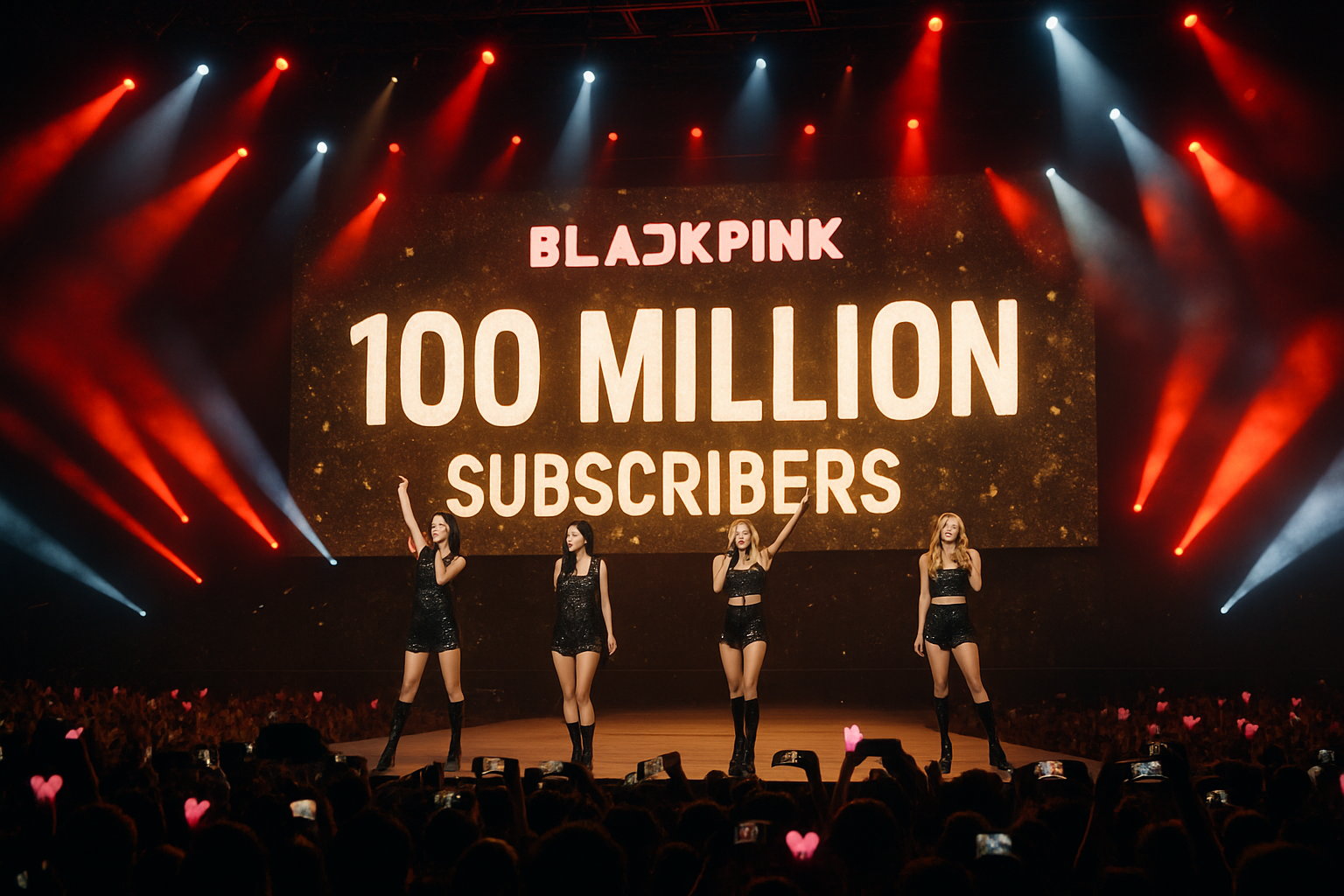
BLACKPINK has become the first artist in history to reach 100 million subscribers on YouTube, marking an unprecedented milestone in digital entertainment, while simultaneously Southeast Asian nations unite in coordinated boycott campaigns against South Korean products and culture, revealing the complex tensions beneath the global K-pop phenomenon.
The achievement, announced by Yonhap News Agency on February 21, 2026, represents a watershed moment for Korean cultural influence worldwide. The four-member group—consisting of Jisoo, Jennie, Rosé, and Lisa—has shattered previous records held by individual creators and artists, cementing their position as global entertainment titans.
Historic YouTube Milestone Reflects K-pop's Global Reach
BLACKPINK's 100 million subscriber achievement comes after years of strategic international expansion, including recent collaborations with major institutions like the National Museum of Korea for their upcoming EP "Deadline," demonstrating the sophisticated integration of cultural heritage with contemporary music that has become a hallmark of successful K-pop acts.
The milestone builds on a remarkable year for Korean entertainment. Lisa secured a starring role in a Netflix original film inspired by "Notting Hill," while the group maintained their position as pioneers in the streaming economy revolution. This achievement occurs within what experts have termed the "February 2026 Cultural Renaissance," characterized by unprecedented global cultural activity and Korean entertainment's expanding international footprint.
"This achievement represents not just BLACKPINK's success, but the maturation of digital entertainment as a truly global phenomenon."
— Entertainment Industry Analyst
Southeast Asian Digital Boycott Movement Gains Momentum
However, BLACKPINK's triumph coincides with a growing wave of digital resistance across Southeast Asia. Posts accusing Koreans of discrimination have circulated widely on social media platforms, with users from Malaysia, Indonesia, and Thailand sharing coordinated calls to boycott Korean products and cultural content.
The boycott movement, trending under hashtags that invoke regional solidarity, stems from disputes over fan behavior at K-pop concerts and controversial comments from public officials. The digital tensions have taken on a distinctly regional dimension, with Southeast Asian communities organizing systematic resistance campaigns against Korean cultural products.
Social media platforms have become the primary battleground for these cultural tensions, with users sharing strategies for avoiding Korean content, alternatives to Korean products, and calls for supporting local entertainment industries instead of Korean imports.
The Paradox of Korean Cultural Influence
The simultaneous occurrence of BLACKPINK's historic achievement and the Southeast Asian boycott campaigns highlights a fundamental paradox in contemporary cultural globalization. While Korean entertainment continues to break records and capture global audiences, it also faces organized resistance from communities that feel marginalized or discriminated against by Korean cultural attitudes.
This tension reflects broader questions about cultural imperialism in the digital age. The same platforms that enable unprecedented global reach for Korean artists also facilitate rapid organization of resistance movements, creating a complex dynamic where cultural success and cultural backlash occur simultaneously.
Industry experts note that this represents a new phase in the globalization of entertainment, where digital platforms can amplify both cultural influence and cultural resistance with equal efficiency. The hashtag movements against South Korea demonstrate how quickly digital dissatisfaction can organize across national boundaries.
Regional Cultural Dynamics and Digital Democracy
The Southeast Asian response illustrates the democratizing power of digital platforms, where audiences are no longer passive consumers of cultural content but active participants in cultural diplomacy. The coordinated nature of the boycott campaigns shows sophisticated understanding of digital organizing principles and regional solidarity.
Malaysia, Indonesia, and Thailand—three of the region's largest economies—represent significant markets for Korean cultural products. The organized resistance from these communities poses real economic and strategic challenges for Korean entertainment companies that have invested heavily in Southeast Asian expansion.
The controversy also highlights the importance of cultural sensitivity in global entertainment expansion. While K-pop has achieved remarkable success through strategic localization and fan engagement, the current tensions suggest that sustained global influence requires more than just entertainment value—it demands genuine cultural respect and reciprocity.
Technology's Role in Cultural Movements
Both BLACKPINK's achievement and the boycott movements demonstrate technology's dual role in contemporary cultural dynamics. YouTube's algorithm and social media platforms enable both unprecedented global reach for entertainment content and rapid organization of resistance movements.
The same digital infrastructure that allowed BLACKPINK to build a global fanbase of 100 million subscribers also enables Southeast Asian communities to coordinate boycott campaigns across multiple countries and platforms. This technological democratization means that cultural influence increasingly operates in a context of potential organized resistance.
Digital platforms have evolved beyond simple content distribution systems to become spaces for cultural negotiation, where success and resistance can coexist and compete for audience attention and loyalty.
Implications for Global Entertainment Industry
The convergence of BLACKPINK's milestone achievement and Southeast Asian boycott campaigns signals a maturation in global entertainment dynamics. Success in the digital age requires not just creative excellence and marketing sophistication, but also cultural diplomacy and genuine international collaboration.
For Korean entertainment companies, the situation presents both opportunities and challenges. BLACKPINK's 100 million subscribers demonstrate the massive potential rewards of successful global expansion, while the Southeast Asian boycotts illustrate the risks of cultural misunderstandings and perceived discrimination.
The entertainment industry increasingly operates in an environment where cultural sensitivity and genuine international partnership are not optional extras but essential components of sustainable global success. The digital tools that enable rapid global reach also enable rapid global resistance.
Looking Forward: Cultural Diplomacy in the Digital Age
As BLACKPINK celebrates their historic milestone, the broader Korean entertainment industry faces important questions about the sustainability of cultural influence without corresponding cultural responsibility. The Southeast Asian boycott movements represent a new form of digital cultural diplomacy that entertainment companies must navigate carefully.
The resolution of these tensions will likely influence not just Korean-Southeast Asian cultural relations, but broader patterns of global entertainment expansion. Success in the digital age increasingly requires balancing global ambition with local sensitivity, technological capability with cultural wisdom.
BLACKPINK's achievement remains a testament to the power of digital platforms to create unprecedented global connections through entertainment. Whether this success can be sustained amid growing cultural tensions will depend on the industry's ability to evolve beyond mere content distribution toward genuine cultural exchange and mutual respect.
The story of BLACKPINK's 100 million subscribers and Southeast Asia's digital boycott campaigns ultimately reflects the complex realities of cultural globalization in 2026—where unprecedented connection and organized resistance can emerge simultaneously, requiring new approaches to international cultural engagement that honor both global ambition and local dignity.