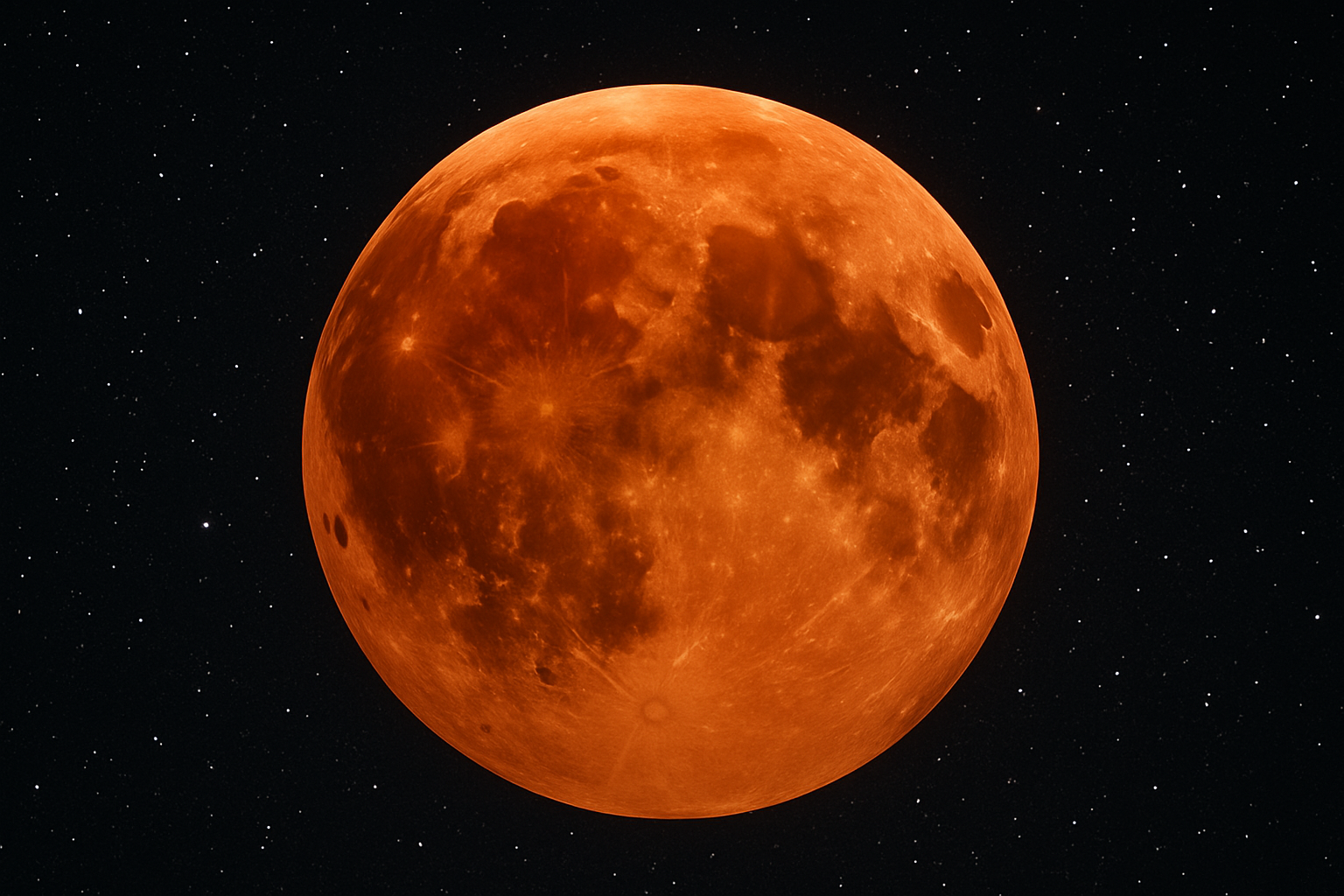
A breathtaking total lunar eclipse turned the Moon into a spectacular "Blood Moon" during the early morning hours of March 3, 2026, captivating millions of observers across the Americas and parts of Asia in what scientists confirm as the year's only total lunar eclipse.
The celestial phenomenon, visible across vast regions including the United States, Mexico, Costa Rica, Pakistan, and Peru, marked the first major astronomical event of 2026, occurring just two weeks after February's rare six-planet alignment that mesmerized global audiences.
Perfect Viewing Conditions Across Multiple Continents
According to NASA data and international meteorological services, the eclipse provided optimal viewing conditions for observers across the Americas during the pre-dawn hours. In Costa Rica, the Cientec Foundation confirmed that the totality phase coincided with moonset on the western horizon, creating dramatic photographic opportunities for early risers.
The Pakistan Meteorological Department's Climate Data Processing Centre verified that the eclipse was partially visible at moonrise across Pakistan, while comprehensive coverage extended throughout North America, South America, East Asia, Australia, and the Pacific and Atlantic regions.
"This eclipse offers a 100 percent safe viewing experience with the naked eye, unlike solar eclipses," explained meteorological experts, emphasizing the accessibility of the lunar phenomenon for general public observation.
— Pakistan Meteorological Department Officials
The Science Behind the Blood Moon Phenomenon
The characteristic reddish-copper coloration that earned the eclipse its "Blood Moon" nickname results from Earth's atmosphere refracting sunlight around our planet. As Earth positions itself directly between the Sun and Moon, the atmosphere acts as a lens, filtering out shorter blue wavelengths while allowing longer red and orange wavelengths to reach the lunar surface.
This atmospheric effect essentially projects all of Earth's sunrises and sunsets simultaneously onto the Moon's surface, creating the dramatic crimson appearance that has captivated human civilizations for millennia.
Global Coordination and International Observation
The eclipse demonstrated unprecedented international cooperation in astronomical observation, building upon existing memory of previous lunar eclipses from the Caribbean and other regions. Educational institutions and astronomy organizations worldwide organized community viewing events, leveraging the safe viewing nature of lunar eclipses to engage public interest in space science.
Multiple sources from Peru documented extensive public interest, with detailed viewing guides provided for major cities including Mexico City, Monterrey, Guadalajara, and locations across the United States from California to Florida. Spain also prepared special viewing arrangements, despite the eclipse occurring during challenging pre-dawn hours in European time zones.
Timing and Regional Variations
The eclipse began during the penumbral phase in the early morning hours of March 3, 2026, with timing varying significantly across different regions. Costa Rican observers experienced the totality phase shortly before sunrise, while viewers in Mexico and the United States had extended observation windows during the darkest hours before dawn.
For observers in Pakistan and parts of Asia, the eclipse appeared during moonrise hours, providing a different but equally spectacular viewing experience as the reddened Moon appeared against the horizon.
Connection to Broader 2026 Space Renaissance
The March 3 eclipse occurs during what space historians are calling the "golden age of astronomical observation," coinciding with remarkable developments in space exploration and technology. The event follows closely after February's historic six-planet alignment and occurs as NASA prepares for potential Artemis II lunar missions and SpaceX advances its lunar colonization programs.
The eclipse provided valuable research opportunities for scientists studying Earth's atmospheric composition and lunar surface characteristics through coordinated global observations, contributing to the expanding knowledge base crucial for future lunar exploration missions.
Photography and Digital Documentation
Modern technology enabled unprecedented documentation of the eclipse, with smartphone cameras—recently approved by NASA for space applications—proving capable of capturing the lunar phenomenon. Advanced eclipse prediction tools and mobile applications provided precise local timing information, while social media platforms facilitated real-time sharing of images and experiences across time zones.
Weather preparation proved crucial for successful observation, with meteorological services across affected regions providing detailed forecasts and recommendations for optimal viewing locations away from light pollution and cloud cover.
Educational Impact and Public Engagement
The eclipse served as a powerful educational tool, inspiring public interest in astronomy and space science during a transformative period of human space exploration. Astronomy clubs and educational institutions reported increased engagement in STEM programs, while the safe viewing nature of lunar eclipses made the event accessible to families and schools worldwide.
The predictable nature of eclipse cycles, calculated through centuries-advance forecasting using Saros cycle patterns, demonstrated the precision of astronomical science and cosmic mechanics to global audiences.
Looking Toward Future Celestial Events
As the only total lunar eclipse of 2026, the March 3 event holds special significance for astronomy enthusiasts and researchers. The eclipse connects to broader patterns of space science advancement, occurring during a year marked by unprecedented international cooperation in space exploration and astronomical research.
The successful global observation of the Blood Moon eclipse reinforces the enduring human fascination with celestial phenomena while demonstrating how modern technology and international cooperation can make these ancient cosmic events accessible to billions of people worldwide.
The next comparable lunar eclipse visible from the Americas is not expected for several years, making the March 3, 2026 Blood Moon a truly special astronomical event that connected cultures and continents through shared wonder at the cosmos above.