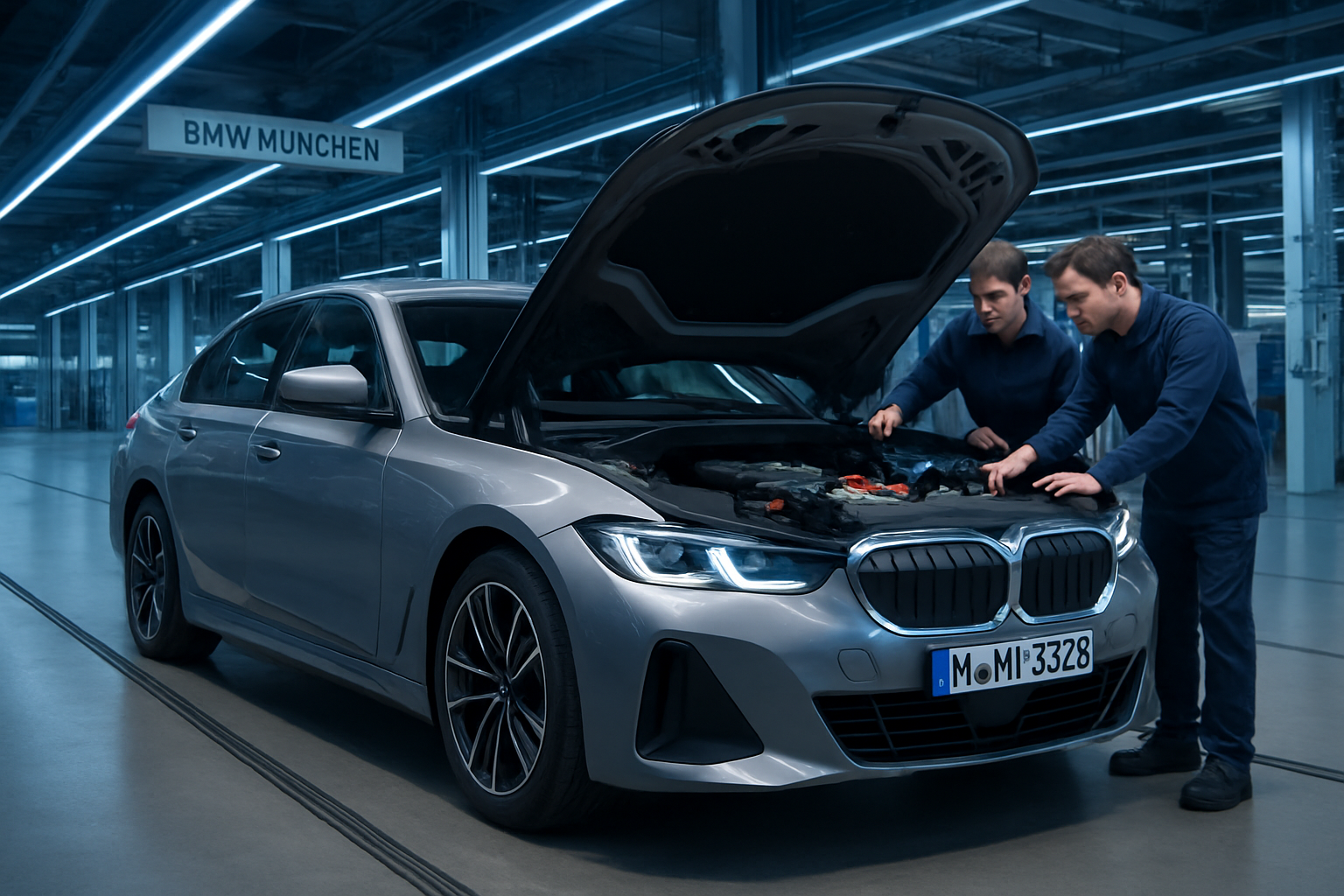
BMW has announced that production of the highly anticipated electric version of its iconic 3 Series will begin at the Munich manufacturing facility this August, with the first vehicles expected to reach customers by the end of 2026, marking another significant milestone in the German automaker's electric vehicle strategy.
The announcement comes at a critical juncture for the automotive industry, as traditional manufacturers face mounting pressure to accelerate their electric vehicle programs while competing against rapidly advancing Chinese competitors and dealing with persistent supply chain challenges.
Strategic Positioning in Competitive EV Market
BMW's decision to electrify the 3 Series, one of its most successful and recognizable models, represents a calculated move to expand its electric vehicle portfolio beyond the current iX3 SUV. The 3 Series has been a cornerstone of BMW's lineup for decades, and its electric transformation signals the company's commitment to transitioning its core vehicles to sustainable powertrains.
The timing aligns with BMW's broader "Neue Klasse" electric vehicle philosophy, which has already seen success with the iX3 being named "Car of the Year" by Top Gear earlier this year. This accolade demonstrates BMW's ability to create compelling electric vehicles that maintain the brand's characteristic driving dynamics while embracing zero-emission technology.
"The electric 3 Series represents our commitment to bringing electrification to the heart of our model range, combining BMW's legendary driving pleasure with sustainable technology."
— BMW AG Spokesperson
Production and Manufacturing Excellence
The Munich facility, BMW's flagship production site, will serve as the manufacturing hub for this crucial electric vehicle. This choice reflects BMW's confidence in its German manufacturing capabilities and its strategy to maintain production of key models close to its headquarters and primary markets.
The production timeline beginning in August positions BMW to capitalize on the growing European electric vehicle market, where infrastructure development has accelerated significantly. Countries like Austria have doubled their EV charging capacity with 1,000 additional stations, while Estonia leads with 88% renewable electricity and the continent's largest battery storage facility serving 90,000 households.
Industry Context and Competitive Landscape
BMW's announcement comes during a period of unprecedented transformation in the automotive industry. The company has demonstrated superior performance compared to German competitors during the current industry crisis, maintaining better positioning through strategic management while 2026 is expected to be a transitional year for the sector's adaptation to EV transition and supply chain disruptions.
The electric vehicle market faces significant supply chain challenges, with China controlling 60% of global critical materials production and 90% of refining capacity for lithium, cobalt, and rare earth elements. Memory chip shortages continue to drive sixfold price increases affecting vehicle control systems, expected to persist until 2027 when new fabrication facilities come online.
Technological Advancement and Innovation
Recent breakthroughs in electric vehicle technology suggest that BMW's electric 3 Series will enter a market where charging limitations are rapidly being addressed. Chinese competitor BYD has unveiled Megawatt Flash Charging technology capable of delivering 400km range in just 5 minutes, while their Blade Battery 2.0 functions effectively in extreme weather down to -30°C, addressing cold climate concerns prevalent in BMW's key markets.
Battery longevity studies provide encouraging data for potential buyers, with Tesla Model S vehicles from 2012-2014 retaining 85-92% capacity after 200,000+ miles, and Nissan Leaf models from 2011-2013 showing 75-85% retention after a decade of operation. These findings suggest practical EV battery lifespans of 15-20 years, far exceeding initial industry predictions.
Regional Market Dynamics
The electric vehicle adoption landscape shows significant regional variations, with urban-rural disparities continuing to influence market penetration. Homeowners and rural residents maintain advantages through home charging access, while urban apartment dwellers face infrastructure barriers that workplace and public charging networks are gradually addressing.
European regulatory pressure intensifies with Brussels planning to effectively ban new diesel vehicle sales within years, forcing accelerated transition to electrified alternatives. This regulatory environment creates both opportunity and urgency for BMW's electric vehicle strategy.
Strategic Implications and Future Outlook
BMW's dual-track approach, balancing electric vehicle development with hydrogen technology initiatives, positions the company to respond to various market scenarios. The company's Austria facility under Harald Gottsche has announced major hydrogen vehicle development initiatives, demonstrating BMW's commitment to multiple sustainable powertrain technologies.
The electric 3 Series production represents more than a single model launch; it symbolizes the transformation of one of the automotive industry's most iconic vehicles for the electric era. Success in this segment could influence BMW's broader electrification strategy and competitive positioning against both traditional rivals and emerging electric vehicle manufacturers.
Market Readiness and Consumer Adoption
With January 2026 marking the 18th consecutive month of temperatures exceeding 1.5°C above pre-industrial levels, the urgency for transportation electrification continues to intensify. Consumer acceptance of electric vehicles has matured significantly, supported by improving charging infrastructure and growing awareness of total cost of ownership benefits.
Vehicle-to-grid technology development allows EVs to serve as mobile energy storage, supporting electrical grids during peak demand periods while providing additional economic benefits to owners. This technological advancement addresses utility cost concerns and demonstrates the expanding value proposition of electric vehicle ownership beyond transportation.
The BMW electric 3 Series entering production represents a pivotal moment in automotive history - the electrification of a model that has defined sporty luxury sedans for generations. As the industry undergoes its most significant transformation in over a century, BMW's commitment to electrifying core models while maintaining manufacturing excellence positions the company for the sustainable mobility future that increasingly urgent climate conditions demand.