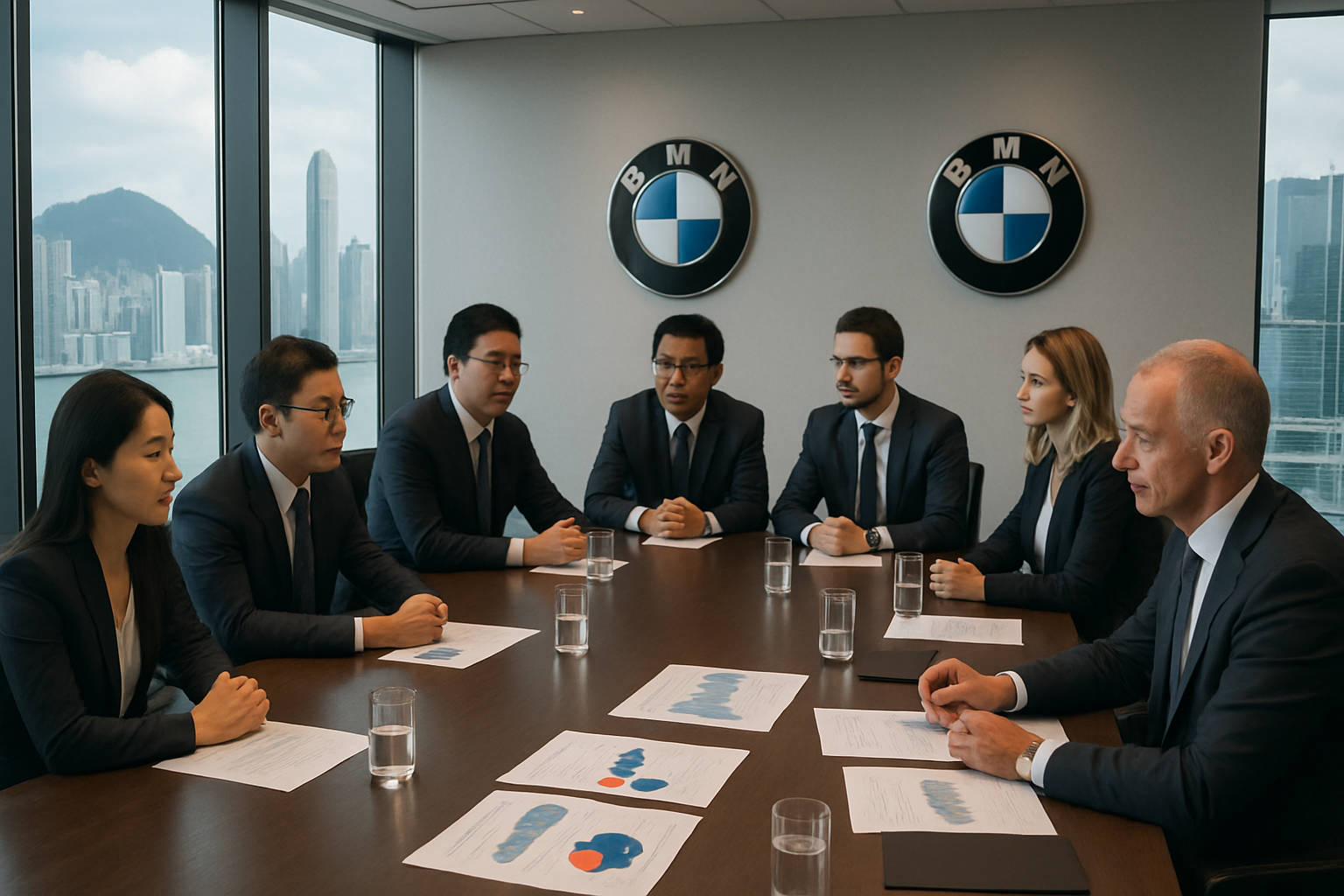
BMW could be approaching the end of its China market difficulties as the German automaker reports price stabilization and slight improvements, while Hong Kong conglomerate Swire Pacific has divested part of its Cathay Pacific Airways stake for HK$1.8 billion to strengthen its financial position.
The developments signal significant shifts in two key sectors affecting Asia-Pacific business operations, with BMW's potential turnaround offering hope for Western automakers struggling in the world's largest car market, while Swire's strategic divestment reflects broader pressures facing traditional Hong Kong business families.
BMW Sees Light at End of China Tunnel
BMW Chief Financial Officer Walter Mertl expressed cautious optimism during a press conference Thursday, stating that "transaction prices in the market for our products have stabilised ... and are actually improving slightly compared to [the third quarter]." The executive added that if current trends continue, BMW has the opportunity to reverse its double-digit sales decline in China during 2025.
The stabilization comes after a challenging period for premium German automakers in China, where local competitors have gained significant market share through aggressive pricing strategies and rapid electric vehicle development. BMW's struggles in China reflect broader challenges facing European luxury brands as Chinese consumers increasingly embrace domestic alternatives offering comparable quality at lower prices.
"If the run rate continues this way, we have the opportunity to go [in a better direction]"
— Walter Mertl, BMW Chief Financial Officer
This potential turnaround aligns with broader patterns observed across German business operations in China. German Chancellor Friedrich Merz's recent Beijing visit in February 2026 secured substantial agreements including a 120-aircraft Airbus order worth billions of euros, demonstrating continued German-Chinese business cooperation despite broader geopolitical tensions.
Swire Pacific's Strategic Divestment
In a parallel development affecting Hong Kong's aviation sector, Swire Pacific announced the sale of 153.05 million Cathay Pacific Airways shares for HK$1.8 billion to raise working capital. The transaction, executed at HK$11.74 per share, represented a 9.6% discount to Thursday's closing price of HK$12.99, indicating Swire's urgency to secure liquidity.
The move marks another significant reduction in Cathay Pacific's ownership structure, following Air China's HK$1.32 billion stake sale in January. These divestments reflect ongoing pressures on the Hong Kong flag carrier as it navigates post-pandemic recovery challenges and shifting regional aviation dynamics.
Swire Pacific's decision to divest part of its longstanding Cathay Pacific investment highlights the financial pressures facing traditional Hong Kong conglomerates. The sale provides immediate capital infusion while maintaining Swire's significant stake in the airline, balancing liquidity needs with strategic positioning.
Regional Business Environment Context
These corporate developments occur within a complex regional business environment marked by evolving China-Western relationships and Hong Kong's ongoing adaptation to changing economic realities. BMW's price stabilization suggests Chinese consumer demand remains strong for premium German automotive brands, despite intense domestic competition.
The automotive sector's performance in China serves as a crucial barometer for European manufacturing competitiveness. Recent data shows German businesses increasingly competing with Chinese companies in renewable energy and advanced manufacturing sectors where Germany traditionally held advantages.
Meanwhile, Hong Kong's role as a financial bridge between East and West continues evolving. Recent developments include strengthened ties with the UAE through enhanced regulatory cooperation on digital assets, positioning Hong Kong as a hub for Middle Eastern capital deployment in Asia while serving as a gateway for Chinese capital seeking global investment opportunities.
Aviation Sector Resilience
The Cathay Pacific stake sales also reflect broader Asian aviation sector dynamics. While Swire and Air China reduce their holdings, the airline continues operations amid regional aviation growth. Hong Kong International Airport recently achieved record passenger processing during Lunar New Year, with projections of 11.38 million travelers representing a 16% increase from 2025 levels.
Regional aviation infrastructure investments continue despite ownership changes, with Hong Kong's Terminal 2 scheduled to open May 27, 2026, completing the HK$141.5 billion expansion project. This infrastructure development maintains Hong Kong's position as a major aviation hub despite corporate restructuring within the sector.
Economic Implications and Strategic Positioning
BMW's potential recovery in China and Swire's capital raising activities reflect broader themes in Asia-Pacific business strategy. German companies are adapting to increased Chinese competition while maintaining market presence through product quality and innovation. Success increasingly depends on company-specific strategies rather than broad regional advantages.
For Hong Kong businesses, the Swire example illustrates strategic flexibility in uncertain market conditions. Traditional conglomerates are adapting their portfolios to maintain competitiveness while preserving core strategic positions. The HK$1.8 billion capital injection provides Swire with enhanced flexibility for future investments and operational requirements.
These developments coincide with China's continued economic recalibration, setting a historic 4.5%-5% GDP growth target for 2026—the first time below 5% in 30 years. Despite lower growth targets, China achieved a remarkable 21.8% export surge in early 2026, demonstrating continued economic dynamism that benefits trading partners and investors.
Future Outlook
The combination of BMW's stabilizing China performance and Swire's successful capital raising suggests resilience within Asia-Pacific business operations. German automotive manufacturers' adaptation to Chinese market conditions provides templates for other European industries facing similar competitive pressures.
Hong Kong companies' strategic portfolio adjustments demonstrate sophisticated approaches to maintaining competitiveness while preserving essential market positions. The aviation sector's continued infrastructure development, despite ownership changes, indicates long-term confidence in regional connectivity growth.
These corporate developments reflect broader trends toward operational excellence and strategic flexibility determining business success regardless of geographic location. Companies demonstrating adaptation capabilities and maintaining strategic vision continue showing superior resilience in an increasingly complex global business environment.