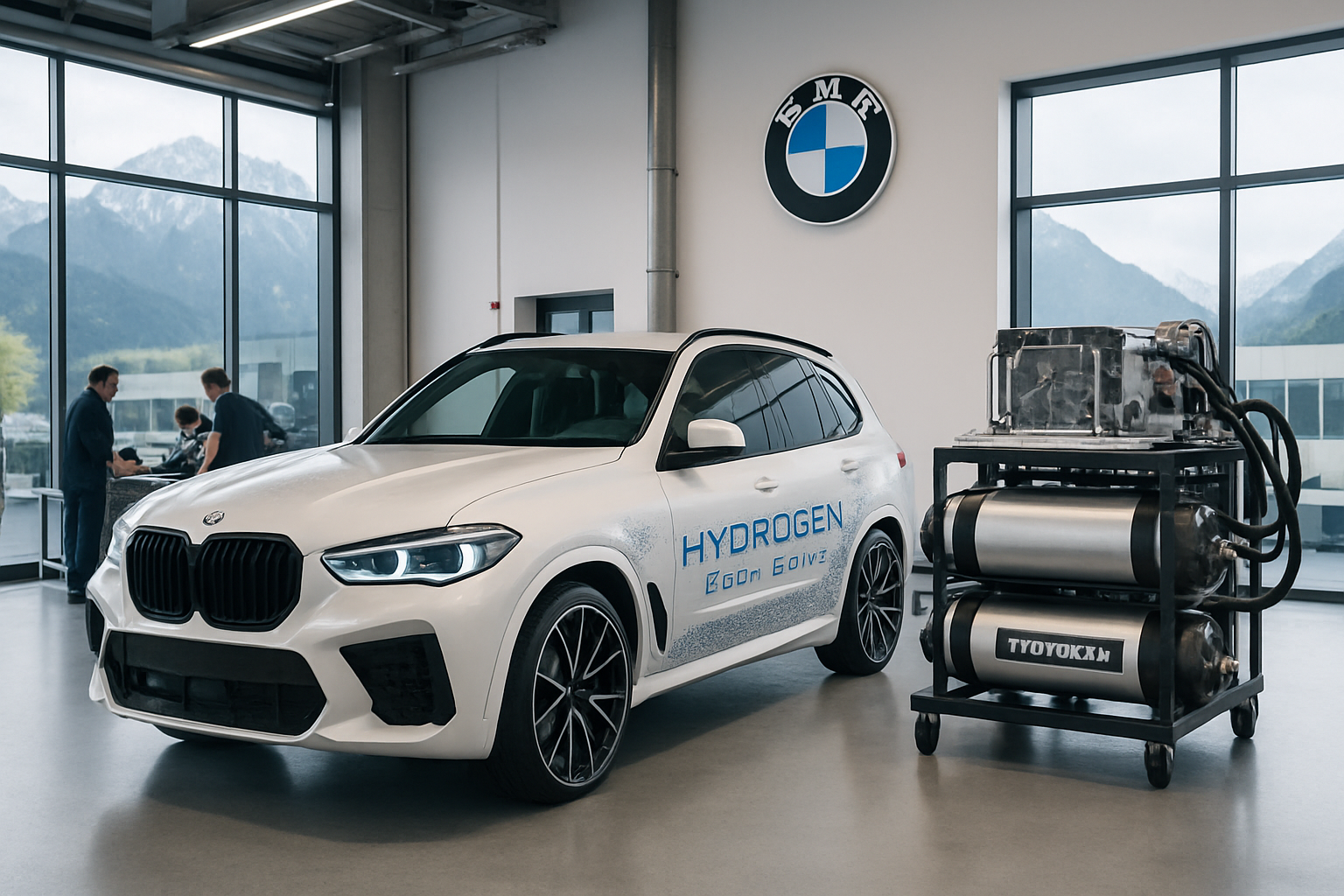
BMW's Austrian facility in Steyr has announced a major strategic initiative to develop hydrogen-powered vehicles, positioning the company at the forefront of the automotive industry's transition to alternative fuels as new leadership takes charge of operations.
Harald Gottsche, the newly appointed director of BMW's Steyr plant, confirmed that the facility will focus extensively on hydrogen vehicle technology development, stating definitively that "we are now making the hydrogen car." This announcement represents a significant shift in BMW's Austrian operations strategy and underscores the company's commitment to diversifying beyond traditional electric vehicle technology.
Strategic Leadership Change at BMW Steyr
The hydrogen initiative comes under the leadership of Harald Gottsche, who has recently taken the helm at BMW's Steyr facility. Gottsche's appointment signals BMW's renewed focus on alternative fuel technologies, with hydrogen power systems becoming a central pillar of the plant's future production strategy.
The new director has indicated plans to engage extensively with social partners and stakeholders as the facility transitions toward hydrogen vehicle manufacturing. This collaborative approach reflects BMW's understanding that successful implementation of hydrogen technology requires broad industry cooperation and support from local communities and workforce representatives.
Hydrogen Technology in the Global Automotive Context
BMW's Austrian hydrogen initiative emerges against a backdrop of intense global competition in alternative fuel technologies. The automotive industry is experiencing unprecedented transformation as manufacturers navigate supply chain challenges, including China's dominance in critical materials production (60% of global production and 90% of refining capacity) and persistent semiconductor shortages affecting vehicle control systems.
The timing of BMW's announcement is particularly significant given the current memory chip crisis, with prices having surged sixfold and shortages expected to persist until 2027 when new fabrication facilities come online. These constraints are pushing automotive manufacturers to explore diverse technological pathways, making hydrogen an increasingly attractive alternative to battery-dependent electric systems.
Industry-Wide Alternative Fuel Development
BMW's hydrogen focus aligns with broader industry trends toward fuel diversification. Recent developments across the automotive sector demonstrate growing investment in hydrogen infrastructure, including Romania's discussions with Hyundai for local hydrogen train production and various international partnerships for sustainable transportation solutions.
The Austrian facility's hydrogen initiative complements BMW's existing electric vehicle success, particularly the iX3 model which was recently named "Car of the Year" by Top Gear, representing the success of BMW's Neue Klasse electric vehicle philosophy. This dual-track approach allows BMW to hedge against technological uncertainties while addressing diverse market demands for sustainable transportation.
Technological Advantages of Hydrogen Vehicles
Hydrogen fuel cell technology offers several distinct advantages over conventional battery electric systems. Hydrogen vehicles typically provide longer range capabilities, faster refueling times comparable to traditional gasoline vehicles, and reduced dependency on lithium and rare earth materials that dominate current electric vehicle battery production.
For commercial applications and heavy-duty transportation, hydrogen systems can offer superior performance in cold weather conditions and extended operational ranges that make them particularly suitable for Austrian geographical and climatic conditions. The technology also enables vehicle-to-grid capabilities, allowing hydrogen-powered vehicles to function as mobile power sources.
Infrastructure and Market Challenges
Despite the promising technology, hydrogen vehicle development faces significant infrastructure challenges. The establishment of hydrogen refueling networks requires substantial investment and coordination between manufacturers, energy companies, and government agencies. Austria's mountainous terrain and distributed population centers create both challenges and opportunities for hydrogen infrastructure deployment.
Market acceptance remains another critical factor, as consumers must adapt to new fueling patterns and infrastructure availability. However, Austria's strong environmental consciousness and government support for clean energy initiatives provide a favorable environment for hydrogen vehicle introduction.
European Union Policy Support
The European Union's increasingly stringent environmental regulations, including plans to effectively ban new diesel vehicle sales, create strong policy incentives for hydrogen technology development. EU regulatory pressure is particularly intense in markets like Austria and Slovakia, forcing accelerated transitions to electrified alternatives.
Austria's commitment to doubling EV infrastructure with 1,000 additional charging stations demonstrates government willingness to invest in alternative fuel infrastructure. This supportive policy environment extends logically to hydrogen infrastructure development, providing BMW Steyr with potential public sector partnership opportunities.
Competitive Positioning and Market Strategy
BMW's Austrian hydrogen initiative positions the company strategically against competitors who have focused primarily on battery electric systems. While manufacturers like Tesla, BYD, and traditional automakers have dominated electric vehicle headlines, hydrogen technology represents a potential differentiation opportunity for BMW in both passenger and commercial vehicle segments.
The Steyr facility's geographic location provides strategic advantages for serving both Western and Eastern European markets, with established supply chains and skilled workforce capabilities that can be adapted for hydrogen vehicle production. This positioning could enable BMW to establish early market leadership in hydrogen technology across the broader European region.
Environmental and Economic Implications
Hydrogen vehicle development at BMW Steyr carries significant environmental and economic implications for Austria's automotive sector. The initiative promises high-value manufacturing jobs, technological expertise development, and potential export industry establishment serving regional hydrogen vehicle demand.
From an environmental perspective, hydrogen vehicles powered by renewable energy sources offer pathways to truly carbon-neutral transportation, particularly important as Austria maintains high renewable electricity generation rates. The technology could complement Austria's existing clean energy infrastructure while reducing transportation sector emissions.
Future Outlook and Industry Impact
BMW's commitment to hydrogen vehicle development at its Austrian facility represents more than a single company's strategic decision—it signals potential industry-wide recognition of hydrogen's role in sustainable transportation futures. As supply chain challenges continue affecting traditional electric vehicle production, hydrogen offers manufacturers an alternative technological pathway.
The success of BMW's Steyr hydrogen initiative could influence other manufacturers' strategic decisions and accelerate broader hydrogen infrastructure development across Austria and the broader European region. This development occurs during what industry analysts describe as one of the most significant industrial transformations in modern automotive history.
Harald Gottsche's leadership and BMW's institutional commitment to hydrogen technology at Steyr position the facility as a potential catalyst for Austria's emergence as a significant player in sustainable automotive manufacturing. The initiative demonstrates how established automotive facilities can adapt to serve next-generation transportation technologies while maintaining manufacturing excellence and workforce development.