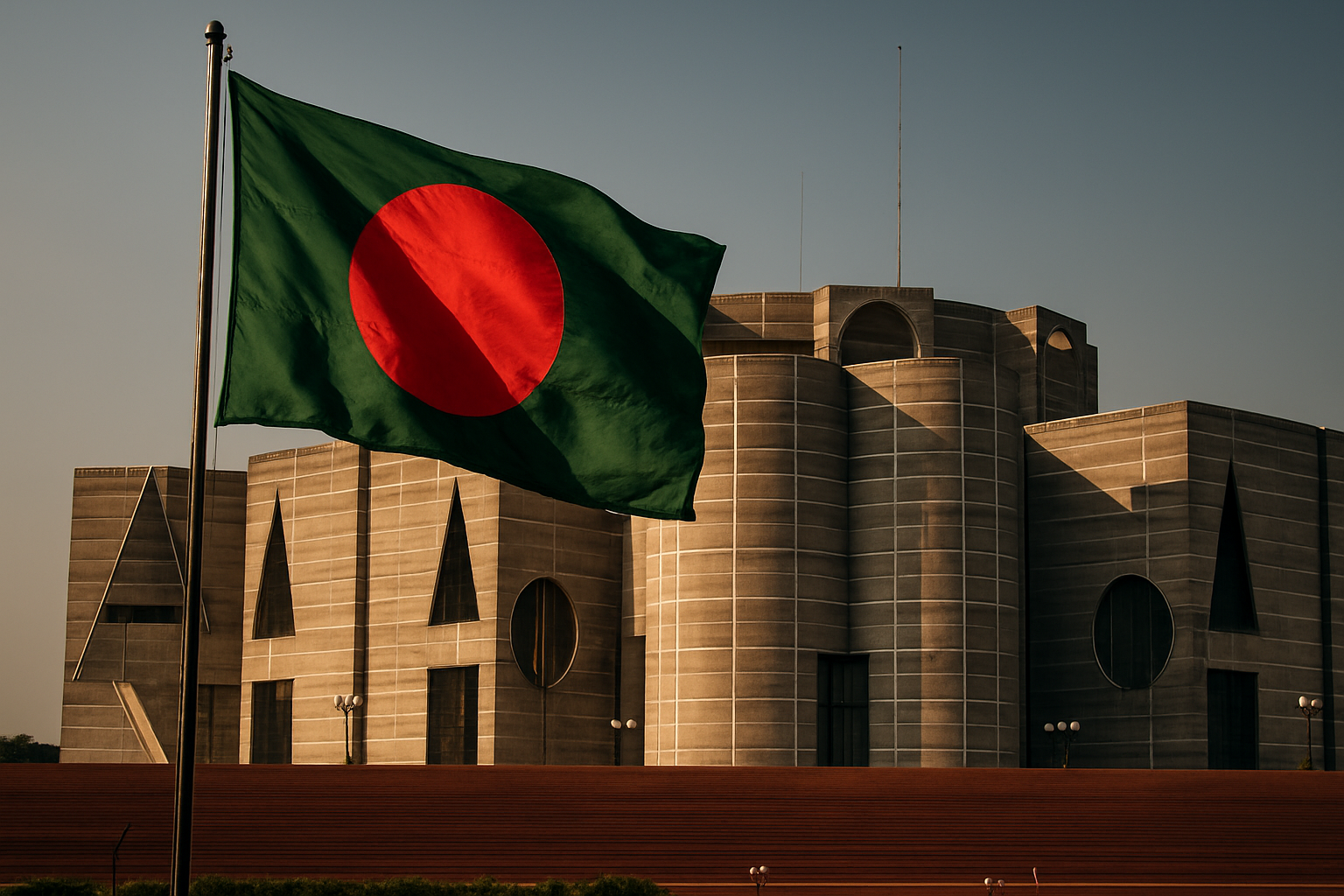
The Bangladesh Nationalist Party has achieved a decisive landslide victory in the country's historic February 12 election, securing 212 of 299 parliamentary seats with 49.97% of the vote share, marking the completion of the world's first democratic transition following a successful Generation Z uprising.
The victory represents the most significant political transformation in Bangladesh since independence, with BNP leader Tarique Rahman set to become Prime Minister after his return from 17 years of exile in London. The election, conducted with unprecedented international oversight, saw 48% voter turnout across 42,651 polling centers, with the decisive "uprising generation" of 55 million voters aged 18-37 comprising 44% of the electorate.
Electoral Breakthrough and Vote Distribution
According to official Election Commission statistics, the BNP's commanding 49.97% vote share was complemented by Bangladesh Jamaat-e-Islami's 31.76%, representing the strongest Islamist showing since 1971 independence. The National Citizen Party, emerging from the 2024 student protests, secured 3.05% of votes, while Bangladesh Khelafat Majlish gained 2.09% and the traditionally significant Jatiya Party managed only 0.89%.
Key BNP victories included Secretary General Mirza Fakhrul Islam Alamgir's overwhelming triumph in Thakurgaon-3 with 236,308 votes, more than doubling his nearest rival. Rahman himself was elected from both Bogra-6 and Dhaka-17 constituencies, demonstrating the party's broad national appeal.
International Recognition and Oversight
The election received unprecedented international legitimacy through the largest monitoring mission in Bangladesh's recent history. A total of 394 international observers from 27 countries, including over 200 EU observers and a Japanese Election Observer Mission led by Watanabe Masato, provided crucial democratic validation.
Historic overseas voting enabled 883,000 postal ballots, including 444,436 expatriate votes through the ICPV system breakthrough, marking the first time Bangladeshi diaspora could participate directly in parliamentary elections. The initiative proved particularly significant for the British Bangladeshi community.
"This represents a clear mandate from the people for constitutional and democratic continuity."
— Professor Muhammad Yunus, Chief Adviser
End of Authoritarian Rule
The election marks the definitive end of Sheikh Hasina's 15-year authoritarian rule, which concluded following the August 2024 student uprising that fundamentally transformed Bangladesh's political landscape. The Awami League was banned from participation, creating a complete political realignment from the traditional two-party system.
The peaceful conduct of the election, despite requiring a massive security deployment of 900,000 personnel in the largest peacetime operation in Bangladesh's history, demonstrated remarkable democratic institutional resilience. Election Commission officials praised the "unwavering commitment to peaceful, credible and participatory election."
Capital Market Surge and Economic Confidence
The immediate aftermath of the BNP victory saw unprecedented confidence return to Bangladesh's capital market. The Dhaka Stock Exchange experienced one of the biggest surges in recent times on the first trading day following the election results, with sharp increases in turnover and upward trends in share prices across most companies, signaling strong investor confidence in the new political direction.
Regional and International Implications
The victory has attracted significant international attention, with Indian Prime Minister Narendra Modi making a personal congratulatory call to Rahman, while Indian Parliament Speaker is expected to attend the swearing-in ceremony on February 17. Malaysia's Prime Minister Anwar Ibrahim praised the outcome as a "triumph of democracy," and US officials have expressed readiness to work with the new government.
The interim government under Nobel laureate Muhammad Yunus had already achieved a major US trade breakthrough during the transition period, securing a 19% tariff rate with zero tariffs for textiles and apparel using US materials, signaling improved US-Bangladesh relations that the new government is positioned to build upon.
Youth-Led Democratic Transformation
The election results reflect the decisive impact of Bangladesh's youth demographic, with the "uprising generation" driving democratic renewal through demands for accountability, transparency, and effective governance over traditional party loyalty. The National Citizen Party, which emerged directly from the 2024 student protests, secured symbolic victories including Nahid Islam's triumph in Dhaka-11, representing the successful institutionalization of youth-led political transformation.
"As BNP's Rahman ascends to power, young Bangladeshis demand government prioritise their voices and deliver on poll promises."
— Al Jazeera Analysis
Challenges and Opportunities Ahead
The new BNP government faces significant challenges, including implementing the July Charter that institutionalizes the uprising principles, addressing transitional justice questions regarding mass killing trials, and managing complex regional relationships. Rahman has acknowledged inheriting a "fragile economy, ineffective constitutional institutions, and weak law and order" from the previous administration.
However, the two-thirds majority provides unprecedented legislative authority for implementing major reforms and addressing the systemic challenges that have long plagued Bangladesh's governance structures. The international community is closely monitoring how this historic mandate will be utilized to balance regional security concerns with democratic governance principles.
Global Template for Democratic Change
Bangladesh's successful transition from street uprising to institutional democracy through peaceful electoral means provides a compelling template for democratic consolidation worldwide. As the world's eighth-largest population successfully completed this transformation, the implications extend far beyond South Asia, offering hope for democratic resilience amid global institutional challenges.
The success of this election, conducted with comprehensive international oversight and enhanced by innovative overseas voting systems, establishes Bangladesh as a potential leader in democratic innovation and could influence neighboring countries' approaches to diaspora political participation and youth engagement in governance.
With the swearing-in ceremony scheduled for February 17 at Bangabhaban Darbar Hall, Bangladesh stands at the threshold of a new democratic era, having completed one of the most remarkable political transformations in recent global history through peaceful, democratic means.