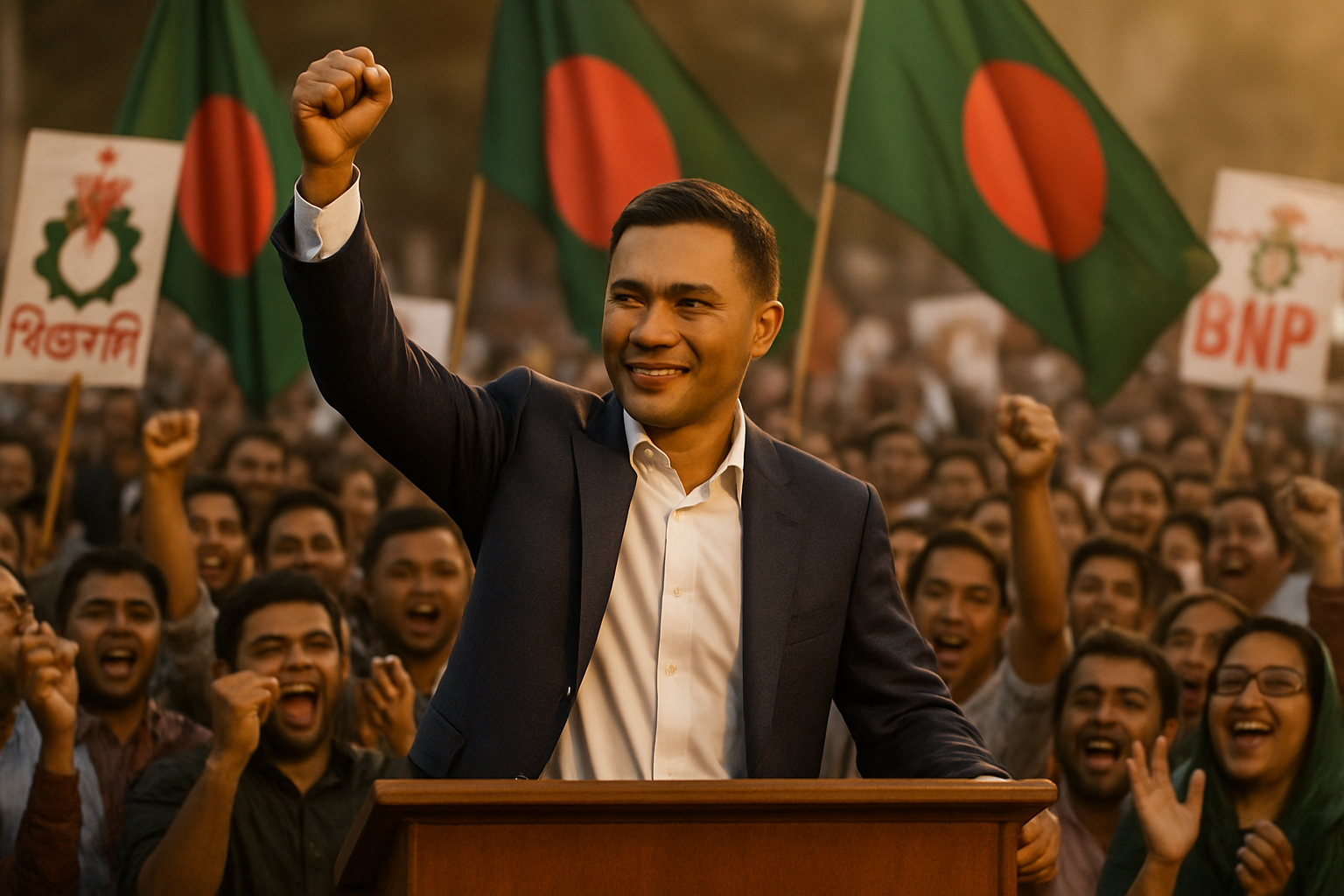
Bangladesh's political landscape has been fundamentally transformed as the Bangladesh Nationalist Party (BNP) swept to a decisive electoral victory, securing a commanding two-thirds majority in the country's first democratic election since the historic August 2024 student uprising that ended Sheikh Hasina's 15-year rule.
According to final results confirmed by multiple sources, the BNP won approximately 212 of 299 parliamentary seats, positioning party chief Tarique Rahman to become Prime Minister after his return from 17 years of exile in London. The victory represents one of the most significant political realignments in Bangladesh's modern history.
Post-Election Violence Mars Democratic Celebrations
Despite the electoral success, the transition period has been marred by deadly post-election clashes that claimed three lives, according to reports from Azerbaijan's Today.Az. The violence underscores the volatile political atmosphere as Bangladesh navigates its democratic transition following the tumultuous events of 2024.
In Rangpur, BNP leaders and activists gathered to demand vote recounts in certain constituencies, warning of "tougher programmes" if their concerns are not addressed. These protests highlight lingering tensions despite the party's overall electoral triumph.
Swift Government Formation Underway
The new government is moving quickly to consolidate power and begin governance. According to Bangladesh's Bangla Online News Portal, the swearing-in ceremony for newly elected Members of Parliament will take place Monday morning, February 16, with the Chief Election Commissioner administering the oath.
The new cabinet members are scheduled to take their oath of office at 7 PM the same day at a ceremony in the Darbar Hall of Bangabhaban, presided over by the President. This rapid transition demonstrates the BNP's eagerness to begin implementing its agenda after nearly two decades in opposition.
Tarique Rahman's Call for Unity
In his first major address since the electoral victory, BNP Chairman Tarique Rahman called for national unity and urged opposition parties to work constructively with the incoming government. According to Saudi Arabia's Saudi Gazette, Rahman acknowledged the scale of challenges ahead, stating: "We are taking office at a time when we have to start our journey through a fragile economy, ineffective constitutional institutions, and weak law and order situation left by a fascist regime."
"However, if the people's strength is with us, no obstacle can stop us from implementing our promises."
— Tarique Rahman, BNP Chairman and Prime Minister-designate
Rahman's victory speech emphasized themes of reconstruction and healing, promising to implement the commitments made to voters during the campaign. The incoming Prime Minister called on party leaders and activists to remain calm and vigilant, urging restraint to prevent further incidents during the sensitive post-election period.
Opposition Results and Political Realignment
The Jamaat-e-Islami-led alliance captured 77 seats and will serve as the main opposition, representing the strongest showing by Islamist parties since Bangladesh's independence in 1971. This result reflects a fundamental shift in the country's political landscape, with the traditional Awami League absent from parliament after being banned from participating due to their role in the violent suppression of the 2024 uprising.
The election results demonstrate a clear mandate from the Bangladeshi people for change, with the BNP's two-thirds majority providing the constitutional authority needed to implement significant reforms and address the institutional challenges left by the previous administration.
Regional and International Implications
The BNP's victory carries significant implications for regional relationships, particularly with India. According to analysis from India's Times of India, the return of leaders with alleged anti-India links complicates bilateral relations, with the new government's push for former Prime Minister Sheikh Hasina's extradition from India presenting an immediate diplomatic challenge.
International observers are closely monitoring Bangladesh's democratic transition, which represents a rare success story of youth-led political change being institutionalized through peaceful electoral processes. The election serves as a potential template for other countries facing similar democratic challenges.
Economic and Governance Challenges
The incoming BNP government faces substantial economic and institutional challenges. Rahman acknowledged inheriting a "fragile economy" and "ineffective constitutional institutions" from the previous administration. The party has promised comprehensive reforms to address these systemic issues while implementing economic policies designed to improve living standards for ordinary Bangladeshis.
Questions remain about how the new government will handle transitional justice processes, including potential accountability measures for those responsible for violence during the 2024 uprising that claimed approximately 1,400 lives.
Cabinet Formation and Future Leadership
According to reports from Dhaka Tribune, BNP policymakers have indicated that the new cabinet will not be excessively large, suggesting a focus on efficiency and effectiveness in governance. The composition of the new government will be closely watched as an indicator of the party's priorities and approach to addressing Bangladesh's challenges.
The swearing-in ceremonies scheduled for Monday will mark the formal beginning of what many observers describe as a new chapter in Bangladesh's democratic development, ending a period of authoritarian rule and opening possibilities for genuine democratic governance.
Looking Ahead
As Bangladesh prepares for this historic transition of power, the success of the BNP government will be measured by its ability to deliver on campaign promises while maintaining democratic institutions and managing complex regional relationships. The party's two-thirds majority provides the legislative authority needed for significant reforms, but the real test will be implementing policies that address the economic hardships and institutional weaknesses that contributed to the 2024 uprising.
The international community will be watching closely to see whether Bangladesh can successfully consolidate its democratic gains and serve as a positive example for other nations navigating similar political transitions in South Asia and beyond.